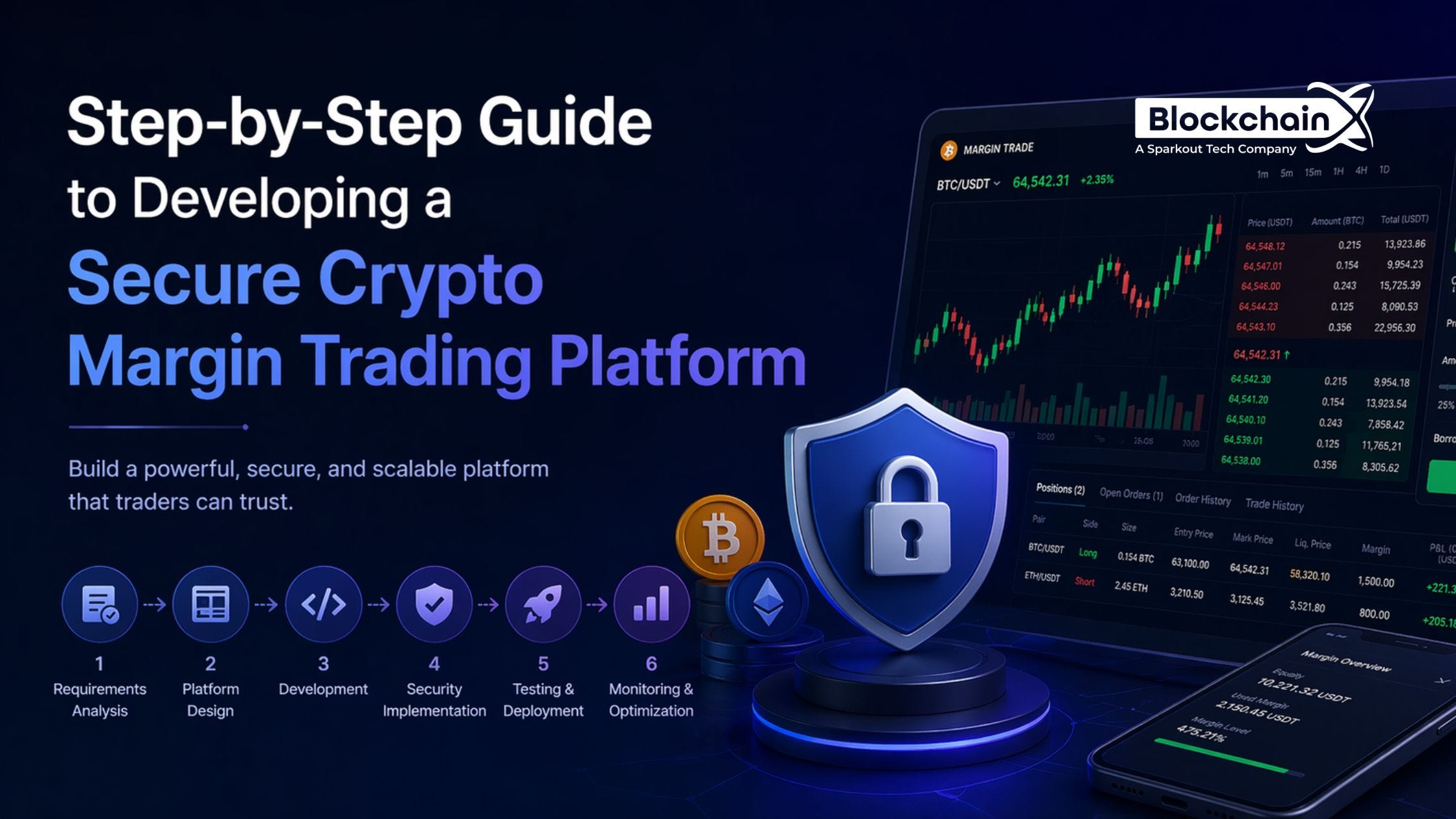
Step-by-Step Guide to Developing a Secure Crypto Margin Trading Platform
 Stomhardy4 min read·Just now
--
The blistering development of digital finance has brought crypto trading to a whole new level, beyond just spot deals. Nowadays, margin trading is on the frontline, allowing users to magnify their positions and open up the market opportunities.
With the increasing demand, companies are turning to the question of how to create secure, scalable and feature-rich margin trading systems, able to compete within a very dynamic ecosystem.
This guide takes you through the crucial steps of creating a secure crypto margin trading platform, plan and architecture, deployment, and scale.
Understanding Crypto Margin Trading
Cryptocurrency margin trading enables them to lend money to trade in greater amounts than the money they have. Traders have an opportunity to make more profits- possibly by using borrowed assets but also risks. Security, risk management and system performance are key elements of any margin trading exchange.
An efficient platform should not only be user friendly but also have complex trading functionality and ensure compliance and security of user funds.
Step 1: Define Business Goals and Compliance Strategy
It is imperative to clarify your business model before sinking your teeth in development. Will your platform focus on retail traders, institutional clients or both? What are the leverage ratio you will provide? In what areas will you be operating?
This is a significant role of regulatory compliance. Leverage risks tend to put greater attention on margin trading platforms. Integrating KYC, AML and regional standards of compliance at the beginning of the process avoid expensive redesign in the future.
Step 2: Choose the Right Technology Stack
An efficient trading platform is supported by the technology stack. A strong backend, which can be used to support real-time order matching, high frequency transactions, and massive data processing, will be required.
Common choices include:
- Backend: Node.js, Go or Python for speed and scalability
- Frontend: React or Angular for responsive UI
- Database: PostgreSQL, MongoDB or Redis for fast data access
- Blockchain Integration: Ethereum, Binance Smart Chain or other networks based on your asset offerings
It would be advisable to have a modular architecture that will allow future upgrades and integrations.
Step 3: Develop a High Speed Matching Engine
The engine you should give is the matching one. It verifies the buying and selling orders and trades are made immediately and correctly. In margin trading, when price changes occur in milliseconds, any delay can cause severe losses.
Your engine must support:
- Real-time order execution
- Low latency performance
- High throughput under heavy load
This component is most important to optimise to provide a competitive trading experience.
Step 4: Integrate Liquidity Solutions
The ease with which the user can enter and exit trades is determined by liquidity. Even the most developed platform, without the adequate amount of liquidity, will have difficulty in keeping users.
You can ensure liquidity by:
- Partnering with liquidity providers
- Integrating external exchanges via APIs
- Encouraging market makers with incentives
A profound liquidity pool increases user confidence and platform stability.
Step 5: Implement Advanced Risk Management
The very nature of margin trading is risky, and a sound risk management system is a must. This involves tracking the position of users, computing margin requirement and initiating liquidations as needed.
Key features include:
- Automated liquidation engine
- Margin call alerts
- Real-time risk assessment
- Insurance funds to cover unexpected losses
These systems cushion users and the system against excessive market volatility.
Step 6: Focus on Security Infrastructure
Any successful crypto exchange is based on security. Cyber threats are most likely to be directed to margin trading platforms with high-value transactions and leveraged positions.
Essential security measures include:
- Multi-signature wallets
- Cold wallet storage for funds
- End-to-end encryption
- Two factor authentication (2FA)
- Regular security audit and penetration testing
The creation of a secure ecosystem will guarantee user confidence and platform credibility in the long term.
>> here is the detailed blog of guide to crypto margin trading exchange
Step 7: Design an Intuitive User Experience
The strongest platform may fail, and when users find it challenging to navigate, it may fail. It is vital to have a clean, responsive and intuitive interface.
Your platform should include:
- Advanced trading charts and indicators
- Easy-to-use order placement tools
- Real-time portfolio tracking
- Mobile-friendly design
An easy user experience help in engaging and retaining.
Step 8: Testing and Deployment
Prior to the release, comprehensive testing is needed to detect bugs, vulnerabilities and performance problems. This includes:
- Functional testing
- Load and stress testing
- Security testing
- User acceptance testing (UAT)
After testing, roll out your platform in a phased approach so that you can test out with a beta release and then roll out full scale.
Step 9: Continuous Monitoring and Upgrades
The crypto market is dynamic and your platform should be as well. The constant observation aids in identifying irregularities, performance optimization, and security.
Regular updates should focus on:
- Adding new trading pairs
- Improving system performance
- Enhancing security features
- Adapting to regulatory changes
Collaborating with seasoned vendors such as BlockchainX can facilitate the continued development process and make sure that your platform could be competitive.
Conclusion
The creation of a safe crypto margin trading system is not an easy, yet a fulfilling task. It involves a balanced approach in terms of technology, security, compliance, and user-centric design.
With a systematic strategy, companies are able to create platforms that would not only satisfy the demands of the market but create long-term trust and scalability.