
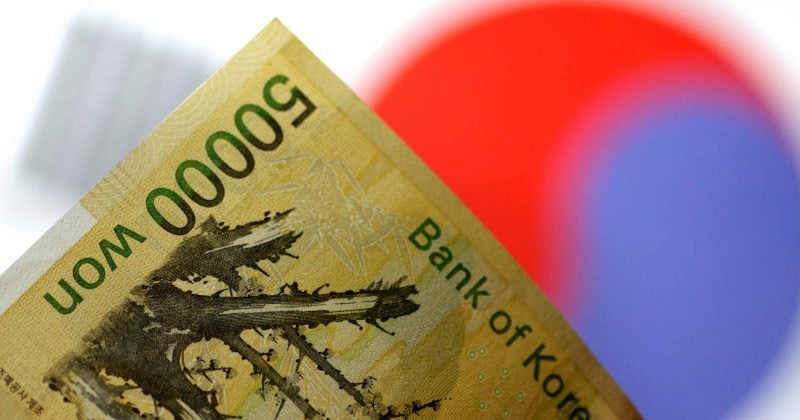
South Korea government vows to curb excessive volatility as won weakens to 17-year low
The Korean won is sliding toward levels not seen since the 2009 financial crisis, and the ripple effects are already hitting the country's crypto markets hard.
Share
Add us on Google by Editorial Team Jun. 4, 2026South Korea’s Finance Minister Koo Yun-cheol put currency markets on notice on June 4, declaring the government will take “immediate and necessary actions” if the won’s decline triggers excessive market volatility. The won has been creeping toward 1,530 per US dollar, a level it hasn’t touched since March 2009.
The won’s slide has been building for months. Back in May 2026, the currency breached the psychologically significant 1,500 per USD mark, prompting authorities to roll out 24-hour monitoring measures. Rising bond yields and external market pressures have continued pushing the won lower.
AdvertisementIn April 2026, US and South Korean officials jointly acknowledged that excessive won volatility is undesirable.
The crypto connection
South Korea has long been one of the world’s most active crypto trading markets. The so-called “kimchi premium,” where Korean exchanges historically trade Bitcoin and other tokens at higher prices than global peers, has been a defining feature of the country’s crypto landscape for years.
Stablecoin balances on leading South Korean exchanges have plummeted roughly 55%, falling from $575 million in July 2025 to approximately $188 million by mid-March 2026. That’s nearly $400 million in liquidity evaporating from Korean crypto markets in less than a year.
The 55% drop in stablecoin balances coincides almost perfectly with the won’s breach of the 1,500 level.
What this means for investors
For crypto traders specifically, the shrinking stablecoin pool on Korean exchanges is the metric to watch. When exchange liquidity dries up, spreads widen, slippage increases, and price volatility tends to amplify. A market that already runs hotter than most global peers becomes even more unpredictable with $188 million in stablecoins compared to the $575 million available less than a year ago.
Disclosure: This article was edited by Editorial Team. For more information on how we create and review content, see our Editorial Policy.