Solana's quantum-threat readiness reveals harsh tradeoff: security vs speed
While Bitcoin developers scramble to find a solution and Ethereum prepares for 'Q-day,' Solana is trying to get ahead of that scenario.
By Margaux Nijkerk|Edited by Aoyon Ashraf Apr 4, 2026, 12:00 p.m. Make preferred on
What to know:
- The Solana Foundation is working with Project Eleven to test quantum-resistant cryptography as concerns grow that future quantum computers could break current blockchain security.
- Early tests show major tradeoffs: quantum-safe signatures are up to 40x larger and made the network roughly 90% slower, raising questions about scalability.
Crypto has spent years obsessing over speed, fees and scalability. Now it may have to confront a more existential question: what happens when its core security breaks?
That question is moving from theory to urgency. Quantum computers, machines that use the principles of quantum physics to process information in fundamentally different ways than today’s computers, could eventually solve the kinds of mathematical problems that underpin modern encryption.
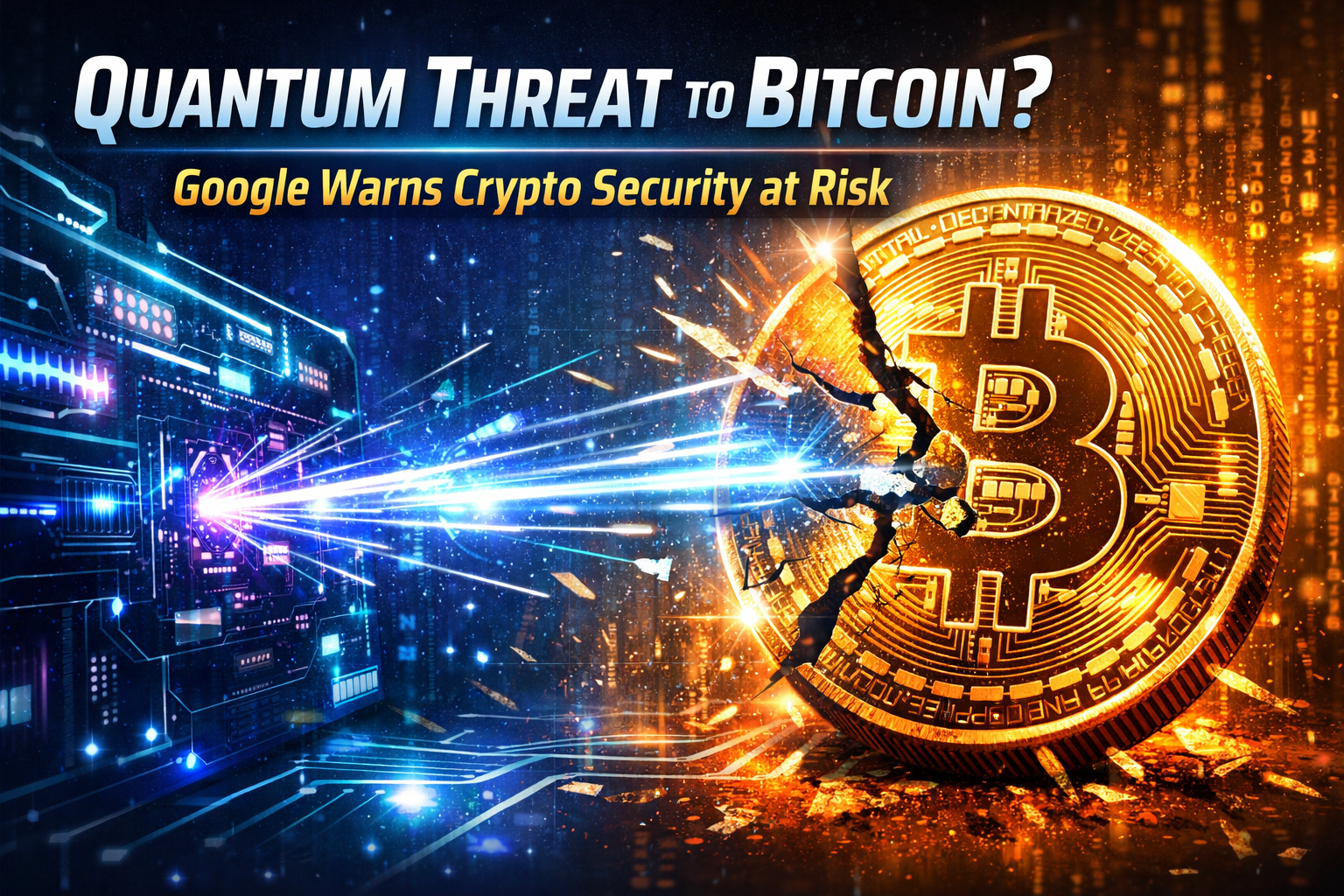
Discussions around post-quantum cryptography have intensified across the industry in recent weeks, especially after new research from Google and academic collaborators suggested that such systems could one day break widely used encryption, potentially cracking systems like Bitcoin’s in minutes rather than years.
While Bitcoin developers scramble to find a solution and Ethereum prepares for the event, Solana is trying to get ahead of that scenario.
Cryptography firm Project Eleven has teamed up with the Solana Foundation to experiment with post-quantum security, technology designed to withstand quantum attacks that could render today’s cryptography obsolete. The early work is already surfacing a difficult reality: making Solana quantum-safe may come at the expense of the performance that defines it.
In practice, that effort has meant moving beyond theory and into live testing. Project Eleven has worked with the Solana ecosystem to model how the network would behave if its current cryptography were replaced, including deploying a test environment using quantum-resistant signatures — the digital keys that authorize transactions. The goal is not just to prove the technology works, but to understand what breaks when it’s pushed to scale.
The early results show a clear tradeoff.
The new, quantum-safe “signatures” that approve transactions are much larger and heavier than those used today, roughly 20 to 40 times larger, Project Eleven CEO Alex Pruden, who founded the project, after years in crypto and venture capital, brings a mix of military and industry experience to the problem, told CoinDesk. That means the network can handle far fewer transactions at once. In testing, a version of Solana using this new cryptography ran about 90% slower than it does today, Pruden said.
That tradeoff cuts directly at the heart of Solana’s design. The blockchain has built its reputation on high throughput and low latency, positioning itself as one of the fastest networks in crypto. But post-quantum cryptography — while more secure against future threats — comes with heavier data and computational requirements, making it harder to maintain those speeds.
'Pick any wallet'
Solana may also face a more immediate structural challenge than its peers.
Unlike Bitcoin and Ethereum, where wallet addresses are typically derived from hashed public keys, Solana exposes public keys directly. That difference matters in a quantum scenario. “In Solana, 100% of the network is vulnerable,” Pruden said.
“A quantum computer could pick any wallet and immediately start trying to recover the private key.”
Pruden, a former Army Green Beret, first became interested in Bitcoin while deployed in the Middle East, later worked at Coinbase and joined Andreessen Horowitz’s venture team on its first fund. He then became an early leader at privacy-focused blockchain Aleo before launching Project Eleven, a firm focused on preparing digital assets for what he calls “Q-day,” the moment quantum computers can break today’s cryptography.
Some developers in the Solana ecosystem, meanwhile, are looking at simpler, more immediate fixes. One example is something called ‘Winternitz Vaults’, which uses a different kind of cryptography that’s believed to be safer against quantum attacks. Instead of changing the entire network, these tools focus on protecting individual wallets, giving users a way to secure their funds now while bigger, system-wide upgrades are still being figured out.
Despite those hurdles, Solana has moved faster than much of the industry in at least one respect: experimentation. “There’s something tangible,” Pruden said. “We actually have a testnet with post-quantum signatures.” He added that the Solana Foundation “deserves credit for at least engaging and wanting to do the work.”
Across crypto, that level of engagement remains rare. While some ecosystems, most notably Ethereum, have begun discussing long-term migration paths, concrete implementation has been limited.
The broader challenge is not just technical, but social: upgrading cryptography in decentralized systems requires coordination across developers, validators, applications and users, all of whom must move in sequence.
For Pruden, the risk is that the industry waits too long to begin that process. “This is a tomorrow problem — until it’s today’s problem,” he said. “And then it takes four years to fix.”
Read more: Here's how bitcoin, Ethereum and other networks are preparing for the looming quantum threat
Solana NewsMore For You
Encryption Supremacy: Zcash and Privacy in the Age of Scale
By CoinDesk ResearchMar 31, 2026 Commissioned byGenZcash
Most crypto privacy models weaken as blockchain data grows. Encryption-based models like Zcash strengthen. CoinDesk Research maps the five privacy approaches and examines the widening gap.
Why it matters:
As blockchain adoption scales, the metadata available to machine learning models scales with it. Obfuscation-based privacy approaches are structurally degrading as a result. This report provides a comprehensive comparison of all five major crypto privacy architectures and a framework for evaluating which models remain durable as AI capabilities improve.
View Full ReportMore For You
Here's what 'cracking' bitcoin in 9 minutes by quantum computers actually means
By Shaurya Malwa|Edited by Omkar Godbole9 hours ago
Google's quantum paper made headlines with that number. Here's what it means, what's actually at risk, and why 6.9 million bitcoin are more exposed than the rest.
What to know:
- New research from Google's Quantum AI team suggests a future quantum computer could derive a bitcoin private key from a public key in about nine minutes, potentially allowing attackers to hijack transactions before they are confirmed.
- Roughly one-third of all bitcoin, including early coins and any held in addresses whose...

Five data sources say the same thing about bitcoin market. It's thinning from the inside
31 minutes ago
Judge continues Nevada ban on Kalshi sports markets
4 hours ago
Here's what 'cracking' bitcoin in 9 minutes by quantum computers actually means
9 hours ago
Schwab plans spot bitcoin, ether trading launch in first half of 2026
16 hours ago
Circle under fire after $285 million Drift hack over inaction to freeze stolen USDC
16 hours ago
What next as XRP rises to $1.33 but fails to break out
19 hours agoTop Stories
U.S. March jobs smash expectations, with 178,000 added
23 hours ago
The 'time pain' trap: why bitcoin’s bear market might need a few more months of ‘boring’ to hit a true floor
Apr 2, 2026
Ethereum Foundation stakes another $93 million ether, reaching its 70,000 ETH target
Apr 3, 2026
CFTC sues Illinois, Arizona, Connecticut over states' sports prediction market efforts
Apr 2, 2026
Coinbase wins initial bank regulator nod for trust charter, boosting custody push
Apr 2, 2026