Solana Tokenization Platform Development: Cost, Process & Adoption 2026
--
Tokenization is rapidly reshaping how real-world and digital assets are created, managed, and exchanged across decentralized ecosystems. As financial systems shift toward programmable assets, platforms that support high-speed, low-cost blockchain environments are becoming essential for enterprise adoption. Solana has emerged as one of the leading infrastructures powering this transformation due to its scalability and performance capabilities.
Why Solana is Driving the Next Wave of Tokenization
The rise of high-throughput blockchain networks has made advanced asset digitization more practical for global industries. Modern platforms are increasingly built on fast-finality chains that support real-time financial applications and asset interoperability.
In this space, Solana blockchain development is becoming a core foundation for enterprises aiming to launch scalable token ecosystems, while Building tokens on Solana enables developers to create high-performance digital assets with minimal latency and transaction costs.
Architecture Behind Tokenization Platforms on Solana
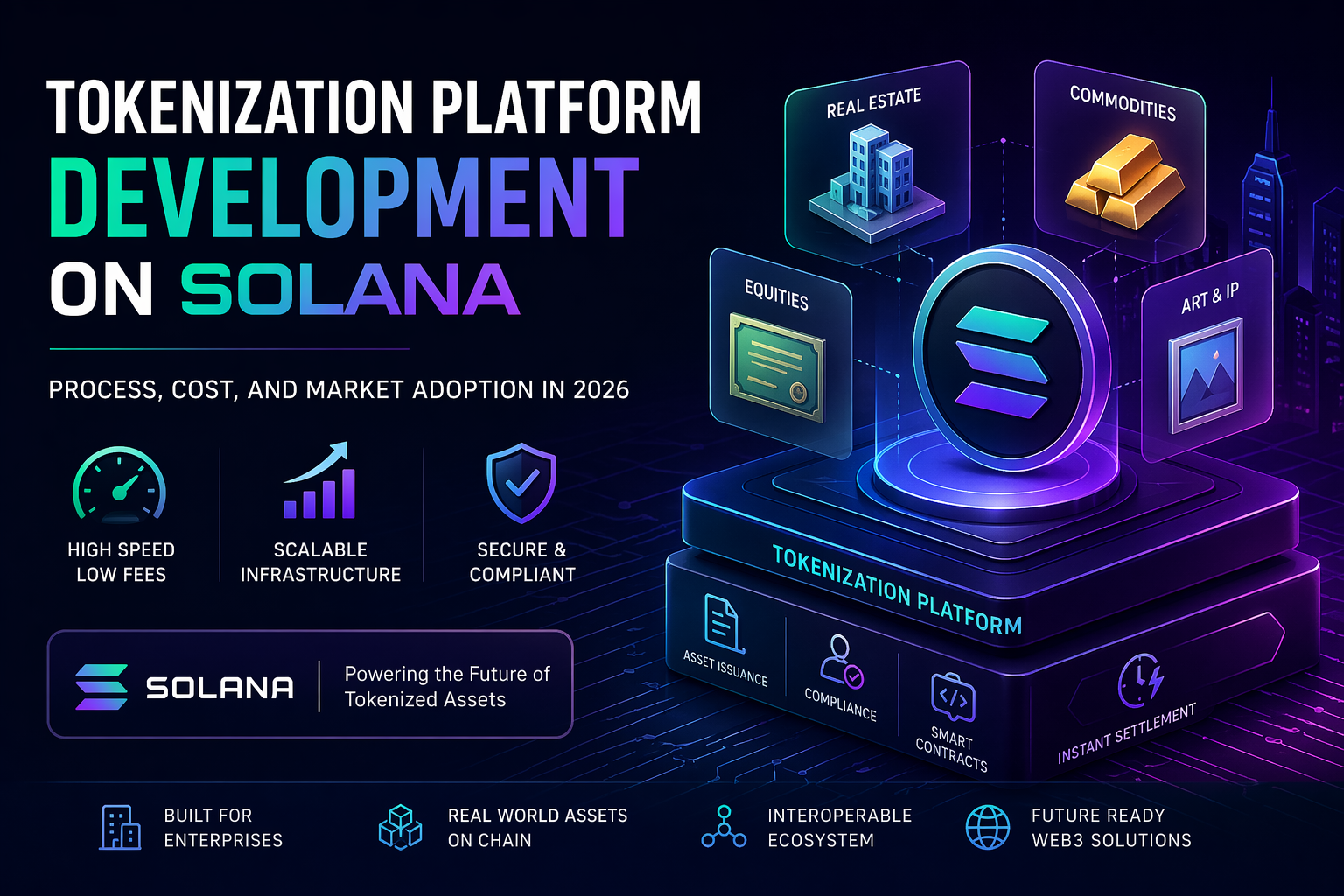
A tokenization platform on Solana typically integrates multiple layers, including smart contract frameworks, off-chain indexing systems, wallet infrastructure, and compliance modules. These components ensure secure issuance, transfer, and lifecycle management of tokenized assets.
Organizations working with a tokenization development company often leverage specialized frameworks for compliance-ready issuance systems, while enterprises increasingly hire solana developers to build optimized smart contracts, automated settlement logic, and interoperable asset layers.
Key Technical Modules Include:
- Smart contract deployment using Solana programs
- Token minting and burning mechanisms
- On-chain and off-chain data synchronization
- Identity and compliance verification layers
- Cross-chain interoperability bridges
Real-World Asset Integration on Solana Ecosystem
The financial industry is increasingly shifting toward digitizing physical and traditional assets into blockchain-based representations. This includes commodities, real estate, equities, and even intellectual property rights.
The adoption of Real World Assets on Solana is accelerating because of its ability to support high-frequency trading environments, instant settlement, and cost-efficient microtransactions making it a strong candidate for institutional-grade tokenization systems.
Development Process of a Tokenization Platform on Solana
1. Requirement Analysis and Asset Mapping
Understanding asset classes, compliance rules, and token standards.
2. Smart Contract Design
Defining token logic, governance rules, and transaction flow.
3. Blockchain Integration Layer
Connecting APIs, wallets, and external financial systems.
4. Security Audits and Testing
Performing vulnerability checks, load testing, and stress simulations.
5. Deployment and Scaling
Launching on Solana mainnet with continuous monitoring and upgrades.
Cost of Building a Tokenization Platform in 2026
The cost of developing a tokenization platform on Solana varies based on complexity, security requirements, and feature depth.
Estimated Cost Breakdown:
- Basic MVP Platform: $25,000 — $50,000
- Mid-Level Enterprise Platform: $60,000 — $120,000
- Advanced Institutional System: $150,000+
Key Cost Factors:
- Smart contract complexity
- Security audit requirements
- Compliance integration (KYC/AML)
- Cross-chain interoperability
- UI/UX and analytics dashboard design
Market Adoption Trends in 2026
By 2026, tokenization is expected to become a mainstream financial infrastructure layer rather than a niche blockchain application. Institutional investors, fintech companies, and governments are increasingly exploring programmable asset systems for improved liquidity and transparency.
Key adoption drivers include:
- Faster settlement cycles
- Fractional ownership of high-value assets
- Reduced operational overhead
- Increased global market accessibility
- Enhanced regulatory transparency
Future Outlook of Solana-Based Tokenization Platforms
The future of tokenization platforms lies in automation, AI-driven compliance, and cross-chain financial ecosystems. Solana’s performance architecture positions it as a strong contender for large-scale institutional adoption.
As digital finance evolves, enterprises that invest early in scalable tokenization infrastructure will likely gain a significant competitive advantage in liquidity, accessibility, and global asset distribution models.
Conclusion
Tokenization platforms built on Solana are redefining how assets are created, traded, and managed in the digital economy. From infrastructure design to real-world asset integration, the ecosystem is rapidly maturing toward enterprise-grade adoption. With increasing demand for speed, scalability, and compliance-ready systems, Solana-based tokenization is poised to become a major pillar of Web3 financial innovation in 2026.