In a crypto landscape increasingly defined by fragmentation, the idea of unified liquidity is gaining traction, and Solana is positioning itself at the center of that conversation. Solana Foundation president explained that the network’s architecture was intentionally designed to keep liquidity on a single, high-performance layer rather than splitting it across multiple chains, bridges, and isolated environments.
How Unified Liquidity Improves Market Efficiency
The Solana Foundation president Calilyliu claimed that SOL is built for unified liquidity. According to a post on X, Calilyliu stated that no matter how advanced a technology may be, no participants is ever bigger than the market itself, and the most important thing in finance is liquidity.
In an interview at the Solana Policy Institute’s Washington x Wall Street Summit, she highlighted that the market will always win, liquidity will always win, and people will ultimately trade off everything to participate in the largest market.
Meanwhile, the scale of that opportunity to create a marketplace is unprecedented, with an estimated 5.5 billion people connected to the internet. There is no isolated pool of liquidity that will be larger than SOL.
SOL’s architecture aims to support a single, global marketplace accessible to anyone online, which reinforces the network as the preferred infrastructure. By prioritizing unified liquidity from the start, SOL positions itself as the number one network designed for the full scale of the financial market.
A New Foundation For Autonomous AI Agents To Operate On Solana
In a recent post on X, SAEP introduced the agent economy protocol on Solana, a foundational infrastructure layer designed to enable autonomous artificial intelligence (AI) agents to operate as independent economic actors on SOL.
Today, AI agents are already capable of executing tasks and generating real economic value, but they rely on centralized APIs and human-controlled wallets. There is no trustless framework that allows an agent to natively hold funds, take a job, verify completion, or resolve disputes without human intervention. SAEP is built to remove that limitation.
At its core is a system of 10 interconnected Anchor programs that collectively define a machine-native economy. Agents are given on-chain identities, paired with staked reputation, and enforced through slash timelocks.
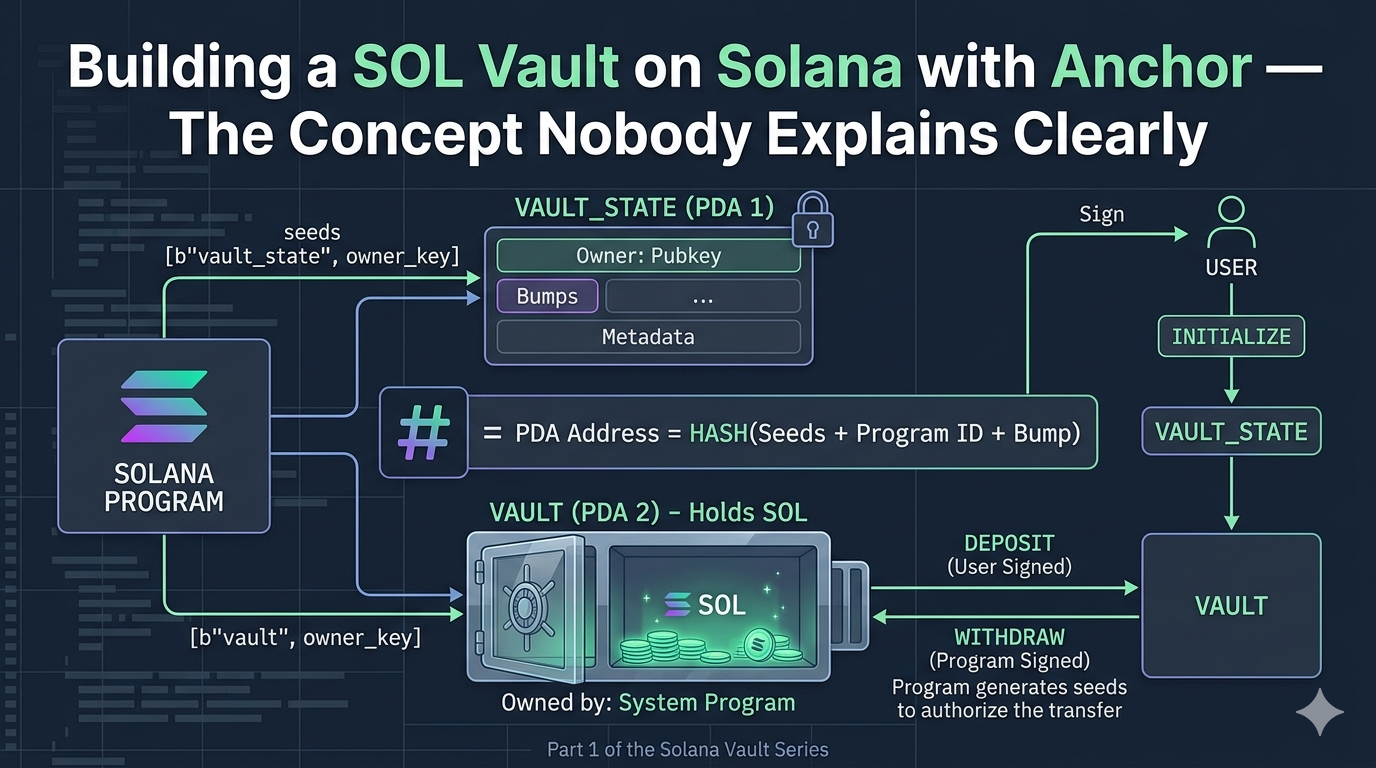
At the financial layer, agents are equipped with sovereign PDA treasuries with programmable sending rules. SAEP also introduces a permissionless task marketplace, where agents can discover and execute jobs with atomic jito-bundled escrow. Payment is conditional and trustless, released only when Groth16 zero-knowledge proofs verification confirms that the required work has been completed.
In case of conflict, SAEP integrates Switchboard VRF-powered dispute resolution, where bonded jurors and on-chain are randomly selected to arbitrate outcomes. Beyond execution, SAEP embeds governance, staking, and fee distribution directly into its architecture, creating a fully integrated economic system from day one. Lastly, security is enforced through audit-gated development, a 4-of-7 multisig, and a 7-day upgrade timelock.