Smarter Cloud Spending: Intelligent Cost Optimization Assistant
--
Cloud computing is the engine powering today’s digital innovation and scalability. From individuals to startups to large enterprises, organizations rely on cloud computing for flexibility, resources, scalability and speed. It seems a great advantage but behind this there lies a on growing concern — unnoticed and often uncontrolled cloud expenditure.
Visibility without intelligence results in missed optimization opportunities.
The Hidden Challenge:
Cloud platforms generate detailed usage metrics; however, they fail to deliver actionable, meaningful insights. Users stuck interpreting complex data without expertise and guidance on what steps to perform next.
This leads to:
- Idle resources running unnoticed
- Unanticipated spikes in monthly bills
- Excessively allocated infrastructure
Over time, these inefficiencies turn into unmanageable financial burdens.
To address this gap, I developed a Cloud-Based Intelligent Cost Optimization Assistant — a system designed not just to visualize, but to analyze, predict, and recommend.
The goal is simple yet powerful:
Transform cloud cost management from a passive task to an active, intelligent process.
System Overview:
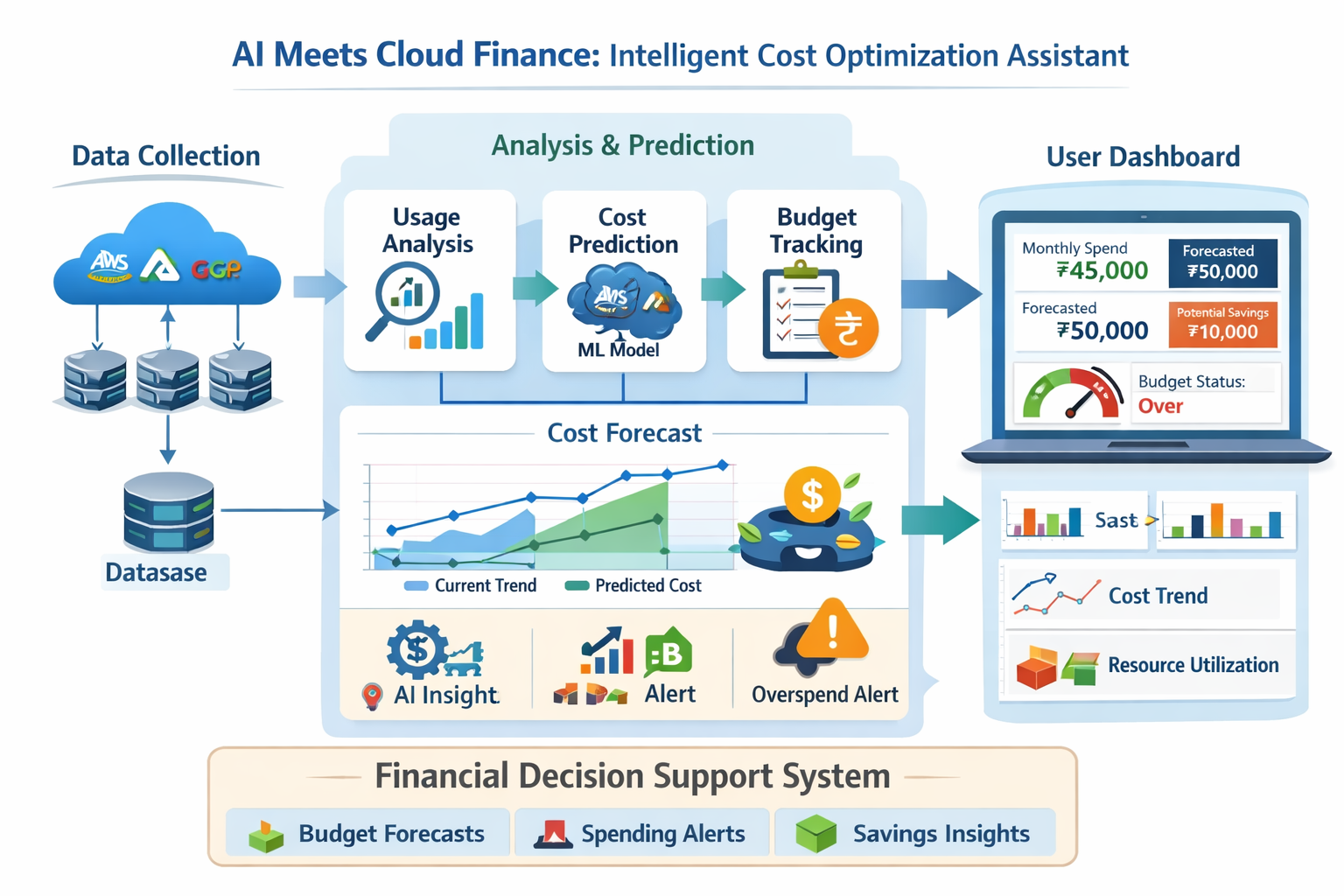
The system follows a well-structured pipeline that combines data processing with intelligent decision-making capabilities.
- Data aggregation: Gathering real-time cloud usage data
- Analysis Engine: Identifying inefficiencies and usage patterns
- Prediction Module: Future costs estimation using machine learning
- Recommendation Engine: Highlighting actionable cost-saving strategies
- User Dashboard: Visualizing insights in a clear and interactive format
This architecture ensures users to take a data-driven decision.
Instead of analyzing cloud usage formally as a technical concern, the system approaches it as a financial optimization problem. It operates as a digital financial advisor by:
- Automating budgets in real time
- Suggesting strategic recommendations to reduce spending
- Forecasting upcoming expenses
This convergence of Cloud Computing, AI and Financial Intelligence creates a more advanced and practical solution.
Key Capabilities:
- Real-time cost monitoring
- AI-powered recommendations for optimization
- Advanced analytics for future expenses
- User-friendly visualization dashboard
- Budget tracking and overspending alerts
Real-World Impact
The implications of such a system are significant:
- For individuals: Better control over limited budgets
- For small startups: Reduced operational costs and improved efficiency
- For large organizations: Enhanced financial visibility and strategic planning
Eventually, it drives a culture of cost-efficient and sustainable cloud usage.
Future Directions
Although the current system demonstrates strong potential, there is a scope of future enhancements that include:
- Integration with platforms like AWS and Azure APIs
- More Advanced machine learning models for higher prediction accuracy
- Automation of optimization actions
Final Thoughts
Cloud technology is unquestionably powerful — but with the lag of intelligent cost management, it can become a financial burden.
By merging AI-driven insights with financial awareness, this project revolutionizes how users interact with cloud infrastructure. It redirects the focus from simply using resources to optimizing them intelligently.
In a data-centric world, the real advantage lies not merely in accessing the information — but in the ability to act on it smartly and creating a real-world impact.