Short interest on S&P 500 stocks reaches multi-year highs, setting the stage for potential squeeze
Bearish bets across major US indexes have climbed to levels not seen in over a decade, creating a coiled spring that could snap in either direction.
Share
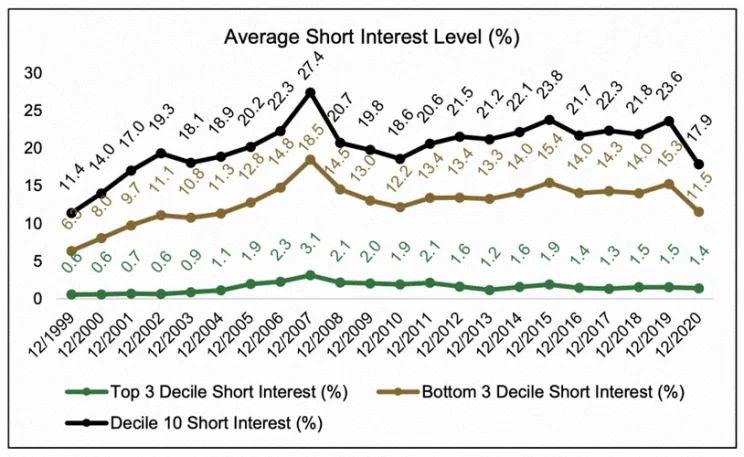
Add us on Google by Editorial Team May. 25, 2026Traders betting against US stocks have gotten increasingly aggressive, and the numbers are starting to look historically extreme. Median short interest across S&P 500 constituents has climbed to roughly 3.7%, a level not seen in 11 years, according to data from Global Markets Investor.
The numbers across indexes tell the same story
The Nasdaq 100 is showing median short interest of approximately 2.7%, its highest reading in six years. But the real standout is the Russell 2000, where median short interest has pushed near 5.0%, a 15-year peak. Small caps, which tend to be more volatile and harder to short profitably, are attracting bearish bets at a pace that hasn’t been matched since the post-financial-crisis era.
The acceleration has been notable since mid-2024, with the pace of new short positioning picking up further into 2026.
AdvertisementWhat a short squeeze actually looks like
Short selling involves borrowing shares, selling them at today’s price, and hoping to buy them back cheaper later. If a stock rises instead of falling, short sellers face mounting losses. At some point, they’re forced to buy shares to close their positions, which itself pushes the price higher. That buying pressure forces other short sellers to cover, creating a feedback loop of rapidly escalating prices.
GameStop in January 2021 remains the most famous modern example, but short squeezes happen regularly across individual stocks and sectors. What makes the current environment unusual is the breadth. We’re not talking about elevated short interest in a handful of meme stocks. We’re talking about historically high bearish positioning across the three most important US equity benchmarks simultaneously.
What this means for investors
The Russell 2000’s 15-year high in short interest deserves particular attention. Small-cap stocks are often viewed as a leading indicator for the broader economy, given their heavier reliance on domestic revenue and more sensitivity to credit conditions. The fact that traders are shorting small caps at the highest rate since roughly 2011 suggests meaningful skepticism about the health of the US economic expansion.
One dynamic worth watching is the relationship between short interest and options markets. When short sellers hedge their positions with call options, it creates additional mechanical pressure that can accelerate moves to the upside. Dealers who sold those calls need to buy shares as prices rise, adding another layer of forced buying on top of the short covering itself.
It’s also worth noting that this buildup in bearish positioning has occurred without any obvious connection to crypto or digital asset markets. The short interest story is firmly rooted in traditional equity dynamics.
Disclosure: This article was edited by Editorial Team. For more information on how we create and review content, see our Editorial Policy.