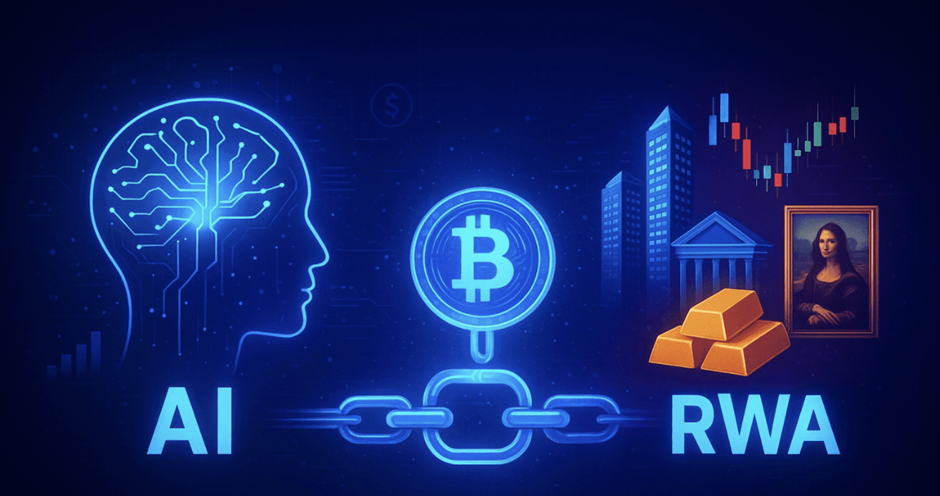
RWA Tokens Exist. Autonomous RWAs Don’t. How Exe’s Execution Layer Fixes That
Why Autonomous RWAs Need Autonomous Execution
 Exe Protocol (Media Room)5 min read·Just now
--
New here? Start with: Start Here: Exe Protocol in 5 Minutes
Making RWAs Autonomous
The RWA market is projected to hit $16 trillion by 2030. Real estate, gold, commodities, securities — all migrating on-chain. The platforms exist: Centrifuge for private credit, RealT for property, Ondo for treasuries. The infrastructure to make them autonomous does not.
Tokenizing a bond is straightforward. Making that digital claim enforce rent collection, pay maintenance, and file taxes autonomously is where the system breaks down.
Bottom line: Most RWAs are stuck. They exist on-chain but cannot function without human babysitting. Every rent collection, every maintenance payment, every tax filing requires a property manager, an accountant, a compliance officer. The token is digital. The operations are still analog.
The gap no one talks about:
The tokens exist. The autonomous economy doesn’t.
No Autonomy = No Economy
The industry has tokenized $35 billion in assets. But settlement is still SWIFT, wire transfers, and property managers. An industry learning to walk is reduced to a crawl on 1970s infrastructure.
You can buy a tokenized apartment. But it cannot pay its own plumber, file its own taxes, or distribute rent — without a property manager taking 20%. You can trade a gold-backed token. But every trade still needs a human to check compliance, sign off, and wire funds.
The RWA revolution stopped at tokenization.
It never reached execution:
Fragmented Marketplaces
Sell stock? NYSE. Sell a RWA token? Ten sketchy websites, three Telegram groups, two apps, all with different prices.
Regulatory Restrictions
Most RWAs are securities by law. Accredited investors only. Intense KYC. Every transaction checked by a human compliance officer.
Valuation Uncertainty
How do you price one token representing a slice of a building? Buyers and sellers disagree, everyone freezes.
Lack of Market Makers
Traditional markets have market makers. RWAs have almost none. DeFi liquidity pools weren’t built for low-volume real-world assets. No one on the other side.
Technological and Operational Frictions
Even with a buyer and liquidity, settlement still takes days. Wire transfers. Banking hours. Manual reconciliation. The market moves at the speed of 1970s infrastructure.
Our approach to RWA autonomy is staged.
One vertical at a time:
Stage One: Friction-Free Trading (The Proof)
We’re building native DEX, Exeswap, to prove the execution layer works under load:
- Fee-free RWA token trading
- Execution Credits gate coverage 0–100%, stepping down under load
- Users pay effectively zero; LPs earn native yield
- The economics are circular, not extractive
Exeswap’s not a generic DEX with RWAs listed. Policy-governed execution infrastructure — compliance, settlement, sustainability are native features. This is critical for an autonomous RWA economy.
Stage Two: Autonomous Asset Management (The Vision)
Once the engine works, we extend it — one vertical at a time. Real estate, gold, or commodities — whichever offers the clearest regulatory framework for our pilot partners. Then we:
- Perfect the stack
- Modularize for expansion
We build on the same execution layer, tailored to our pilot industry’s regulatory demands:
- Compliance hooks
- Yield distribution
- Maintenance routing
- Tax withholding
Then we:
- Extract the patterns
- Expand
Compliance hooks plug into the Policy Oracle Layer:
- KYC from Sumsub or Onfido becomes a policy constraint
- Vault creation unlocks for verified holders only
Not a separate product. Just another policy rule.
The Core Insight
Fee abstraction is the beachhead. Control how value moves programmatically, then layer on any policy constraint — compliance, governance, distribution logic. Whatever the vertical demands.
The progression:
- Settlement layer: Control how money moves
- Policy engine: Control under what conditions it moves
- Composable modules: Adapt to any industry (RWA, AI, DeFi, etc)
The RWA angle: Real estate needs different policies than gold than securities. But the settlement infrastructure is identical. Swap the policy rules.
The broader vision: Any autonomous agent — managing property, trading commodities, coordinating supply chains — needs the same thing:
Programmatic execution with enforceable constraints.
That’s our layer.
The Result
A tokenized building that pays its own bills, files its own taxes, and distributes rent to holders in real-time—no property manager. A gold-backed token that rebalances, trades, and settles autonomously — without a fund administrator.
Rent hits Exe’s Execution Vault → 10% maintenance reserve → 5% agent fee → 85% to token holders. Not a new smart contract. Programmable splitting logic within the same infrastructure.
Maintenance routing uses our existing Agent SDK. The agent detects a leak, checks policy (budget limit: $500, vendor whitelist: Approved plumbers), and executes payment from the vault. Not a separate maintenance app. Just an agent triggering paymaster execution with policy constraints.
Tax withholding: Off-chain calculation (UK: 20%, US: 30% for non-residents) → on-chain execution via paymaster. Not tax software. Pre-transaction logic within the same layer.
1970s Infrastructure Won’t Run a $16 Trillion Market
A tokenized building in Dubai needs to:
- Pay a plumber in Manila: Minutes, not 3 SWIFT days
- Distribute rent to 500 holders across 40 countries: Automated, not 500 wire transfers
- File taxes in 3 jurisdictions: Simultaneous, not sequential
- Rebalance into gold: Programmatic, not waiting for a fund manager to wake up
Legacy rails: Days, $30–50 per action, human sign-off, 9–5. Exe: sub-second, sub-cent, 24/7, programmatic.
Exe: Sub-second, sub-cent, 24/7, programmatically governed.
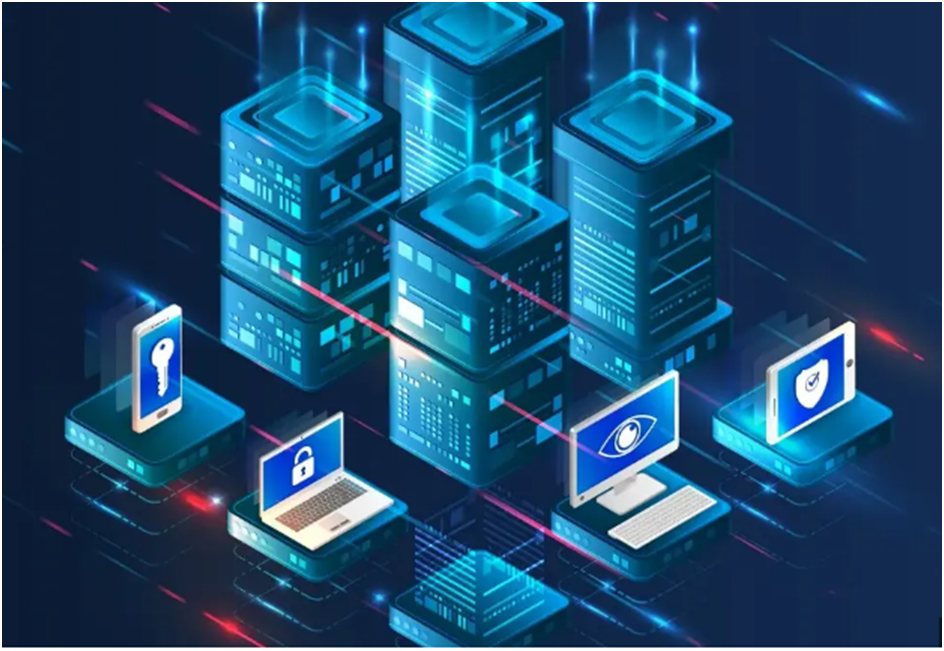
The Architecture (Simple)
Same engine. Same SDK. Same mathematical proof of graceful degradation under load. Just RWA-specific policy rules and interfaces plugged in.
Conclusion: The Tokens Are Ready. The Economy Is Not
Current platforms built the tokens. Not the autonomy. Every rent collection, maintenance payment, tax filing, yield distribution requires human intermediation. Property managers. Accountants. Compliance officers.
The token is digital. The operations are analog.
This is unsustainable: A $16 trillion market cannot run on manual processes and 20% management fees. It will stall under its own weight.
Autonomous RWAs need autonomous execution. Agents that manage assets, settle transactions, enforce compliance, distribute value — all programmatically, all in real-time, all within policy constraints.
That’s the infrastructure we’re building. Not the token. Not the legal wrapper. The execution layer that makes the token function — without human babysitting.
Let’s build it.
Next Steps
Want to see this in production? Follow for launch updates, pilot announcements, and KPI snapshots as we stress-test Exeswap and expand to partner integrations. We’ll share what’s working, what isn’t, and the metrics behind it.
Together, we’re building infrastructure that scales without subsidies.
Connect with Us
Email: [email protected]
Telegram: [Link]
Telegram Ann: [Link]
X (Twitter): [Link]
Bluesky: [Link]