Russia officials warn Putin of unsustainable war spending risks as crypto sanctions tighten
Finance Minister projects a $28 billion budget overrun while the UK targets crypto networks that funneled $90 billion into Russia's economy.
Share
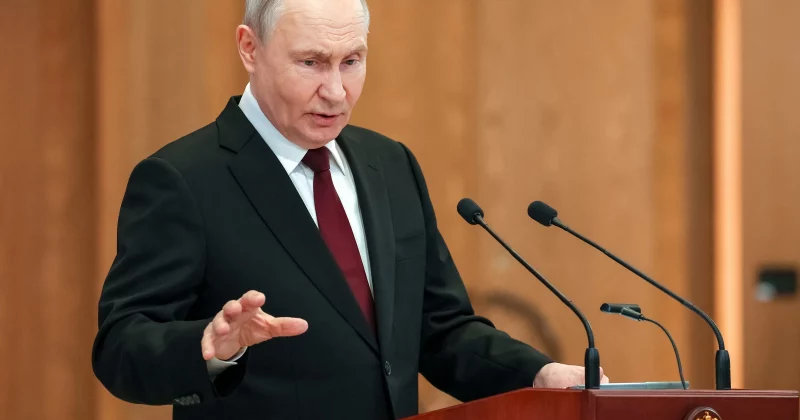
Add us on Google by Editorial Team Jun. 3, 2026Russia’s Finance Ministry and central bank warned Putin that defense expenditures tied to the Ukraine conflict are “unaffordable” and risk triggering a full-blown budget crisis.
Putin told them to find savings everywhere else first. Defense budgets stay untouched, for now.
The numbers behind the warning
Finance Minister Anton Siluanov laid out a stark picture. He projected a budget overrun of at least $28 billion this year, with the federal deficit already blowing past planned levels.
AdvertisementTo plug the gap, Siluanov proposed freezing roughly $40.8 billion in non-war government spending. Think infrastructure, social programs, civil service budgets. Essentially everything that isn’t keeping soldiers in the field or missiles in production.
The warnings didn’t materialize overnight. Back in February 2026, analysts were already predicting that a financial crisis could emerge by summer, driven by dwindling oil revenues and deficits growing faster than anyone in Moscow wanted to acknowledge.
The crypto connection: sanctions evasion at scale
The UK sanctioned 18 crypto-related entities in May 2026, targeting networks that had funneled over $90 billion into Russia’s economy.
The most notable of these was the A7 network, which moved that $90 billion figure. To put that in perspective, $90 billion is roughly the entire GDP of a country like Kenya.
What this means for investors
The immediate implication for crypto markets is regulatory pressure. When governments discover that $90 billion moved through digital asset networks to support a sanctioned war effort, the policy response is never “interesting, let’s see where this goes.” It’s more compliance requirements, more entity sanctions, and more scrutiny on exchanges and OTC desks.
For market participants, the key risk isn’t that crypto gets “banned” over this. It’s that specific protocols, exchanges, or token ecosystems get caught in the crossfire of sanctions enforcement, creating liquidity shocks in corners of the market that investors assumed were safe. Anyone with exposure to privacy-focused tokens, OTC trading desks, or platforms with weak KYC should be reassessing that exposure right now.
Disclosure: This article was edited by Editorial Team. For more information on how we create and review content, see our Editorial Policy.