
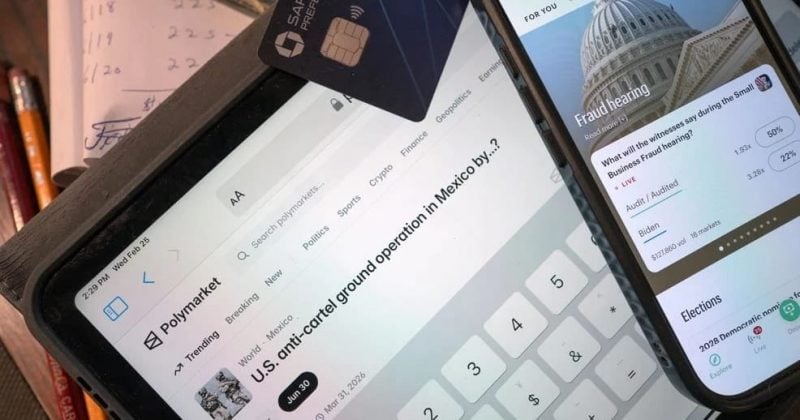
Republicans in Congress monitor prediction markets as scrutiny rises
Rep. Bryan Steil is drafting legislation to ban lawmakers and staff from betting on political outcomes, part of a broader wave of more than ten bills targeting prediction markets since January.
Share
Add us on Google by Editorial Team Jun. 8, 2026The same party that largely let prediction markets flourish is now writing rules to rein them in. Rep. Bryan Steil, a Wisconsin Republican, is drafting legislation that would prohibit current and former members of Congress, their staff, and candidates from placing wagers on electoral and political outcomes through platforms like Kalshi and Polymarket.
The bill is designed to attach to an existing piece of legislation that addresses stock trading among lawmakers. The people who write the laws and shape political outcomes would be barred from profiting off their own influence in prediction markets.
A flood of bills, not a trickle
This isn’t a one-off proposal. Since January 2026, more than ten bills targeting insider trading and prediction markets have been introduced in Congress. Some focus specifically on sports-like betting contracts, while others take a broader swipe at the entire prediction market ecosystem.
The Senate Commerce Committee held hearings in May 2026 that took direct aim at platforms like Kalshi. Lawmakers raised concerns about gambling, public trust, and the potential for these markets to distort political discourse.
AdvertisementThe scrutiny isn’t coming from nowhere. A senator who knows about backroom deals, party strategy, or upcoming endorsements could theoretically place bets on political outcomes with information the public simply doesn’t have. The asymmetry is obvious, and legislators on both sides of the aisle seem to recognize it.
Kalshi’s dominance makes it the obvious target
Kalshi controls approximately 89% of the regulated US prediction market share as of April 2026. The platform experienced substantial growth following the 2024 elections, riding a wave of public interest in real-time odds on political events.
The May Senate Commerce Committee hearings didn’t just raise abstract concerns. Senators questioned whether prediction markets function more like gambling operations than legitimate price discovery mechanisms. If regulators classify certain prediction market contracts as gambling rather than financial instruments, the regulatory framework changes completely.
International events have added fuel to the fire. Turmoil in countries like Venezuela has intensified concerns about how prediction markets interact with real-world political instability.
What this means for investors and traders
The immediate impact of Steil’s proposed legislation would be narrow in scope. Banning lawmakers and their staff from betting on political outcomes removes a small slice of potential market participants.
For Kalshi specifically, holding 89% of the regulated market means any new rules will disproportionately affect its business. Polymarket and similar decentralized platforms may be harder for US regulators to reach directly, but increased scrutiny of the broader prediction market space could push institutional capital toward more cautious positioning.
Traders should watch for whether Steil’s bill successfully attaches to the stock-trading ban legislation, which would give it a faster path to a vote. A change in congressional power could accelerate legislation rather than slow it down, particularly if prediction markets become a visible political issue during campaigns.
Disclosure: This article was edited by Editorial Team. For more information on how we create and review content, see our Editorial Policy.