Real Estate Tokenization Platform Development: Complete Guide for 2026
 Kevingeller10 min read·Just now
--
Real estate has long been considered a stable investment class; however, it comes with persistent limitations, including high entry barriers, slow transactions, and restricted access for global investors. Traditional property deals often involve multiple intermediaries, lengthy documentation, and significant capital commitments, which exclude a large portion of potential participants.
By 2026, tokenization will have emerged as a practical response to these challenges. The idea of dividing property ownership into digital units recorded on a blockchain has gained traction among developers, investment firms, and regulatory bodies. Instead of relying solely on conventional ownership models, tokenization introduces a structured way to represent real estate assets digitally while maintaining legal backing.
A real estate tokenization platform acts as the bridge between physical assets and digital investment environments. It handles asset onboarding, token issuance, investor management, and compliance processes within a unified system. Building such a platform requires an understanding of both real estate operations and blockchain infrastructure, along with careful attention to legal frameworks.
What Real Estate Tokenization Means in Practice
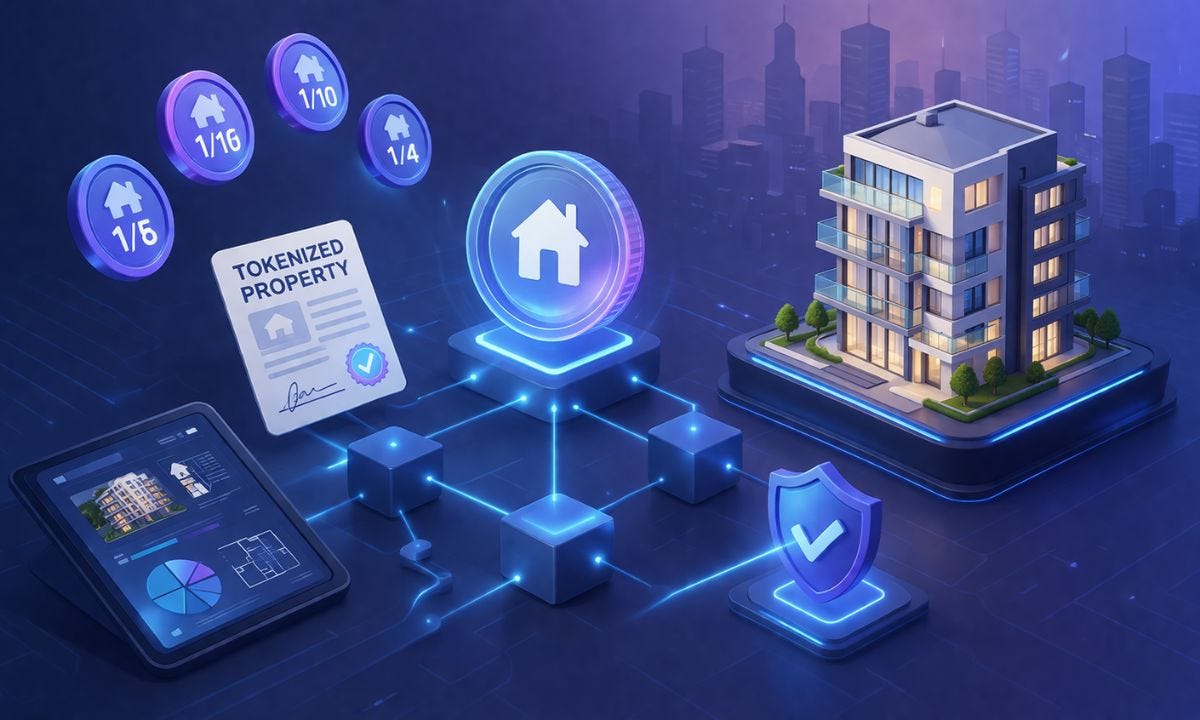
Tokenization involves converting ownership rights of a property into digital tokens that can be issued, transferred, and managed on a blockchain network. Each token represents a defined share in the underlying asset, allowing multiple investors to participate without purchasing the entire property.
In practical terms, a commercial building worth $20 million can be divided into 200,000 tokens priced at $100 each. Investors can purchase any number of tokens, and their returns are linked to rental income or property appreciation. These tokens are stored in digital wallets and recorded immutably on the blockchain.
This approach does not eliminate legal ownership structures. Instead, it works alongside them. Typically, a legal entity such as a Special Purpose Vehicle holds the property, and token holders own shares in that entity. This alignment ensures that digital ownership corresponds with legally recognized rights.
Why Tokenization is Gaining Ground in 2026
Several developments have contributed to the steady growth of tokenized real estate platforms.
First, regulatory clarity has improved in regions such as the United States, Singapore, and parts of Europe. Authorities have introduced frameworks for digital securities, making it possible to issue and trade tokenized assets within defined legal boundaries.
Second, investor behavior has shifted. There is growing interest in fractional ownership models that allow diversification across multiple properties without committing large sums to a single asset. Tokenization supports this by lowering minimum investment thresholds.
Third, digital infrastructure has matured. Wallet technologies, identity verification systems, and blockchain networks are now more reliable and user-friendly compared to earlier years. This has reduced friction for both platform operators and investors.
Finally, real estate developers are seeking alternative funding methods. Tokenization provides access to a broader investor base, including international participants who may not be reachable through traditional channels.
Structural Foundations of a Tokenization Platform
Developing a real estate tokenization platform requires multiple interconnected components that work together to manage assets, users, and transactions.
Asset Onboarding and Verification
The process begins with identifying and evaluating properties suitable for tokenization. This stage involves legal due diligence, valuation assessments, and verification of ownership records. The goal is to ensure that the asset is free from disputes and meets investment criteria.
Once verified, the property is transferred to a legal entity, often an SPV. This entity becomes the issuer of tokens, linking the physical asset with its digital representation.
Blockchain Layer and Data Recording
The blockchain serves as the record-keeping system for token ownership and transactions. Every transfer, issuance, or modification is recorded as a transaction, creating a traceable history.
Public blockchains such as those based on Ethereum are commonly used due to their established ecosystems. However, some platforms prefer permissioned networks to maintain tighter control over participant access and compliance requirements.
Smart Contract Logic
Smart contracts define how tokens operate. They govern issuance, transfer restrictions, and revenue distribution. For example, a smart contract can automatically distribute rental income to token holders based on their ownership percentage.
These contracts must be carefully designed and audited, as errors can lead to financial loss or legal complications. In many cases, developers incorporate compliance rules directly into smart contracts to restrict transfers based on investor eligibility.
Investor Management System
A tokenization platform must manage user identities, investment records, and transaction histories. This involves integrating KYC and AML verification processes to confirm investor legitimacy.
The system also tracks ownership balances, dividend payments, and trading activity. Providing a clear dashboard for investors improves transparency and helps maintain trust in the platform.
Payment Infrastructure
Handling payments is a critical aspect of platform development. Investors may use fiat currencies, stablecoins, or other digital assets to purchase tokens.
Platforms often integrate with banking systems and payment gateways to support deposits and withdrawals. Settlement processes can be automated through smart contracts, reducing manual intervention and delays.
Methods for Developing a Tokenization Platform
There is no single approach to building a real estate tokenization platform. The choice depends on available resources, technical expertise, and business objectives.
Method 1: Full Custom Development
This method involves designing and developing every component from the ground up. It includes creating proprietary smart contracts, building a custom blockchain interface, and integrating compliance systems internally.
This approach provides complete control over platform functionality. It allows developers to implement unique features such as custom trading mechanisms or specialized investment structures. However, it requires significant investment in time, expertise, and financial resources.
Organizations choosing this method typically have access to experienced blockchain developers and legal advisors who can manage regulatory requirements.
Method 2: Framework-Based Development
Framework-based development uses existing tokenization protocols and tools as a foundation. These frameworks provide pre-configured smart contracts, compliance modules, and token standards.
Developers can adapt these components to suit their platform requirements while reducing development time. This method is particularly useful for startups aiming to enter the market quickly without building everything from scratch.
The trade-off lies in limited flexibility. While frameworks cover common use cases, they may not support highly customized investment models or advanced features.
Method 3: White-Label Platform Integration
White-label solutions offer ready-made platforms that can be branded and deployed with minimal technical effort. These solutions typically include user interfaces, backend systems, and compliance tools.
This method is suitable for real estate companies that want to offer tokenized investments without investing heavily in technology development. It allows rapid market entry but may involve dependency on third-party providers for updates and maintenance.
Customization options are often restricted, which can limit differentiation in a competitive market.
Method 4: Hybrid Development Approach
The hybrid method combines custom development with third-party services. For example, a company may develop its own smart contracts while using external providers for identity verification and payment processing.
This approach balances flexibility and efficiency. It allows developers to focus on critical components while outsourcing non-core functions to specialized providers.
In 2026, many platforms will adopt this method due to its practical balance between cost, speed, and control.
Token Design and Financial Structure
Designing the token model involves defining how value is represented and distributed among investors.
Equity-Based Tokens
These tokens represent ownership shares in the property or its holding entity. Investors receive a portion of the rental income and capital gains.
Debt-Based Tokens
Debt tokens function similarly to bonds. Investors lend money for property acquisition or development and receive fixed returns over time.
Revenue-Sharing Models
Some platforms use revenue-sharing tokens, where returns are linked to property performance rather than ownership.
Each model has different risk levels and appeals to different types of investors.
Pricing and Distribution
Initial pricing is based on property valuation, expected returns, and market conditions. Platforms may conduct private sales, public offerings, or staged releases of tokens.
Secondary market trading allows prices to fluctuate based on demand, liquidity, and property performance.
Secondary Markets and Liquidity Mechanisms
Liquidity has always been a major limitation in real estate investment. Tokenization attempts to address this by introducing secondary markets where investors can buy and sell tokens after the initial offering.
In practice, secondary trading is not as straightforward as in public stock markets. Regulatory requirements often impose restrictions on who can trade, how long tokens must be held, and which platforms can facilitate transactions.
Despite these constraints, several models have emerged.
Internal Marketplace Model
Some platforms operate their own trading systems where verified users can list and purchase tokens. These marketplaces maintain control over compliance checks and transaction approvals.
While this model offers greater oversight, it may limit liquidity due to a smaller pool of participants.
Exchange-Based Trading
Another approach involves listing tokens on regulated digital asset exchanges. These exchanges provide broader access to investors and often have higher trading volumes.
However, listing requirements can be strict, and platforms must ensure that tokens meet all regulatory and technical standards.
Peer-to-Peer Transfers
Certain platforms allow direct transfers between investors, subject to compliance rules enforced through smart contracts. This method offers flexibility but requires robust identity verification to prevent unauthorized transactions.
Liquidity Enhancement Strategies
To improve trading activity, platforms may adopt several strategies:
- Introducing market makers to provide buy and sell orders
- Offering incentives for early participants
- Structuring tokens with periodic redemption options
- Aggregating multiple properties into diversified portfolios
These approaches aim to reduce friction and encourage consistent trading activity.
Revenue Models for Tokenization Platforms
A sustainable business model is critical for long-term platform operation. Tokenization platforms generate revenue through multiple channels, depending on their structure and services.
Token Issuance Fees
Platforms typically charge issuers for listing properties and creating tokens. These fees may cover legal structuring, technical deployment, and compliance setup.
Transaction Fees
Every trade conducted on the platform may include a small fee. This applies to both primary sales and secondary market transactions.
Asset Management Fees
Some platforms take on property management responsibilities, including tenant coordination and maintenance oversight. In such cases, they earn a percentage of rental income.
Subscription Models
Platforms offering advanced analytics, reporting tools, or institutional services may charge subscription fees to users.
Custody and Wallet Services
Providing secure storage solutions for digital assets can also serve as a revenue source. Institutional investors often prefer custodial services that meet regulatory standards.
Real-World Case Studies
Examining existing implementations provides insight into how tokenization platforms function in practice.
Case Study 1: Commercial Property Tokenization
A European firm tokenized a portfolio of office spaces valued at over €100 million. The assets were placed under an SPV, and tokens were issued to investors across multiple countries.
Investors received quarterly rental income distributions, and the platform facilitated limited secondary trading through an internal marketplace. The project demonstrated how tokenization can attract international capital while maintaining regulatory compliance.
Case Study 2: Residential Development Funding
A property developer used tokenization to raise funds for a residential project. Instead of relying solely on bank financing, the developer issued tokens representing future revenue from property sales.
This approach reduced dependency on traditional lenders and allowed smaller investors to participate in early-stage development.
Case Study 3: Hospitality Asset Fractionalization
A luxury hotel chain divided ownership of one of its properties into digital tokens. Investors were given a share of annual profits and limited usage rights.
This model combined investment with experiential benefits, attracting a different category of participants compared to conventional real estate investments.
Technology Stack Considerations
Choosing the right technology stack is a critical step in platform development. Decisions made at this stage affect the performance, security, and scalability of operations.
Blockchain Selection
Developers must evaluate factors such as transaction speed, cost, and ecosystem support. Public networks provide openness and interoperability, while private networks offer greater control.
Smart Contract Development Tools
Programming languages and frameworks used for smart contract development must support security auditing and testing. Errors in contract logic can have irreversible consequences.
Backend Infrastructure
The backend system handles data processing, user management, and integration with external services. Cloud-based infrastructure is commonly used to support scalability and reliability.
Frontend Design
User interfaces must cater to both experienced investors and newcomers. Clear presentation of financial data, intuitive navigation, and responsive design are essential.
Security Measures
Security must be integrated at every level, including:
- Encryption of sensitive data
- Multi-factor authentication
- Regular system audits
- Incident response planning
Future Outlook Toward 2030
Looking ahead, real estate tokenization is expected to expand further as technology and regulation continue to mature.
Institutional participation is likely to increase, bringing larger assets into tokenized markets. Governments may introduce standardized frameworks, reducing uncertainty and encouraging broader adoption.
Integration with decentralized finance systems may also play a role, allowing tokenized real estate assets to be used as collateral or included in diversified investment portfolios.
Advancements in digital identity systems could simplify compliance processes, making it easier for investors to participate across multiple platforms.
At the same time, competition among platforms will intensify. Success will depend on reliability, regulatory alignment, and the ability to provide meaningful value to both issuers and investors.
Final Conclusion
Real Estate Tokenization Platform Development represent a shift in how property investment is structured and accessed. By dividing ownership into digital units and managing transactions through blockchain systems, these platforms open new pathways for participation while maintaining ties to traditional legal frameworks.
Developing such a platform requires coordination across multiple domains, including technology, law, finance, and user experience. From selecting the appropriate development method to designing token economics and compliance systems, each decision influences the platform’s effectiveness.
As the market continues to evolve, platforms that focus on reliability, regulatory alignment, and investor trust are more likely to sustain long-term growth. Tokenization does not replace traditional real estate systems but adds a new layer of accessibility and flexibility that aligns with the digital economy.