Member-only story
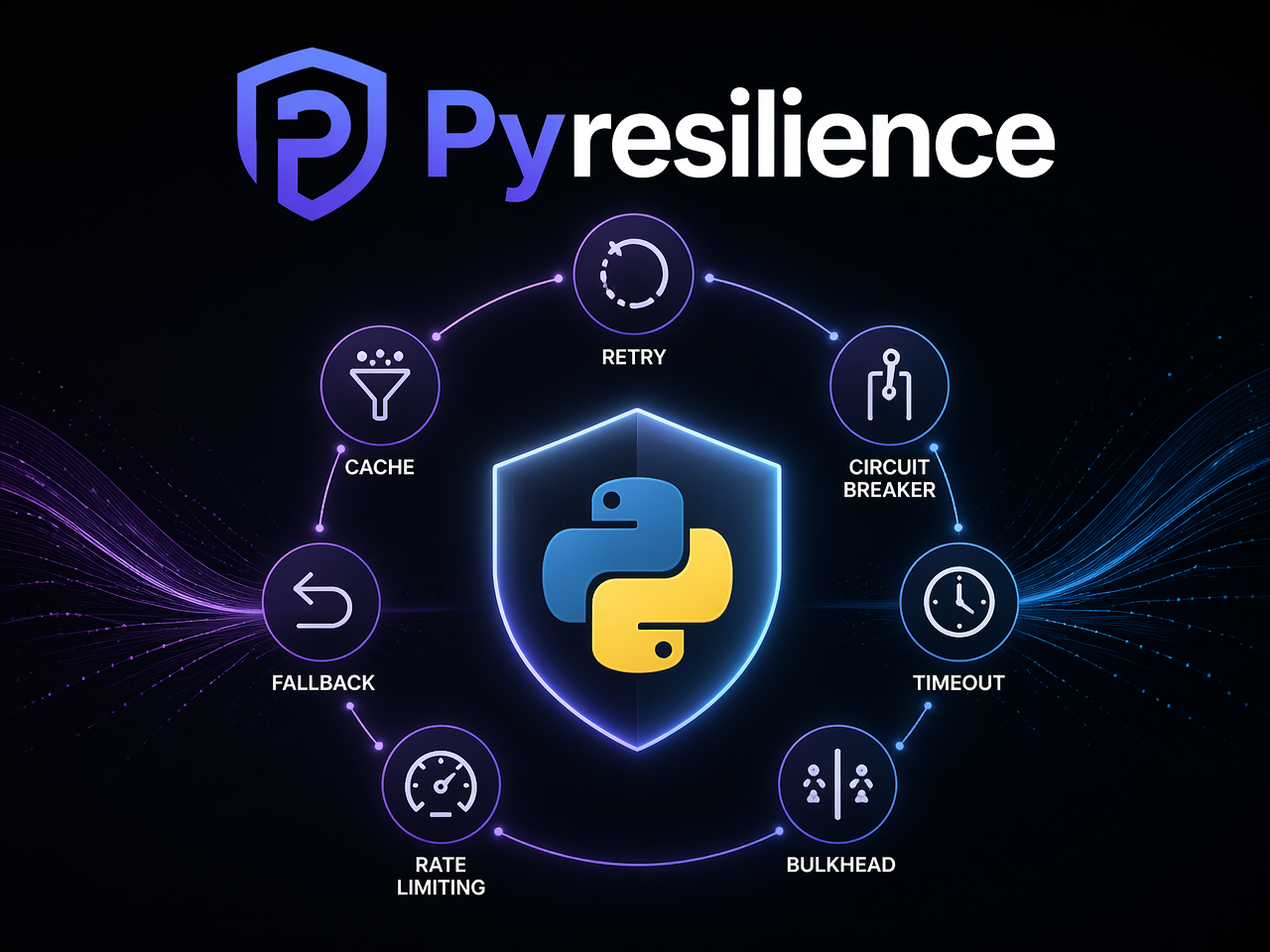
Pyresilience: One Decorator. Seven Patterns. Zero Excuses.
Tenacity, pybreaker, hand-rolled timeouts. They don’t talk to each other. That gap is your next incident.
 Pravash7 min read·4 days ago
--
A retry loop with no circuit breaker sent 847 requests to a dead payment API in 90 seconds. The API came back up — and immediately collapsed again under the hammering. The incident lasted four hours. The root cause wasn’t the API going down. It was our own retry logic making the recovery impossible.
The fix was one decorator.
That’s not a hypothetical. That’s the kind of incident that happens when you wire resilience patterns together manually — tenacity for retries, pybreaker for circuit breakers, custom code for timeouts and fallbacks — and none of them know what the others are doing.
By the time most teams have a real resilience stack, they have five libraries, three custom wrappers, and a requirements.txtthat looks like a design mistake.
There’s a library that replaces all of it. And it’s 10.4x faster than tenacity on the happy path.
The Problem With How We Handle Failures Today
Distributed systems fail. That’s not pessimism — it’s physics. A flaky API, a database timeout, a downstream…