Last week, we saw three high-quality manuscripts rejected by AI screening bots before a human editor even saw them. The ‘Gatekeepers’ have changed, and if you’re using 2024 strategies, you’re already invisible.
This isn’t just ‘editors being tougher.’ The system is changing.
In January 2026, the International Association of STM Publishers (STM) released a report with a blunt message: Scholarly publishing has shifted from a trust-first model to a verification-first model. What used to be handled by peer reviewers and occasional post-publication corrections now requires systematic screening, dedicated integrity teams, and cross-publisher collaboration.
For authors, the result is a new reality:
Your manuscript isn’t only being evaluated. It’s being verified.
That’s the story behind the rejection spike many researchers describe as ‘random’ or ‘unfair.’ It often isn’t random. It’s procedural.
Let’s break down what’s actually changing—and what you can do to stop losing good work to avoidable red flags.
Why the system changed: fraud scaled, so screening scaled
STM points to two forces reshaping publishing:
· Volume: the number of papers has surged, stretching editorial capacity.
· Industrialized manipulation: not just plagiarism or isolated misconduct, but paper mills, coordinated networks, and AI-enabled fabrication that can produce plausible manuscripts at scale.
Publishers didn’t respond by asking peer reviewers to be more careful. They responded like a platform under attack: they built infrastructure.

That infrastructure includes dedicated research integrity teams, technology stacks that screen submissions at scale, and shared intelligence across the sector.
What authors will notice first: publishing now has checkpoints
The biggest day-to-day change for authors is not a new policy document. It’s the workflow.
Integrity checks now happen at multiple points, not just when an editor suspects something.
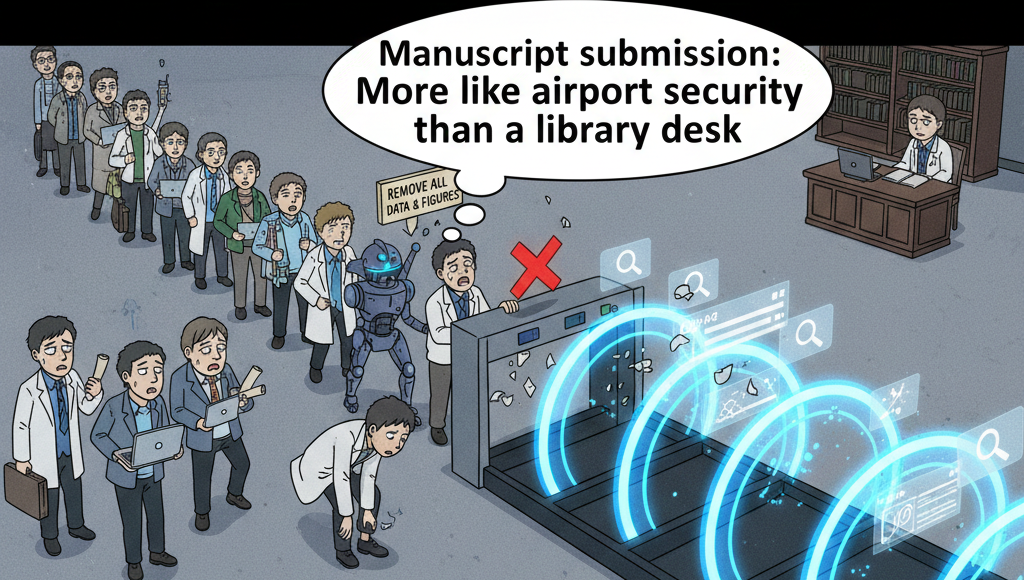
In plain terms: the submission pipeline is being treated more like airport security than a library intake desk.
Most authors will pass smoothly—but everyone goes through the scanner.
What gets scanned often includes:
· Identity signals (ORCID, emails, affiliation consistency)
· Authorship signals (contribution clarity, approvals, conflicts)
· Content signals (text patterns, scope fit, methods clarity)
· Figure signals (duplication/manipulation indicators, provenance)
· Citation signals (odd clusters, retracted references, unusual patterns)
Even if your science is real, weak documentation can look like a risk.
The ‘shadow layer’ you can’t ignore: cross-publisher detection
Here’s the part many authors don’t realize: integrity checks are no longer only inside one publisher.
Shared infrastructure and community reporting can surface patterns across venues. That makes industrial manipulation harder to hide.
It also means honest authors need to be cleaner than ever about the basic signals that trigger screening.
The uncomfortable critique: integrity infrastructure can protect science—and still punish honest authors
Integrity investment is necessary. But authors are right to worry about collateral damage.
Screening systems create two predictable problems:
· False positives: automated tools flag patterns; humans then review. That review takes time and sometimes gets it wrong.
· A documentation tax on honest authors: the cost of proving your work is real is rising, but institutions rarely give time, training, or support for it.
This is where the new publishing world can feel unfair: not because integrity is bad, but because the burden is unevenly distributed.
The fix isn’t to fight screening. The fix is to publish with verification in mind.
How to avoid preventable rejections in 2026 (without playing games)
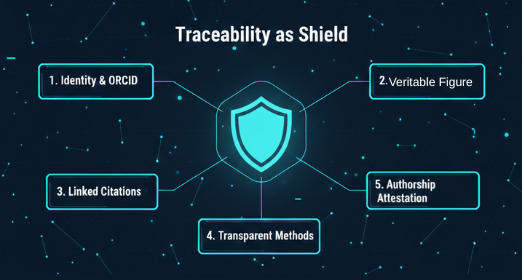
Here is a practical playbook—simple, repeatable, and aligned with how publishers are tightening workflow checks:
· Treat identity as part of the manuscript: keep ORCID current and consistent; use a stable institutional affiliation format; prefer institutional email where possible.
· Lock authorship clarity early: confirm author approvals before submission; document who did what; keep conflict and funding statements precise, not generic.
· Build a figure provenance folder: save raw images, intermediate files, and final figures; keep a short log of what changed, when, and why.
· Don’t let citations become the weak link: remove retracted references; avoid citation padding; make sure citations match claims.
· Make methods auditable, not just readable: write so that an editor can see your work could be independently understood and checked.
What this means for the next 12–24 months
Expect three outcomes:
· More desk rejections for risk and fit, not only quality.
· More requests for proof of process (figures, methods, approvals).
· More coordination that makes manipulation harder to hide—and increases screening pressure on everyone.
The authors who win in 2026 won’t be the ones who write the most. They’ll be the ones who publish with traceability.
A closing thought
Publishing isn’t getting unfair. It’s getting defensive—because the scholarly record is now operating under adversarial pressure.
The question is whether this new integrity infrastructure evolves into a fair trust layer that protects honest authors—or into a risk management machine where researchers absorb the friction.
Either way, in 2026, the manuscript isn’t just evaluated. It’s investigated.
Publishing is No Longer About Trust It’s About Verification (And Why Your Paper Might Be Flagged) was originally published in DataDrivenInvestor on Medium, where people are continuing the conversation by highlighting and responding to this story.