
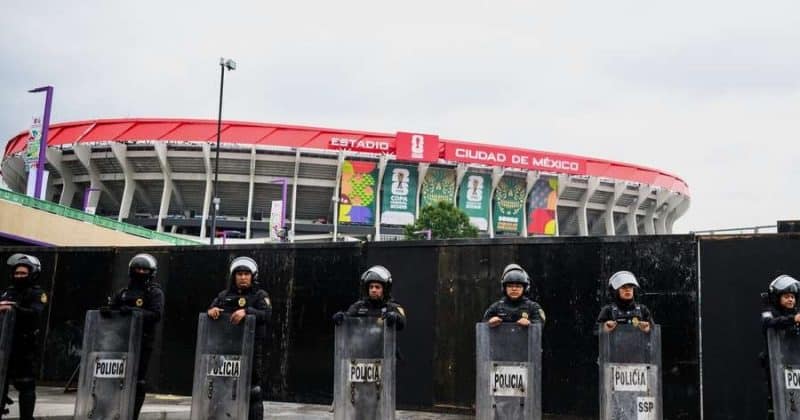
Protesters block access to Azteca Stadium ahead of World Cup opener
Thousands of teachers and activists are using the global spotlight of the 2026 FIFA World Cup to demand higher wages and protest government spending priorities in Mexico City.
Share
Add us on Google by Editorial Team Jun. 9, 2026Two days before the biggest sporting event on the planet kicks off in Mexico City, thousands of demonstrators have turned the streets surrounding Estadio Azteca into a staging ground for grievances that have nothing to do with football. Roads leading to the iconic venue, which is set to host the June 11 opening match between Mexico and South Africa, were blocked by protesters demanding the government pay attention to teachers, not tournaments.
The protests, organized primarily by the National Coordination of Education Workers (CNTE) and various activist groups, have been building since early June. And their timing is not accidental.
A week of disruption before the world arrives
The demonstrations peaked between June 3 and June 9, with protesters flooding major thoroughfares including Insurgentes and Paseo de la Reforma, two of Mexico City’s most critical arteries.
AdvertisementThe CNTE called for a national strike on June 1. Their central demand: a 100% pay increase for educators.
But the protests aren’t purely about pay. Demonstrators have framed their movement as a direct counter-narrative to what they see as a government obsessed with World Cup optics while ignoring gang violence, forced evictions, and deteriorating labor conditions.
The damage hasn’t been limited to blocked roads. FIFA sculptures installed along Paseo de la Reforma, part of the tournament’s fan-facing infrastructure, have reportedly been damaged during demonstrations.
The political tightrope for Sheinbaum
President Claudia Sheinbaum’s administration finds itself in an unenviable position. The 2026 World Cup, co-hosted by the US, Mexico, and Canada, represents a once-in-a-generation opportunity to showcase Mexico on the world stage. The opening ceremony and first match at Azteca Stadium are supposed to be the crown jewels of Mexico’s hosting duties.
The government has made attempts to engage in dialogue with protest organizers, but those efforts haven’t produced results. Demonstrations have continued unabated, and organizers have warned of potential further disruptions during World Cup events themselves.
What this means for investors and the broader picture
For investors with exposure to Mexican tourism, infrastructure, and consumer sectors, the protests add a layer of risk. Mexico City’s hospitality industry was expecting a massive windfall from World Cup visitors. Blocked roads, damaged installations, and images of unrest on international news broadcasts could dampen that enthusiasm, even if the matches themselves proceed without incident.
Disclosure: This article was edited by Editorial Team. For more information on how we create and review content, see our Editorial Policy.