Privacy Talk with Michael Mainelli, Chairman at Z/Yen Group: Why did you start to work in the finance and technology field?
 Kohei Kurihara5 min read·Just now
--
“This interview recorded on 14th April 2026 is talking about financial history and technical data protection.”
Kohei is having great time discussing financial history and technical data protection.
This interview outline:
- Introduction
- Why did you start to work in the finance and technology field?
Kohei: Okay. So Hello everyone. Thank you for joining this privacy talk. I’m very privileged to have an interview today. Mr. Michael, he’s leading the financial industry in London. So, Michael, thank you for joining us today.
Michael: Well, delighted to be here. Kouhei-san, it’s always an honor to have the opportunity to use technology to speak to people all over the world.
- Introduction
Kohei: Yeah, absolutely. So first of all, I would like to share his profile.
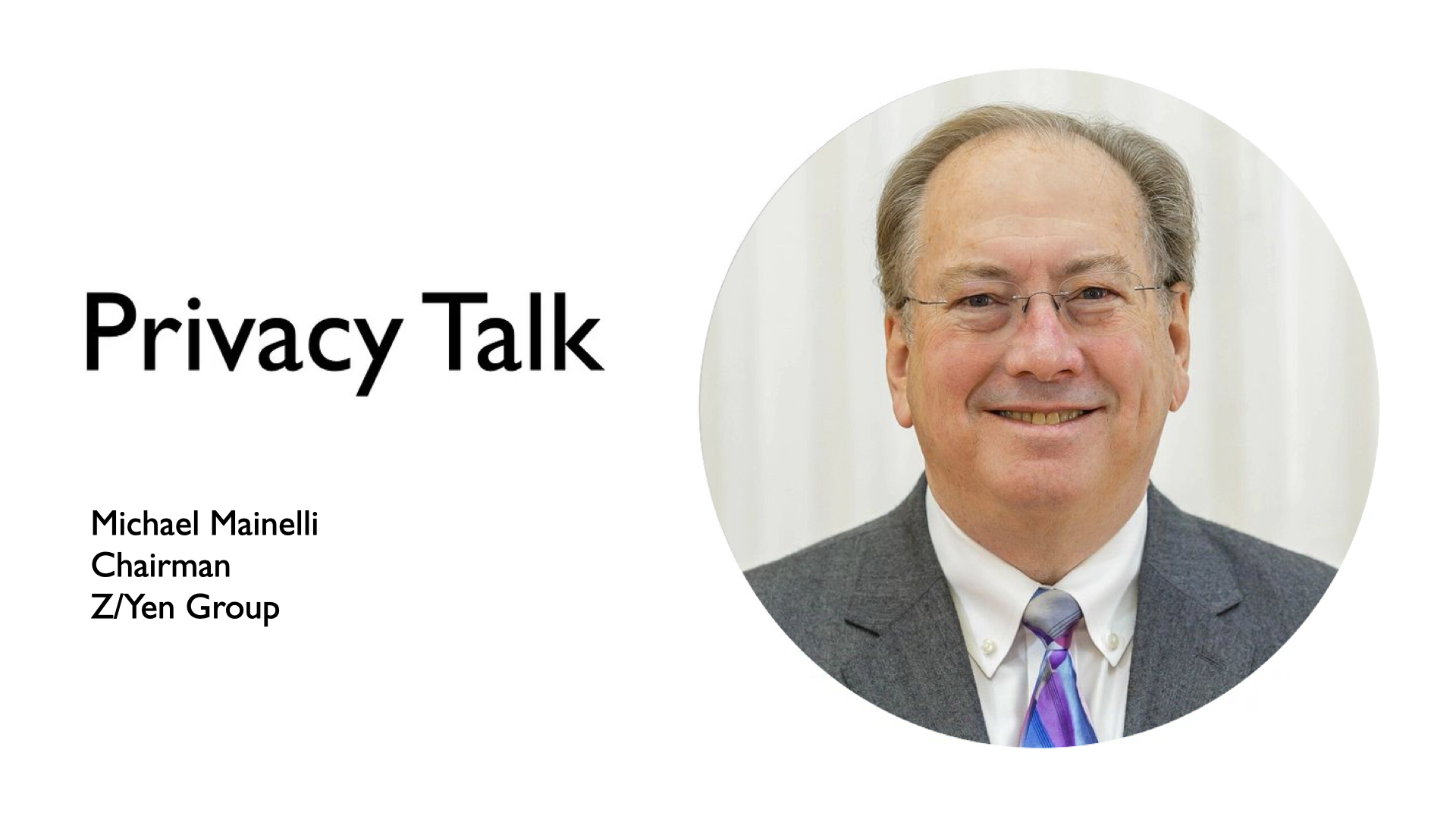
Professor Michael Mainelli is a scientist, economist and former Lord Mayor of London, known for his work at the intersection of finance, technology and public policy.
Professor Michael Mainelli is a scientist and economist with a distinguished career spanning research, finance, technology, and public service.
He is recognised for his work promoting societal progress through better decision-making, innovation, and financial systems. Michael began his career in aerospace and cartography before moving into technology and finance.
He was a senior partner at BDO Binder Hamlyn, and later served as Corporate Development Director at the UK Ministry of Defence’s Defence Evaluation & Research Agency, where he led the commercialisation of government R&D.
He went on to work in investment banking at Deutsche Morgan Grenfell before founding Z/Yen in 1994, the City of London’s leading commercial think tank. Z/Yen is best known for producing the Global Financial Centres Index, the Global Green Finance Index, and the Smart Centres Index.
His areas of expertise span finance, sustainability, innovation, and systems thinking. His academic affiliations include fellowships at Gresham College, King’s College London, and Birkbeck College, and visiting professorships at University College London and City St George’s University of London.
He served as Lord Major of London (2023–2024) and Sheriff (2019–2021), is an Alderman of the City of London, and is active across 14 livery companies. He is past Master of the Worshipful Company of World Traders and supports a number of environmental and educational charities.
His professional contributions include work on banking and pension reform, ESG research, intellectual property markets, cyber risk, and standards governance.
Michael has also led public initiatives on AI ethics, space sustainability, and long-term financial systems — including Long Finance and the London Accord.
As a keynote speaker, he is known for combining deep subject matter knowledge with real-world application, drawing on his experience across technology, economics and policy.
So that was remarkable to join us today. Thank you. Michael.
Michael: Pleased to be here, very much.
Kohei: Thank you. First of all, I’d like to explore your background and profile. So I’m personally very interested in that you work in the finance and the technology field. So could you share about the history? How did you get into this space?
- Why did you start to work in the finance and technology field?
Michael: As you indicated, I had a wide academic background, ranging really from government and social sciences through to the hard sciences, mathematics, statistics, and I had always looked at the systems approach to problem solving during my career at BDO.
In particular, we developed a methodology for problem solving based on decision theory evolution, and really looking at, how do you solve holistic problems.
And I felt that it would be good to have a think tank devoted to that. And I was fortunate that there were five other people who felt the same way. So we set up in 1994, the motto was, “if we could help the world make better decisions every day, the world would be a better place”. 32 years later, we’re still trying to do that.
Because of our backgrounds, of course, a lot of our focus is on two areas, really, Science & Technology, and Economics & Finance.
In the science and technology field, we still do some hard research in areas like electronics, quantum computing, AI, which I know AI is very popular right now, but we were building AI systems 32 years ago.
I was building AI systems in the 70s. So these are long standing themes for us. When it comes to economics and finance, I think our biggest area there has been on trying to look at ways of evaluating the long term.
So you mentioned the London Accord. That was an enormous project here in London involving 125 investment researchers for two years between 2005 and 2007 looking into the investability of climate change.
That’s a long time ago, taking that view. We’ve also done things like policy performance bonds. These are bonds which pay a higher interest rate of a government, doesn’t mean a policy.
We’ve been fortunate in having such bonds issued in Chile, Uruguay, Thailand and Slovenia.
And these bonds have typically been about climate change, although the Malaysian government actually issued one on education, so an investor can hedge knowing that the government is committed to the policy.
To be honest, one could argue that inflation linked bonds are the same thing. The government says inflation is going to be x, say, 2% if inflation is 5% it pays you 3% more.
But these policy performance bonds in the green area, which are typically about the percentage of share of renewables in the grid, or decrease in carbon emissions, allow green investors to remove some of the government political risk.
So those are the two areas that we tend to work in. We’ve got a lot of ongoing projects at the moment, some of them definitely in the AI field, because it’s become popular.
But as you say, we still run the three largest commercial center evaluations in the cities, the global financial centers, the global green finance and the smart centers index.
Kohei: That sounds very nice. So you founded your own Think Tank, as I mentioned on the profile. So could you share a little bit about the work of the think tank, and why did you started of this think tank in 1994?
Thank you for reading and please contact me if you want to join interview together.
Privacy Talk is the global community with diversified expert, and contact me below Linkedin if we can work together!
Privacy by Design Lab - データを切り口にこれからの時代を探索する
Joined a major printing company in 2004. After engaging in product development of packaging materials in the technology…
privacybydesign.jp