Prediction Markets Could Be the Next SaaS Opportunity — Here’s Why
 Arun Kumar Balusamy3 min read·Just now
--
A few months ago, I came across a simple question online:
“Will this event happen or not?”
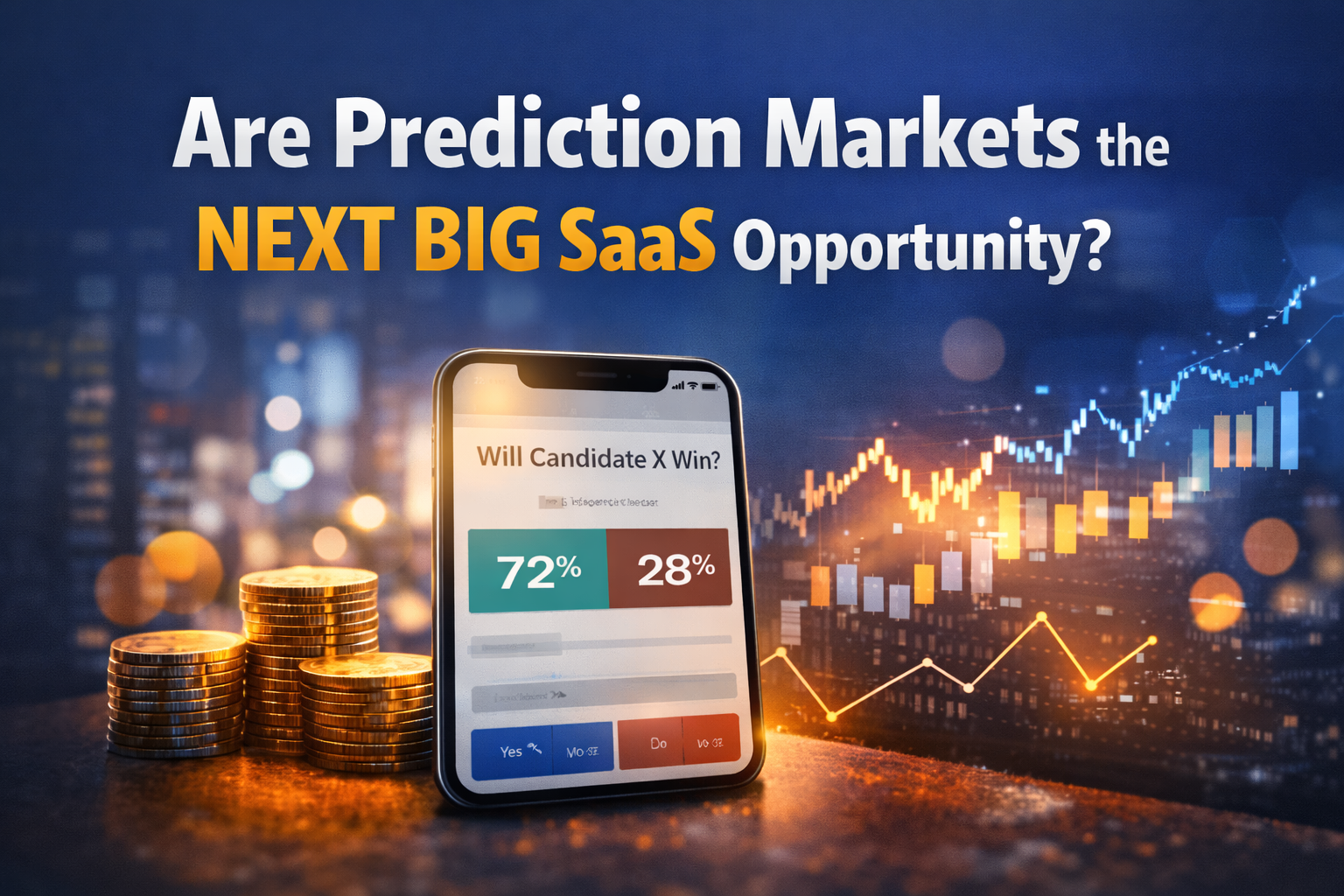
Under it, there were numbers constantly changing — 63%, 68%, 71%…
At first, it looked like just another poll.
But then I realized something different was happening.
People weren’t just voting.
They were putting money behind their opinions.
And suddenly, that number wasn’t just a guess — it was a real-time reflection of what people actually believed.
That’s when it clicked.
This isn’t just a market.
This is a product idea.
Not Just Trading… Something More
Most people still look at prediction markets as a niche thing.
Something traders use.
Something crypto people experiment with.
But if you zoom out a little, you’ll see something else:
👉 It’s actually a decision-making engine.
Think about it.
Instead of asking:
- “What do people think?”
You’re asking:
- “What are people willing to bet on?”
That small shift changes everything.
Because now you’re not collecting opinions.
You’re collecting conviction.
And that’s incredibly valuable for businesses.
Where SaaS Comes Into the Picture
Now imagine this:
What if a company could plug this system directly into their product?
- A startup testing future features
- A media company driving user engagement
- A crypto platform building community-driven insights
They don’t need to build it from scratch.
They just need the right infrastructure.
That’s exactly where something like a
👉 https://nexcenz.com/polymarket-clone-script/
starts making sense.
Instead of spending months building complex logic,
you get a ready-to-launch system that already understands how prediction markets work.
This is how most SaaS waves begin —
not with invention, but with simplification.
The Real Shift: From Data to Decisions
Traditional SaaS tools are great at one thing:
They tell you what already happened.
- Analytics dashboards
- Reports
- Charts
But prediction markets flip that completely.
They focus on:
👉 What is likely to happen next
And in today’s world, that’s what everyone actually wants.
Not just insights.
Not just data.
But direction.
Why People Actually Stick Around
Let’s be honest.
Most SaaS products are useful… but forgettable.
You log in, check something, log out.
Prediction markets feel different.
Because now users are:
- Thinking
- Competing
- Reacting
- Taking positions
It creates a loop.
You don’t just use the product —
you come back to see if you were right.
That kind of engagement is hard to build…
but once it’s there, it’s powerful.
A Business Model That Just Makes Sense
Here’s another interesting part.
This isn’t limited to one revenue stream.
You can build around:
- Transaction fees
- Premium features
- Market creation access
- Community-driven events
It’s not just SaaS.
It’s a mix of:
👉 SaaS + Fintech + Community
And that combination is where a lot of modern startups are heading.
Why This Space Still Feels Early
Even with all this potential, prediction markets are still not everywhere.
There are reasons:
- Regulations are still evolving
- Not every market gets enough participation
- Trust takes time to build
But honestly, that’s what makes it interesting.
Because if everything was already figured out,
there wouldn’t be much opportunity left.
The Bigger Opportunity Most People Miss
Here’s what stood out to me the most:
Prediction markets are not just tools.
They’re a way to capture collective thinking in real time.
And when you package that into a product…
You’re not just building software anymore.
You’re building something that answers questions like:
- “What will happen next?”
- “What does the crowd really believe?”
That’s a different kind of value.
Final Thought
If you had told someone 10 years ago that:
- Payments would become APIs
- Communication would become SaaS
- Infrastructure would become plug-and-play
It would’ve sounded strange.
But that’s exactly what happened.
Prediction markets feel like they’re at a similar stage right now.
Still early.
Still evolving.
But clearly moving somewhere.
And for builders, founders, or even marketers…
This might not just be a trend to watch.
It might be something worth building on.