PCI DSS Demystified: How Businesses Can Achieve Payment Security Without Losing Agility
In today’s digital world, securing payment data is not just a legal requirement.
 Ritika Prajapati3 min read·Just now
--
It is essential for protecting your business and customers. Every time a customer enters their credit card information online, they are trusting your company to keep it safe. Failing to do so can result in financial loss, damage to your reputation, and legal consequences. This is where PCI DSS comes in. But what is it, and how can businesses follow it without slowing down operations?
What is PCI DSS?
PCI DSS stands for Payment Card Industry Data Security Standard. It is a set of rules designed to ensure that all companies that accept, process, store, or transmit credit card information keep that information safe. The standard was created by major card networks like Visa, MasterCard, and American Express and applies to businesses of all sizes that handle card payments.
The standard focuses on six main goals:
Build and maintain a secure network
Protect cardholder information
Manage vulnerabilities
Control who can access information
Monitor and test systems regularly
Maintain clear security policies
Following these rules is not just about avoiding fines. It is also about building trust with your customers.
Common Misconceptions About PCI DSS
Many small and medium sized businesses have wrong ideas about PCI DSS:
“It is only for big banks or online giants.”
This is not true. Any business that handles card payments, even a small online shop, needs to follow these rules.
“Following it slows down the business.”
While implementing security measures takes effort, with the right approach, it can be integrated smoothly without affecting operations.
“It is just a checklist.”
PCI DSS is not a one-time exercise. It is an ongoing security program that protects your business and customers.
Understanding these myths helps companies approach PCI DSS strategically rather than seeing it as a burden.
Practical Steps to Implement PCI DSS Without Slowing Operations
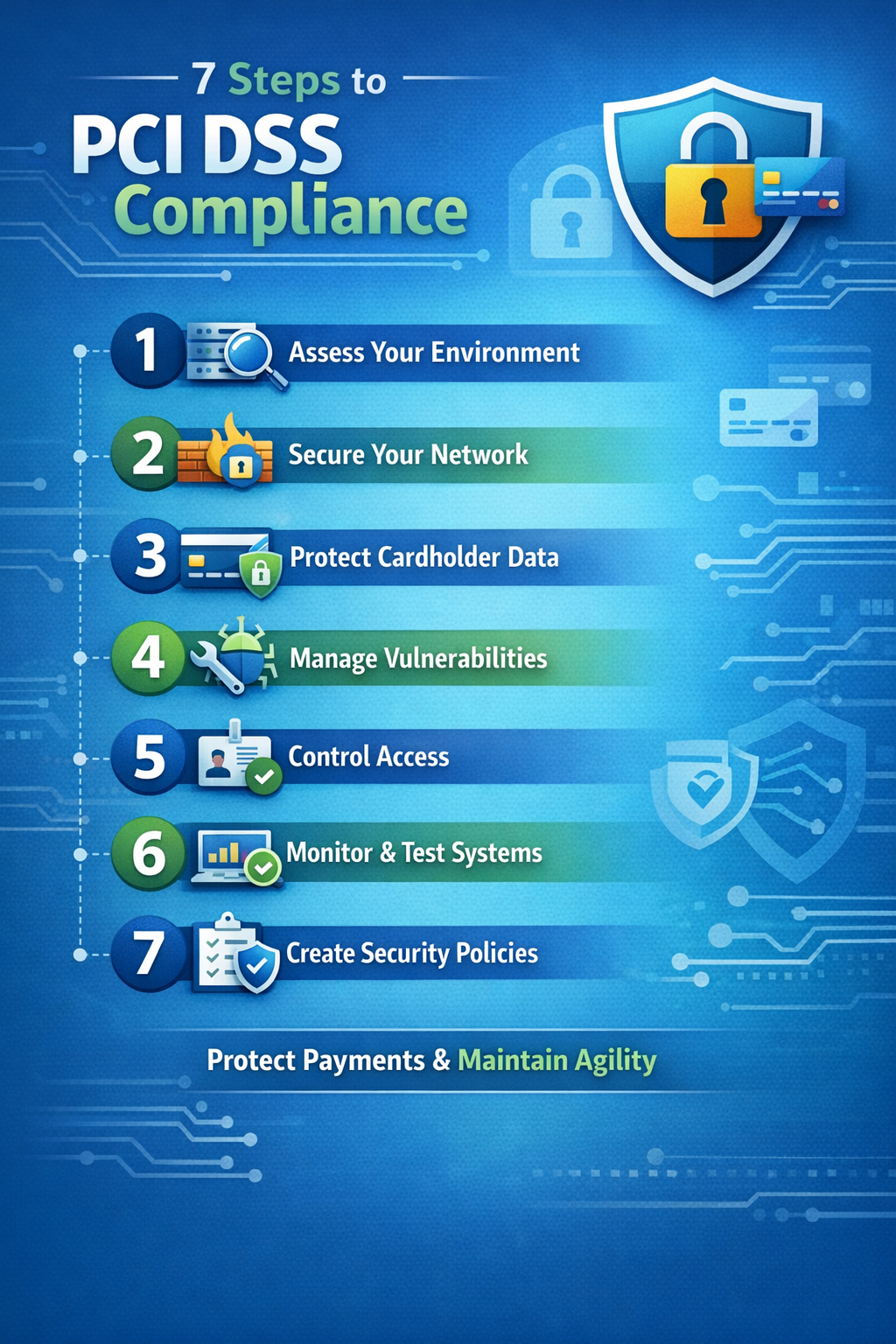
Meeting PCI DSS requirements may seem challenging, but it can be done in simple steps:
Assess Your Environment
Identify all systems, applications, and processes that handle card information. This is called the cardholder data environment. Keeping it limited makes compliance easier.
Secure Your Network
Use firewalls, secure routers, and proper network setup to protect sensitive data.
Protect Cardholder Information
Encrypt card information both when it is stored and when it moves across systems. Using tokenization and secure payment platforms can reduce the risk of exposure.
Manage Vulnerabilities
Update software regularly, apply security patches, and check systems for weaknesses.
Control Access
Limit access to card information based on roles, use multi-step verification, and keep records of who accesses the information.
Monitor and Test Systems
Watch your systems continuously, run tests, and audit access to catch problems early.
Create Security Policies
Train employees and keep clear policies about handling information, using strong passwords, and responding to incidents.
Following these steps in phases makes compliance achievable without interrupting business operations.
Benefits Beyond Compliance
Following PCI DSS brings more than legal safety. It also provides business advantages:
Lower Risk of Data Breaches — Encryption and secure systems make it harder for hackers to steal information
Customer Trust — Showing your commitment to security builds confidence and loyalty
Better Operations — Many practices improve overall IT hygiene, making systems more reliable
Easier Reviews — A structured program makes audits less stressful
Case Example: A Fintech Success Story
A mid-sized fintech company offering digital wallets followed PCI DSS in stages. They started by reducing the number of systems that store card information and added tokenization and network security. Within six months, they achieved compliance without slowing operations. Customer trust increased because users knew their payments were secure.
Conclusion
PCI DSS can seem complex and intimidating, but when approached in a clear, strategic way, it becomes a tool for growth. By protecting card information, applying strong security practices, and integrating compliance into daily operations, businesses can secure payments, increase trust, and continue to operate efficiently.
In a world where digital payments are growing fast, PCI DSS is not just a rule to follow. It is an advantage for companies that want to build a secure, trusted, and successful business.