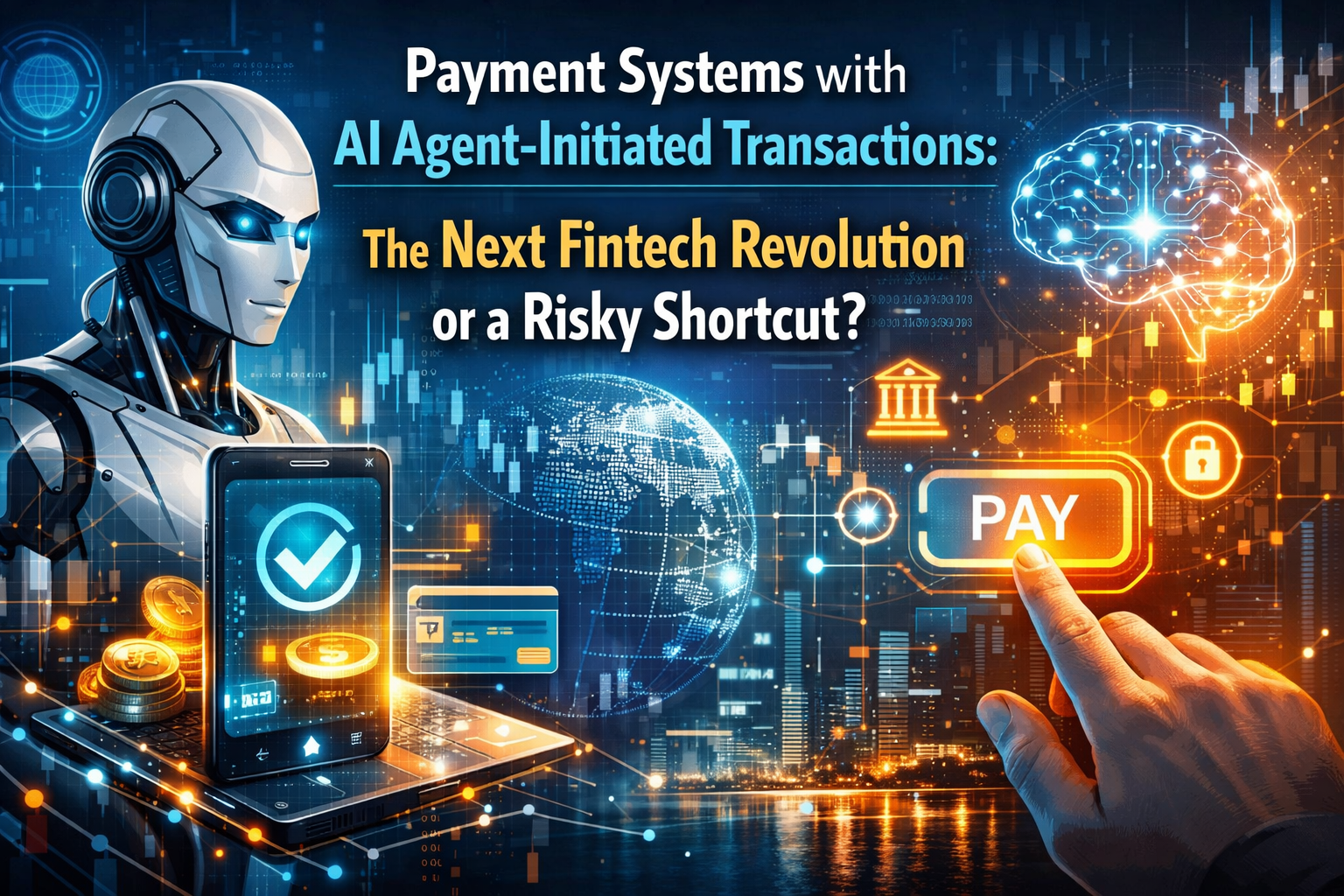
Payment Systems with AI Agent-Initiated Transactions: The Next Fintech Revolution or a Risky Shortcut?
 Elinext4 min read·Just now
--
A quiet but profound shift is happening in fintech. Payments are no longer just executed by humans tapping “Pay Now.” Increasingly, AI agents are making decisions, initiating transactions, and moving money on our behalf.
This emerging model is often called agentic payments or agent-initiated transactions. It represents a transition from AI as an advisor to AI as an actor.
The promise is efficiency. The reality is more complicated.
What Are AI Agent-Initiated Payments?
Agentic payments rely on autonomous software agents that can:
- Search for products or services
- Compare prices and conditions
- Decide what to buy
- Execute payments automatically
In this model, payment is no longer a final human decision. It becomes an embedded step in an automated workflow.
For example:
- Your AI assistant renews subscriptions before they expire
- It switches energy providers to a cheaper option and pays automatically
- It purchases travel tickets based on your calendar and preferences
This is not theoretical. Companies like Mastercard are already piloting systems where AI agents complete transactions without human interaction at checkout.
Real-Life Examples of Agentic Payments
1. AI Shopping Agents
Retail and fintech companies are experimenting with AI that can shop on behalf of users. Systems backed by players like Visa, Mastercard, and Walmart aim to:
- Compare offers across platforms
- Choose optimal payment methods
- Complete purchases automatically
Some systems can even optimize spending behavior, such as routing payments to a credit card to maximize rewards.
2. Autonomous Subscription Management
AI agents can start, upgrade, or cancel subscriptions automatically. They track usage patterns and adjust plans accordingly.
But this introduces regulatory challenges around consent and transparency, especially when services are renewed without direct user confirmation.
3. AI in Enterprise Payments
In B2B environments, AI agents already:
- Process invoices
- Approve payments
- Reconcile accounts
Some companies report up to 40 percent cost reduction and significant efficiency gains through automation.
Why the Industry Is Excited
The appeal of agentic payments is obvious:
Speed and Efficiency
Transactions happen instantly, without manual steps.
Optimization
AI can find better deals, reduce fees, and manage spending patterns.
Scale
Businesses can automate thousands of transactions simultaneously.
New Economic Models
AI agents could eventually transact with other AI agents, creating a machine-driven economy.
Some estimates suggest that AI could influence over $1 trillion in e-commerce spending in the near future.
The Real Problems No One Talks About Enough
This is where things get controversial.
1. Fraud Becomes Smarter Than Humans
AI agents are designed to find the “best deal.” That makes them vulnerable.
Fraudsters can build fake online stores that:
- Look legitimate
- Offer lower prices
- Pass automated checks
An AI agent may complete the purchase without suspicion, exposing payment credentials and enabling fraud.
In other words, AI can scale not just efficiency, but mistakes and fraud exposure.
2. Who Is Actually Authorizing the Payment?
Traditional payment systems assume a human is present to:
- Verify identity
- Confirm amount
- Approve the transaction
Agentic payments break that assumption.
Now the question becomes:
- Is the user authorizing the payment?
- Or is the AI acting independently based on prior instructions?
This creates serious regulatory friction, especially under rules like strong customer authentication.
3. Liability Is a Legal Grey Zone
If something goes wrong, who is responsible?
- The user who configured the AI?
- The AI provider?
- The payment processor?
- The merchant?
There is no clear answer.
Legal experts highlight that liability for unauthorized AI-initiated transactions is still unresolved, making it one of the biggest risks in adoption.
4. AI Can Be Manipulated
AI agents rely on data and prompts. That makes them vulnerable to:
- Prompt injection attacks
- Manipulated product listings
- Biased recommendation inputs
Research shows that even simple adversarial prompts can redirect AI behavior or extract sensitive data in payment scenarios.
This is not a theoretical risk. It is already being tested in real systems.
5. Loss of Human Awareness
One subtle but serious issue is behavioral.
If AI handles payments automatically:
- Users may lose awareness of spending
- Financial decisions become invisible
- Overspending risks increase
We move from “conscious transactions” to “background financial activity.”
That changes how people relate to money.
6. Massive Data Exposure
Agentic systems require deep integration between:
- Payment providers
- Merchants
- AI platforms
- User data
This increases the amount of sensitive data shared across systems, raising privacy and compliance risks.
7. Systemic Risk and Scale
When humans make mistakes, the damage is limited.
When AI systems fail, they can fail at scale.
Imagine:
- Thousands of incorrect payments executed in seconds
- AI agents misinterpreting instructions across multiple accounts
- Automated fraud spreading across networks instantly
Agentic payments compress decision time, but also amplify failure impact.
The Bigger Shift: From Users to Delegation
At its core, this is a shift in control.
Traditional payments:
- Human decides
- System executes
Agentic payments:
- Human sets rules
- AI decides and executes
This changes the entire structure of trust in financial systems.
Final Thought
AI agent-initiated payments are not just a feature upgrade. They represent a fundamental redesign of how money moves.
They can:
- Reduce friction
- Improve efficiency
- Enable new economic models
But they also introduce:
- Legal ambiguity
- Security vulnerabilities
- Loss of user control
- Systemic financial risks
The future of payments may indeed be autonomous. But for that future to work, the industry must solve one critical challenge:
As agentic payment systems evolve, the role of robust architecture, security, and compliance becomes critical. At Elinext, an AI software development company, we help businesses design and integrate intelligent payment solutions that balance automation with control. From secure transaction flows to AI model integration and risk mitigation, our focus is on building systems that are not only innovative, but also trustworthy and scalable in real-world financial environments.