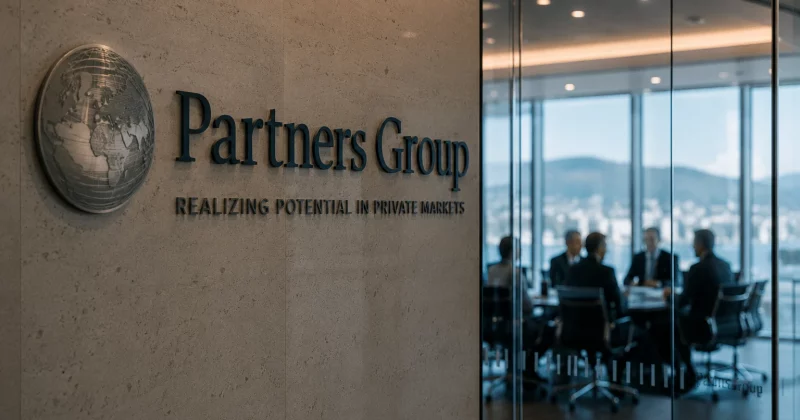
Partners Group faces surge in withdrawal requests at major fund, shares plunge 17%
The Swiss private markets giant capped redemptions at its $8.6 billion Global Value SICAV after requests hit nearly 10% of net asset value, with pressure building across multiple funds.
Share
Add us on Google by Editorial Team Jun. 4, 2026Partners Group, one of the largest private markets investment firms in the world, is dealing with something no fund manager wants to see: investors heading for the exits, all at once.
The Swiss firm announced on June 3 that it was capping withdrawals at its $8.6 billion Global Value SICAV after redemption requests surged to 9.8% of net asset value. The cap was set at 5% of NAV, meaning roughly half of the investors who wanted out will have to wait. Partners Group’s stock responded accordingly, plunging as much as 17% on the day, the steepest single-session drop the company has experienced in over two decades.
The pressure is spreading across funds
The Global Value SICAV wasn’t the only fund feeling the heat. By the following day, Partners Group’s $16 billion Delaware-domiciled US private equity master fund reported that redemption requests had climbed to approximately 6% of NAV during the second quarter. That level was enough to trigger anticipatory withdrawal restrictions.
AdvertisementThree additional evergreen funds, with a combined estimated value of around $9.7 billion, are also bracing for elevated outflows. Partners Group indicated that projected redemptions across those vehicles fall in the range of 3.5% to 5% of NAV.
Partners Group has been quick to note that these withdrawal caps are part of its standard fund protocols, not emergency measures invented on the fly. The firm says these gates have been regularly communicated to investors and are baked into the fund structures specifically to protect long-term holders from being hurt by a rush of short-term exits.
Why this is happening now
Private equity’s evergreen fund model was supposed to be the industry’s answer to a persistent problem. Traditional PE funds lock up capital for a decade or more. Evergreen structures, by contrast, offer periodic liquidity windows, making private markets accessible to a broader range of investors, including wealth management clients and smaller institutions.
Partners Group isn’t the first major firm to face this dynamic. Blackstone and KKR have both navigated similar liquidity strains in their semi-liquid fund offerings in recent years. The private credit and private equity spaces have seen growing investor caution as questions mount about asset valuations and whether marks on private holdings truly reflect current market conditions.
What this means for investors
The 17% single-day stock drop tells you everything about how the market is pricing this risk. Partners Group is a publicly traded company, so unlike the underlying private equity assets, its stock reprices in real time based on sentiment.
For institutional investors and allocators with exposure to private markets, the Partners Group situation is a stress test of the evergreen model itself. When liquidity gets capped at 5% of NAV while nearly 10% of investors want out, the gap between promise and reality becomes hard to ignore.
Watch the redemption numbers at those three additional evergreen funds closely. If requests push past the 5% threshold and force additional caps, the narrative shifts from “isolated pressure” to “structural concern.”
Disclosure: This article was edited by Editorial Team. For more information on how we create and review content, see our Editorial Policy.