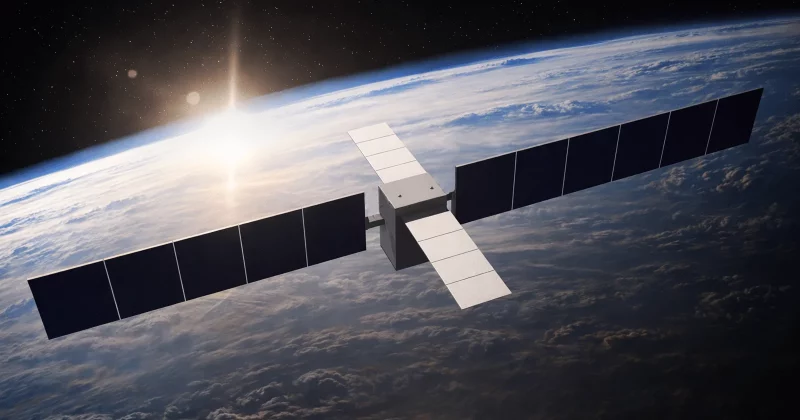
Orbital raises $5M to build 10,000 space data centers by 2028
The former Spin founder wants to put AI inference compute in low Earth orbit, backed by a16z's Speedrun accelerator.
Share
Add us on Google by Editorial Team Jun. 9, 2026Euwyn Poon once figured out how to scatter 250,000 electric scooters across more than 100 cities. Now he wants to do roughly the same thing with data centers, except instead of sidewalks, he’s targeting low Earth orbit.
His startup Orbital just closed an oversubscribed $5M pre-seed round led by a16z’s Speedrun accelerator. The pitch: launch 10,000 satellite-based data centers capable of delivering up to a gigawatt of AI inference compute by 2028.
From scooters to satellites
Poon’s previous company, Spin, scaled to over 250,000 vehicles before Ford acquired it in 2018. The Los Angeles-based company plans to use the fresh capital to fund two things. First, Orbital-1, its inaugural test mission scheduled for 2027 aboard a SpaceX Falcon 9 rocket. Second, a new R&D facility in Los Angeles called Factory-1, where the company will develop and iterate on its satellite hardware.
AdvertisementThe core thesis is straightforward. Terrestrial data centers face mounting constraints around power consumption and cooling. In space, you get continuous solar energy and the vacuum itself acts as an efficient thermal management system.
Both SpaceX and Blue Origin have reportedly explored orbital data center concepts of their own.
The scale problem and the Starship bet
Orbital’s roadmap explicitly depends on SpaceX’s Starship program. Starship’s fully reusable design promises to dramatically reduce the cost per kilogram to orbit, which is the only way deploying thousands of compute-equipped satellites becomes economically viable.
For context, SpaceX itself took roughly five years to go from launching its first batch of Starlink satellites in 2019 to deploying over 6,000 of them.
What this means for the compute and crypto landscape
Orbital has not announced any token, blockchain integration, or crypto-native partnership.
The $5M raise is tiny by venture standards, barely a rounding error for the kind of infrastructure Orbital is describing. But a16z’s involvement through its Speedrun accelerator signals that at least one top-tier firm sees this as more than science fiction. The real inflection point will be Orbital-1’s launch in 2027.
Disclosure: This article was edited by Editorial Team. For more information on how we create and review content, see our Editorial Policy.