
Open Intents Framework advances toward broader adoption as shared cross-chain infrastructure
Backed by over 30 teams including Arbitrum and Optimism, the Ethereum Foundation's intent framework is quietly becoming the plumbing for cross-chain transactions.
Share
Add us on Google by Editorial Team May. 26, 2026Launched in February 2025 by the Ethereum Foundation in collaboration with Hyperlane and Bootnode, the Open Intents Framework (OIF) is gaining traction as shared infrastructure for building and executing cross-chain intents. With backing from over 30 teams, including heavyweights like Arbitrum, Optimism, Polygon, ZKsync, and Starknet, the project is positioning itself as a neutral standard rather than a proprietary product.
What the framework actually does
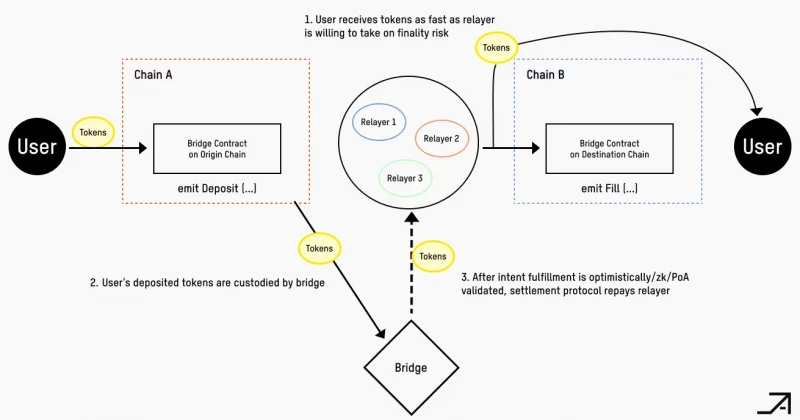
OIF provides the toolkit for cross-chain intents to work across multiple chains. It includes smart contracts, open-source solvers, aggregators, and an SDK that developers can plug into without asking anyone’s permission. The core architecture relies on three key contract types: InputSettler, OutputSettler, and Oracle contracts, along with an interoperability SDK that ties them together.
The framework builds on the ERC-7683 standard, which defines how cross-chain intents should be structured. When a user submits an intent, say a cross-chain token swap, competitive solvers race to fulfill that request as efficiently as possible.
AdvertisementDeployments are already live on multiple networks including Ethereum Sepolia and Optimism Sepolia. Under optimal conditions, solver-filled orders complete in 10 to 60 seconds.
Coinbase joins the party
The framework picked up a significant endorsement in September 2025 when Coinbase Payments became a core contributor. The exchange’s payments arm is working to help standardize cross-chain asset transfers through OIF.
OIF’s design is deliberately modular and permissionless, meaning any team can deploy and extend the contracts without needing approval from a central authority. There’s no governance token, no protocol fee extraction, no vendor lock-in. Production contracts have been deployed across various testnets and mainnets, with ongoing audits and additional solver development targeted for later this year.
Why the “no token” thing matters
OIF has no dedicated token or crypto asset associated with it. This is a deliberate design choice that positions the framework as neutral infrastructure. For developers, this removes the need to navigate tokenomics, staking requirements, or fee structures that can change based on token holder votes.
Without a token, there’s no direct financial incentive mechanism to bootstrap a network of solvers and participants. The framework instead relies on the competitive dynamics of solvers who profit from fulfilling intents efficiently.
Disclosure: This article was edited by Editorial Team. For more information on how we create and review content, see our Editorial Policy.