One Feature That Could Change Web3 Gaming on Portaldot.
 Estylsmart4 min read·Just now
--
We’ve gone from simple NFT experiments to immersive worlds with real economies, digital ownership, and decentralized communities. But even with all this progress, one major problem still limits the true potential of blockchain gaming:
Players still lose their identity every time they move to a new game.
You may own your assets.
You may keep your tokens.
But your achievements, reputation, and experience often disappear outside a single ecosystem.
That’s the gap.
And it’s exactly why I believe Portaldot has the opportunity to introduce a feature that could fundamentally reshape Web3 gaming.
The Feature: Portable Identity & Progress Layer (PIPL)
If I could add one feature to a Web3 game on Portaldot, it would be this:
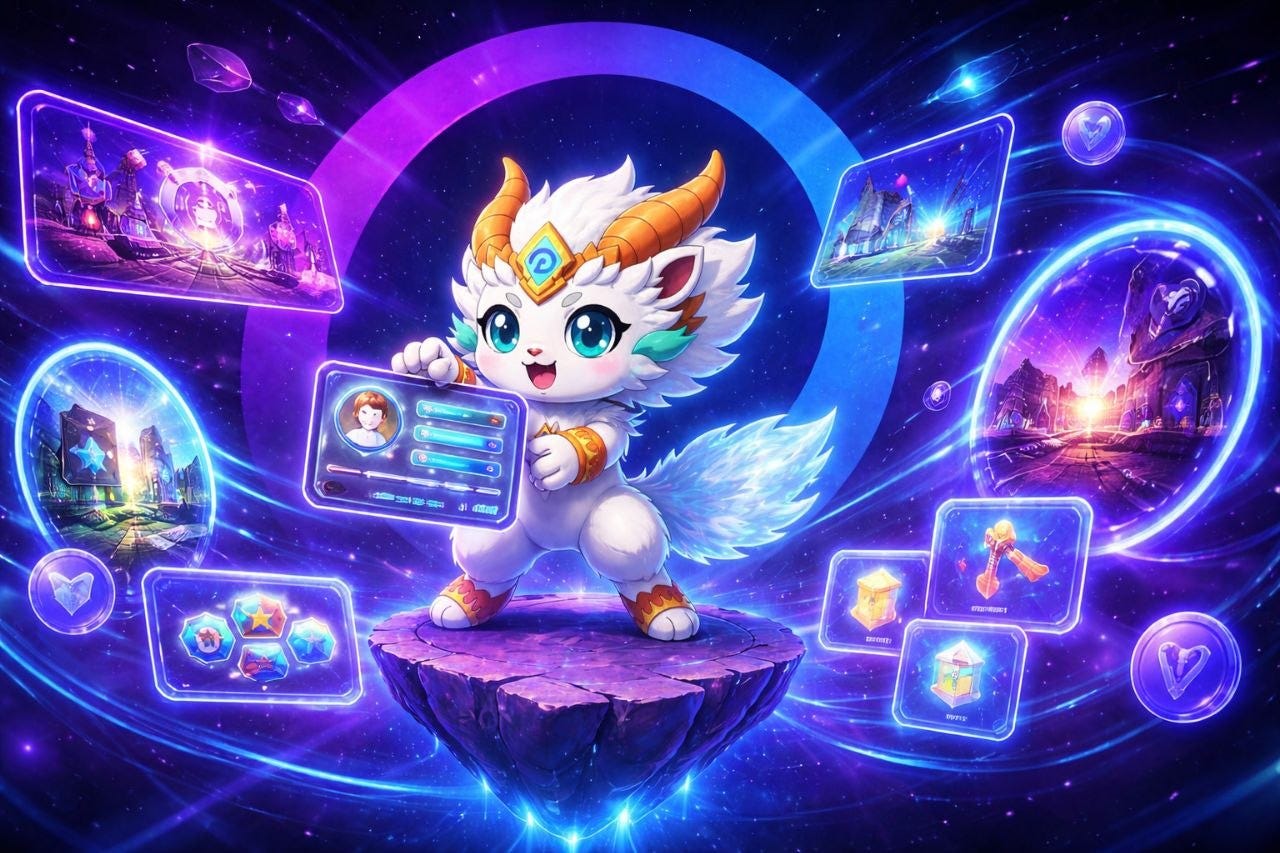
A Portable Identity & Progress Layer a system that allows players to carry their reputation, achievements, skills, and progression seamlessly across multiple games within the ecosystem.
Not just transferable assets.
But transferable identity.
Imagine every match you win, every quest you complete, every skill you master becoming part of a persistent gaming profile that follows you everywhere.
Your journey no longer resets.
It evolves.
One Player. Multiple Worlds. Infinite Progress.
Instead of isolated gaming experiences, players become part of a connected universe where progress compounds over time.
The more you play, the more valuable your identity becomes.
A strategy expert in one game could unlock advanced tactical roles in another.
A respected trader could gain marketplace privileges across ecosystems.
An elite PvP player could earn reputation-based tournament access instantly.
This transforms gaming from disconnected sessions into a long-term digital identity system.
The Current Problem With Most Web3 Games.
Despite the promise of interoperability, most Web3 games still operate like isolated islands.
You start over repeatedly:
New account.
New progression.
New reputation.
New grind.
Even though blockchain technology should enable continuity, very few ecosystems actually leverage it in meaningful ways.
This creates several issues:
Weak player retention.
Fragmented communities.
Short-lived engagement.
Limited ecosystem synergy.
Players invest time, but that investment rarely compounds across experiences.
From Isolated Games → Connected Ecosystem.
Now imagine something different.
Instead of separate games competing for attention, every game on Portaldot becomes part of a larger connected network.
A player’s Reputation, Achievements, Playstyle, Contribution history, Skill level becomes accessible across the ecosystem through a unified identity layer.
That changes everything.
How the Portable Identity & Progress Layer Would Work.
The system could function as a universal player profile stored on-chain and integrated directly into Portaldot’s infrastructure.
1. On-Chain Identity
Every player has a persistent identity tied to their wallet.
This identity stores:
Achievements.
Milestones.
Match history.
Reputation.
Participation metrics.
Not owned by a single game.
Owned by the player.
2. Cross-Game Reputation.
Reputation becomes transferable.
If you establish yourself as:
A top strategist.
Elite competitor.
Trusted trader.
Guild leader.
Other games can recognize that instantly.
This creates social credibility across ecosystems instead of within isolated communities.
3. Skill Metadata.
Games could also interpret player behavior and strengths.
For example:
PvP performance.
Economic strategy.
Quest completion efficiency.
Collaboration patterns.
Governance participation.
Instead of starting as a “new player” everywhere, your history speaks for you.
4. Dynamic Reward Systems.
New games launching on Portaldot could reward experienced ecosystem players immediately.
Imagine joining a new title and instantly receiving:
Advanced starter gear.
Exclusive access.
Early faction privileges.
Higher-level missions.
Because the ecosystem already understands who you are.
Why Portaldot Is Perfect for This.
Portaldot already positions itself around scalable infrastructure and ecosystem-driven experiences.
That makes it the perfect foundation for a connected gaming identity layer.
Because this feature doesn’t just improve one game.
It strengthens the entire network.
Benefits for Players.
Progress compounds over time.
Identity persists.
Reputation matters.
Less repetitive grinding.
Benefits for Developers.
Better onboarding.
Stronger retention.
Shared player ecosystems.
Smarter player profiling.
Benefits for the Ecosystem.
Network effects between games.
Increased player loyalty.
Cross-community growth.
Sustainable engagement loops.
A Simple Example.
Imagine this scenario:
You spend months mastering a tactical strategy game on Portaldot.
You build a strong reputation as a top commander.
Later, a new RPG launches within the ecosystem.
Instead of starting from zero:
Your strategist badge unlocks elite guild access.
You gain advanced tactical missions immediately.
Your previous achievements grant rare starter items.
That’s not just interoperability.
That’s continuity.
A Connected Gaming Universe.
The future of Web3 gaming shouldn’t only focus on ownership.
Ownership alone is not enough.
The real opportunity lies in:
Persistent identity.
Cross-world continuity.
Reputation portability.
Long-term progression.
Games should build on the player instead of constantly resetting them.
That’s how ecosystems become worlds.
Final Thought.
Most Web3 games today are focused on building economies.
But the next evolution of blockchain gaming will focus on building player identity.
And when players can carry their history, reputation, and progress across experiences, Portaldot won’t just host games.
It will host living player journeys.
That’s the kind of feature capable of transforming Web3 gaming from disconnected ecosystems into a truly connected universe.