Metrics need to report performance but also drive decisions
Startups are built around moments.
A launch. A funding round. A breakout feature.
The first cannonball.
Everyone is focused on the splash.
Did it land? How big was it? Who noticed?
And the metrics reflect that obsession. Growth spikes. Signups. Press. Engagement.
But then comes the quieter, more dangerous question:
What’s the next cannonball?
The teams that can’t answer this do not last.
Not because they lack ideas… their strategy never defined what success looked like.
Their plans focused on tactics over vision and defined their KPIs to measure the splash, not to plan the next move.
And when someone asked the inevitable question:
“So what do we do next?”
The room goes quiet.
Do you want to be the splashy startup…
or the company others measure themselves by?
Splashy startups build KPIs that report what already happened, not ones that guide what should happen next.
Those organizations don’t have a data problem.
They have a decision problem.
Most startups begin with a clear idea of what success looks like, at least at first.
Revenue targets. Growth rates. Conversion.
Those become the focus.
Those become the metrics.
Ask what success looks like after that first big splash.
What are you actually trying to become?
What position are you trying to earn?
What outcome are you building toward beyond the next milestone?
Failure to define what success looks like after that first big splash is the difference between being another great startup … and becoming a real player in the market.
Without that clarity, strategic KPIs never get defined.
And when strategic KPIs don’t exist, tactical ones have nothing to aim at.
It helps to separate four things that often get blurred together.
Strategy. Tactics. Operations. Work.
I think of it as STOW IT:
- Strategy = Direction
- Tactics = Movement
- Operations = Repeatability
- Work = Execution
Most startups are very good at the last one.
Many are strong at the second.
Some build solid operations over time.
But far fewer take the time to clearly define the first.
Without strategy, tactics become guesswork.
Operations become busywork.
And work without the other three is just motion without momentum.
This shows up in subtle ways.
Goals without clear strategies
A team sets a goal to “improve onboarding.”
They track what they can control:
- steps completed
- time in flow
- feature clicks.
The process improves. The numbers go up.
But activation doesn’t change. Retention doesn’t move.
Because they optimized the process … not the outcome.
They measured what they could control.
They never defined what actually mattered.
I’ve seen this play out firsthand.
I was part of a team that was very good at execution.
We hit our deadlines. Delivered what we committed to. Consistently.
We were recognized for it.
It was part of a major enterprise transformation program, lots of different things going on and every time we finished a project, we were handed the next one that was already struggling.
Not because we failed.
Because we were reliable.
Meanwhile, I watched another team that was just as strong.
But their leader always had a clear path forward defined.
What they were building toward. What came next. Why it mattered.
When they finished something, they didn’t wait to be assigned work because their leader was already aligned with what was next.
They were given bigger opportunities. At the time I didn’t realize why this kept happening, I just realized I didn’t like it.
And then it hit me. They weren’t better than we were, they were just better positioned.
I wasn’t on the wrong projects. I was on the wrong team.
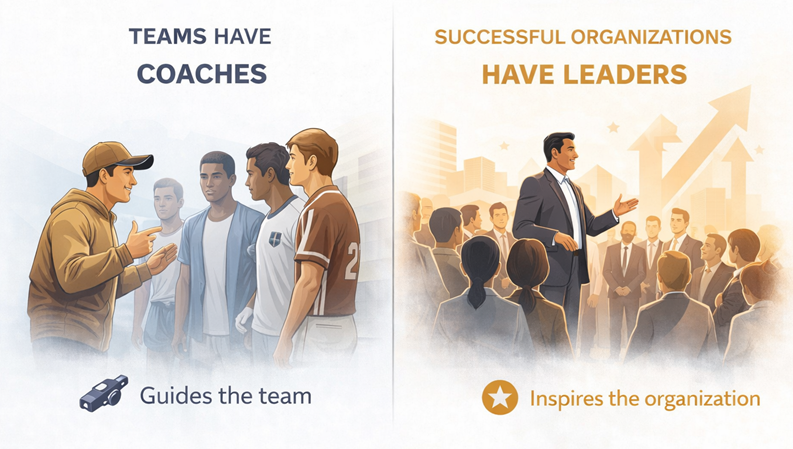
I didn’t want to work for a coach or a manager.
I wanted to work for a leader.
Someone who didn’t just drive execution … but defined where we were going next.
That’s the difference between managing work, and leading outcomes.
And it’s exactly what your KPIs should reflect.
Strategic KPIs define direction.
Tactical KPIs determine action.
One tells you if you’re winning.
The other tells you what to do next.
But they only work if they’re connected.
Tactical KPIs should exist to move strategic KPIs.
If they don’t, you’re not executing a strategy.
You’re just doing work.
Tactical KPIs are sexy. They hit the bottom line.
They keep the lights on.
Strategic KPIs are quieter.
They’re what keep the doors open.
Focus on the Goal. Filter the Noise.
In a startup, focus is everything.
If it doesn’t support the goal, it’s a distraction.
And distractions don’t belong in your system.
Stow them until they’re needed.
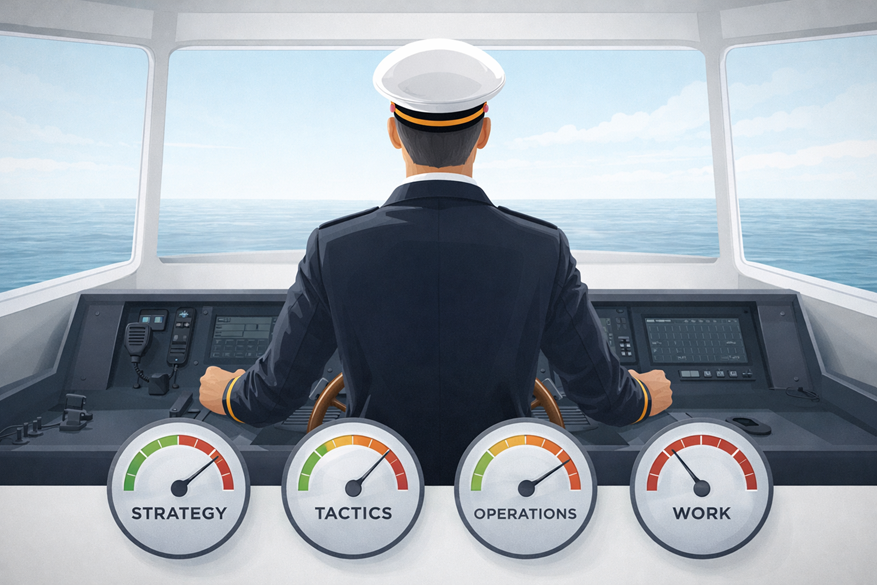
A strong captain doesn’t keep everything on deck.
Only what’s mission-critical stays within reach:
- a clear course with navigation tools to know where they are
- the right tools to communicate direction to the crew.
They know where they’re going. They know where they are.
And they plan for what could go wrong before it does.
Everything else is stowed below deck, available, but never in the way. Because when conditions change, the last thing you need is noise getting in the way of the signal.
Your dashboards should work the same way.
Show what matters. Filter out what doesn’t.
Make the signal impossible to miss.
Pay attention to the indicator… not the data behind it.
Your Strategic and Tactical KPIs should make that signal clear.
This isn’t just a metrics problem.
It’s a choice.
At some point, every startup has to decide what game it’s playing.
Are you chasing the next win…
or are you building to lead the market?
Tactical KPIs help you capture the moment.
Strategic KPIs determine whether you own what comes next.
Anyone can win a moment.
Not everyone gets to define what happens after it.
Tactical KPIs measure the splash.
Strategic KPIs measure the ripples that create the next wave.
If those two aren’t aligned, you’re not building momentum.
You’re just reacting to the last impact.
For every KPI you track, ask two questions:
- What strategic decision does this inform?
- What action should change this week because of it?
If it doesn’t answer both, it’s not a KPI.
It’s a report.
Startups don’t lose because they lack a clear vision.
They lose because their results never tell them what to do next.
The splash is loud.
The shore is what matters.

If your metrics don’t change what you do next, you’re not measuring performance. You’re documenting history.
Most KPIs Explain the Past. The Best Ones Drive the Next Move. was originally published in DataDrivenInvestor on Medium, where people are continuing the conversation by highlighting and responding to this story.