Most DeFi Losses Don’t Come From Markets They Come From Misunderstanding Yield
--
Most people don’t lose in DeFi because of bad luck — they lose because they misunderstand yield.
On the surface, everything looks easy: high APYs, real-time returns, simple deposit flows. It gives the impression that yield is straightforward. It isn’t.
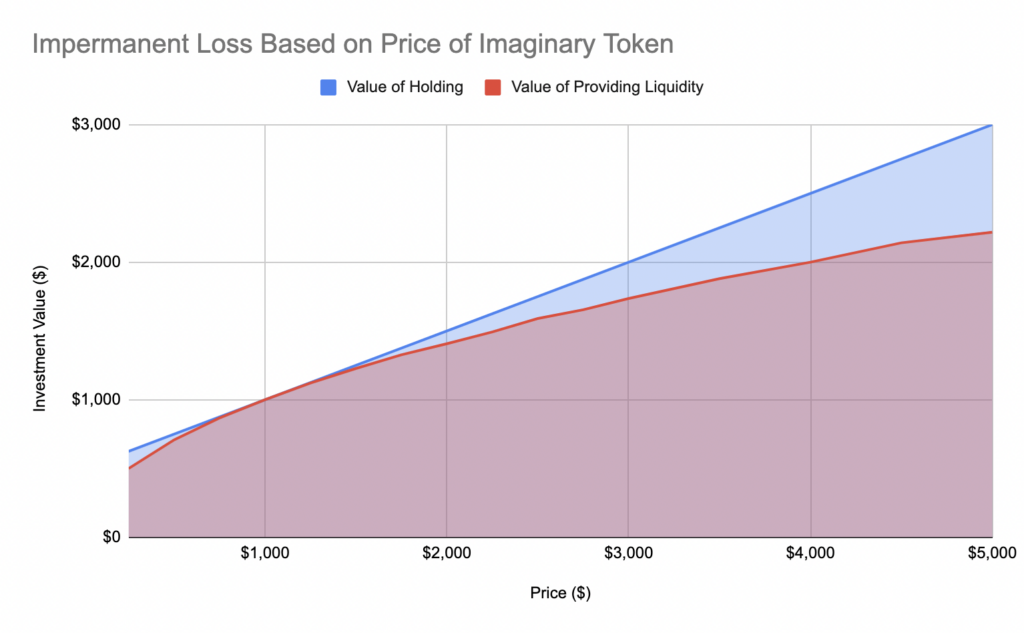
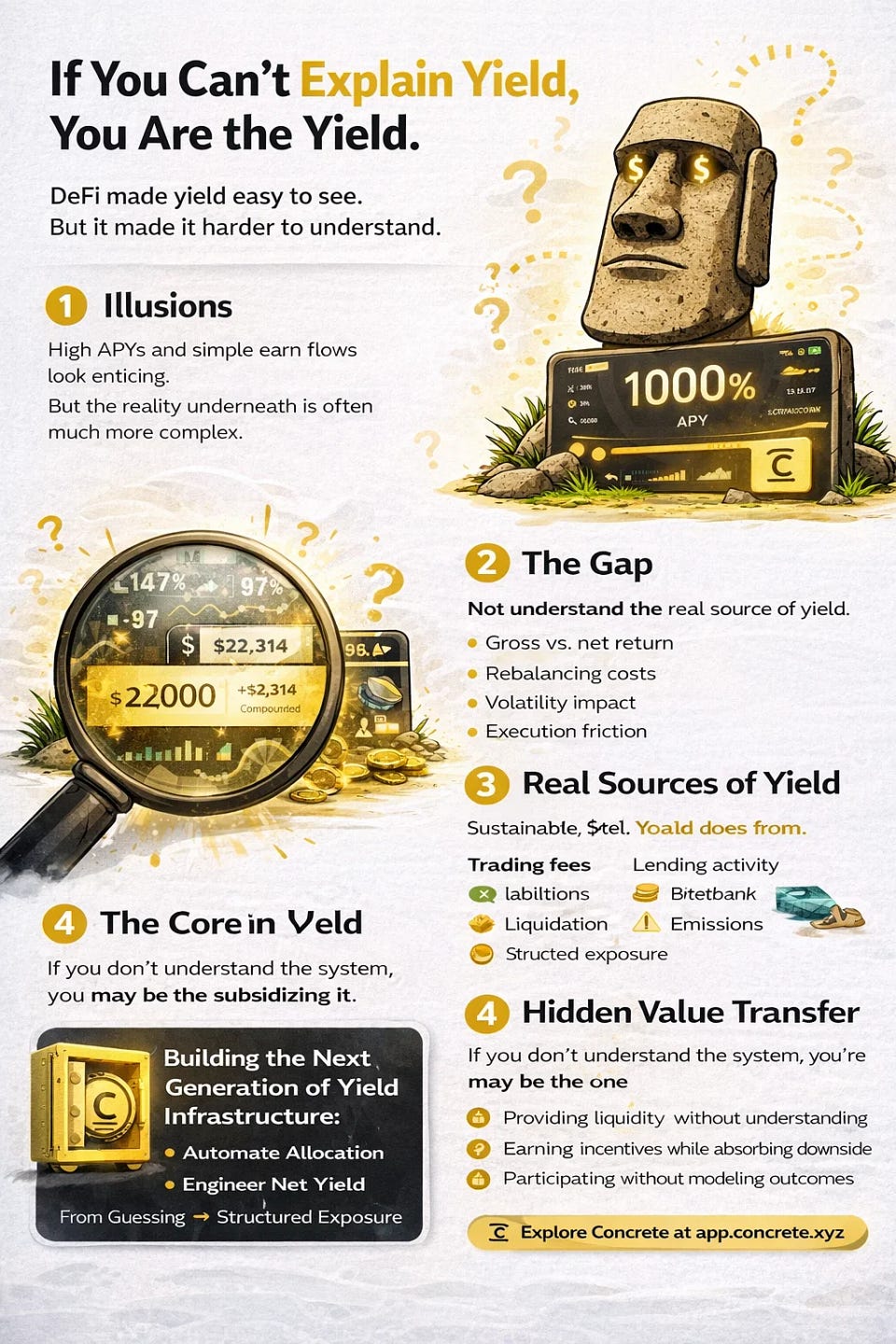
That displayed APY hides a lot: impermanent loss, rebalancing drag, execution costs, and market volatility. When you move from gross to net, the difference can be significant.
And importantly, yield always has a source. It comes from trading fees, borrowing activity, arbitrage, liquidations, or protocol incentives. Each behaves differently — some durable, some short-lived, some purely redistributive.
💡 If you don’t know which one you’re earning, you might actually be funding it. This happens when users provide liquidity without understanding risk, farm rewards but carry downside exposure, or enter positions without modeling outcomes.
That’s why results vary. Some optimize for the highest APY. Others evaluate structure, cost, and risk. More sophisticated participants model before allocating capital. Same system, completely different outcomes.
The direction of DeFi is changing: from chasing yield to engineering it. That means thinking in terms of expected outcomes, risk control, continuous optimization, and net returns.
@ConcreteXYZ is building toward that shift. Concrete Vaults automate strategy execution, manage allocation, rebalance positions, and reduce human error — helping users move from reactive decisions to structured exposure.
In the end, yield isn’t a promise. It’s a calculation: revenue minus costs, adjusted for risk. Once you see it that way, dashboards stop being signals — and start being inputs.
Explore 👉 https://app.concrete.xyz
#DeFi #Crypto #YieldEngineering #ConcreteXYZ