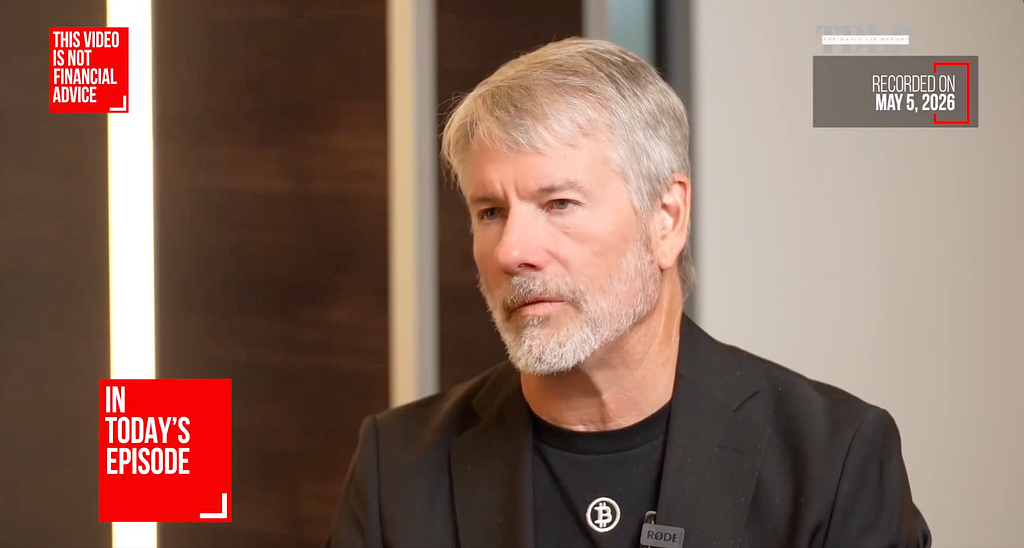
Michael Saylor has built one of the strongest brands in Bitcoin around a simple message:
Never sell your Bitcoin.
So when Strategy suggested it could sell Bitcoin to fund preferred-stock dividends, the internet reacted exactly as expected. Critics called it a contradiction. Traders tried to decode the market impact. Bitcoin purists questioned whether the “never sell” philosophy had changed.
But Saylor’s latest explanation adds an important nuance:
Never be a net seller of Bitcoin.
That distinction matters — especially for crypto traders, treasury companies, and anyone using platforms like Ave.ai to track market flows, Smart Money behavior, token narratives, and liquidity rotation across chains.
The Core Message: Sell One, Buy Ten
Saylor’s argument is not that Strategy wants to reduce its Bitcoin position. It is that the company wants the flexibility to use Bitcoin as a productive capital asset.
In his words, even if Strategy were to sell one Bitcoin, it could be buying 10 to 20 more Bitcoin through its capital-raising engines.
The logic is simple:
Strategy issues credit instruments, raises capital, buys Bitcoin, and expects that Bitcoin to appreciate over time. If needed, the company can monetize a portion of those gains to fund dividends while still increasing its net Bitcoin holdings.
In other words, the company is not trying to exit Bitcoin.
It is trying to turn Bitcoin into a balance-sheet engine.
For traders, this is the key takeaway:
The real question is not whether Strategy sells some Bitcoin. The real question is whether Strategy ends each period with more Bitcoin than it started with.
This is also the same principle many on-chain traders follow at a smaller scale. The goal is not to avoid every sale. The goal is to rotate capital intelligently, protect upside, and end the cycle with a stronger portfolio.
On Ave.ai, this mindset shows up in how experienced traders monitor wallet behavior, token flows, and Smart Money positioning. A single sell transaction does not always mean bearish conviction. Sometimes it is profit-taking, liquidity management, or capital rotation into a higher-conviction opportunity.
The better question is: Is the wallet becoming a net accumulator or a net distributor?
That is the same lens traders should apply to Strategy.
Why the Market Freaked Out
The reaction was predictable because Saylor has spent years making “never sell your Bitcoin” a core part of Bitcoin culture.
But the market often takes slogans literally.
Saylor’s updated position is more practical. Bitcoin, in his view, is capital. And capital can be used, pledged, refinanced, monetized, or rotated — as long as the owner remains a long-term net accumulator.
He compares it to real estate development.
A developer might raise credit, buy land, improve it, and later monetize part of that appreciation to service obligations. Nobody calls that irrational. The land remains the productive asset. The credit structure simply allows the developer to scale.
Saylor is applying the same model to Bitcoin.
Strategy buys digital capital, builds credit products on top of it, and uses capital gains to fund credit dividends.
That is the business model he wants the market, credit agencies, and investors to understand.
For crypto traders, this is a reminder to avoid headline-level interpretation. In volatile markets, the first reaction is often emotional. The better approach is to check the underlying flow.
- Is capital leaving the asset class?
- Is the holder reducing exposure?
- Is liquidity rotating into stronger positions?
- Is the net balance increasing or decreasing?
These are the kinds of questions traders should ask before reacting to any major wallet movement, treasury announcement, or institutional headline.
Is This a Ponzi Scheme?
Peter Schiff and other skeptics argue that Strategy’s model depends on issuing more equity or credit to support dividends and continue the Bitcoin accumulation cycle.
Saylor’s response is straightforward: this criticism only works if you believe Bitcoin has no real value.
If Bitcoin is “digital capital,” then building credit instruments on top of it is no different from building financial products on top of real estate, corporate assets, commodities, or government bonds.
The controversy comes down to one core belief:
If Bitcoin is worthless, then everything built on it looks unstable.
If Bitcoin is digital capital, then Bitcoin-backed credit becomes a natural financial product.
Saylor clearly believes the second view.
He describes STRC as a credit instrument backed by overcollateralized Bitcoin exposure. The goal is to strip out some of Bitcoin’s volatility and deliver a more stable yield product for investors who want exposure to Bitcoin’s economic strength without holding the underlying asset directly.
That is an important development for crypto traders because it points to a broader trend:
Bitcoin is no longer just being held. It is being financialized.
And once an asset becomes financialized, traders need more than price charts. They need to track liquidity, collateral demand, derivative flows, institutional positioning, and on-chain behavior.
This is where tools like Ave.ai become increasingly useful. For meme coins, altcoins, and fast-moving on-chain assets, traders already rely on real-time data to identify early momentum, whale accumulation, liquidity shifts, and abnormal volume. As Bitcoin-backed credit expands, the same principle applies at the institutional level:
Follow the flows, not just the narrative.
The Rise of Digital Credit
One of the most interesting parts of the interview is Saylor’s updated thesis on Bitcoin’s “killer app.”
For years, Bitcoin’s primary narrative has been digital gold: a decentralized, scarce store of value.
Saylor now adds another layer:
Bitcoin’s killer app may be digital credit.
The argument is that if Bitcoin is one of the best-performing forms of capital, then credit instruments backed by Bitcoin could become some of the most attractive credit products in public markets.
That is a major shift.
Bitcoin is not just competing with gold anymore. It is starting to compete with preferred stock, convertible bonds, money market alternatives, private credit, and eventually yield-bearing digital money.
For traders, this matters because new credit products can create new flows.
Bitcoin ETFs already changed institutional access. Bitcoin-backed credit could create another demand layer — one that is less about retail speculation and more about structured yield, collateral, and corporate treasury management.
For Ave.ai users, this trend also reflects a larger market direction: crypto is becoming more layered.
There is the base asset.
There are yield products built on top of it.
There are derivatives around those products.
There are on-chain signals that reveal how capital moves between them.
In meme coin trading, this layered structure already exists in a more aggressive form. A new token may gain attention from a narrative, then attract Smart Money wallets, then trigger liquidity growth, then spread through social channels, then enter a momentum cycle.
Bitcoin-backed credit is a more institutional version of the same pattern.
The asset creates the foundation.
The financial product creates the flow.
The flow creates new trading opportunities.
Why Saylor Says Strategy Does Not Move the Bitcoin Market
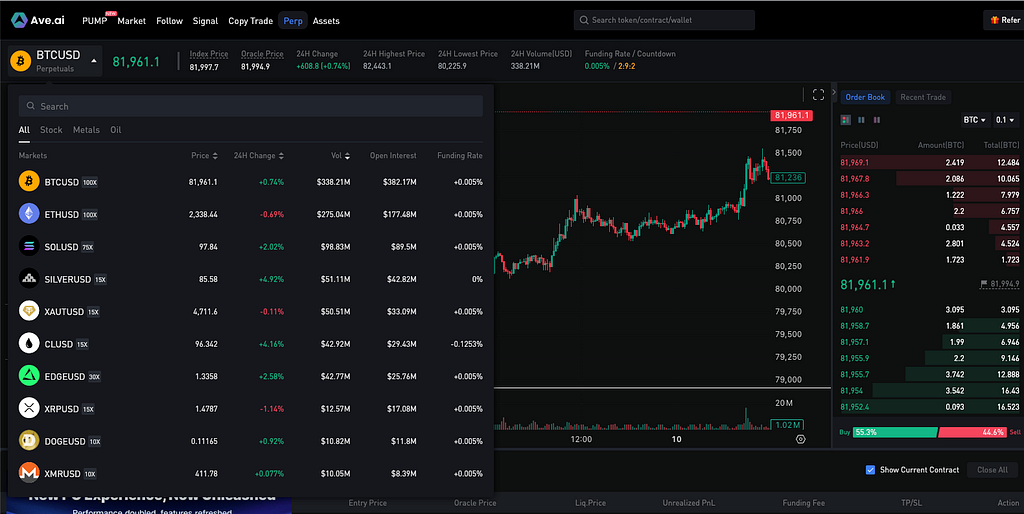
Some traders believe Strategy’s Bitcoin purchases create predictable price movements. Saylor pushed back hard on that idea.
His view: Bitcoin is too liquid and too global for Strategy’s individual purchases to control price action.
He pointed to the depth of the spot and derivatives markets and argued that even large purchases — $100 million, $200 million, or more in an hour — do not necessarily move Bitcoin in a reliable way.
That is a useful reminder for traders.
Micro flows matter, but macro dominates.
Saylor highlighted several bigger drivers:
- Trade wars.
- Geopolitical tension.
- Interest rates.
- Liquidity conditions.
- Currency policy.
- Institutional adoption.
- Digital credit creation.
- ETF inflows.
- Bank credit formation.
The message is clear:
Do not overfit your trading strategy to one buyer. Bitcoin is bigger than any single actor.
This is also true in on-chain trading.
A whale buy can trigger attention.
A Smart Money entry can validate a setup.
A liquidity spike can create momentum.
But none of these signals should be used in isolation.
On Ave.ai, the strongest setups usually come from signal confluence: volume expansion, holder growth, liquidity depth, whale behavior, transaction frequency, price structure, and narrative heat moving in the same direction.
The same logic applies to Bitcoin.
Strategy’s activity is a signal. It is not the whole market.

The STRC Dividend Trade
One more tactical point: traders trying to front-run Strategy’s Bitcoin purchases around STRC dividend behavior.
According to Saylor, STRC sees heavy demand before dividend record dates because traders attempt to capture yield. After the record date, the instrument may trade down and then recover toward par.
That creates arbitrage activity.
But Saylor does not believe this pattern translates cleanly into a Bitcoin front-running opportunity. The Bitcoin market is simply too deep, and the forces driving price are much larger than one company’s periodic capital allocation.
For crypto traders, the lesson is simple:
A yield-arbitrage pattern in STRC does not automatically become a reliable Bitcoin trade.
This is a familiar trap in crypto.
Traders often see a repeated pattern and assume it will continue forever. But once the pattern becomes obvious, it attracts competition, gets front-run, becomes less profitable, or disappears entirely.
Ave.ai traders see this often in new token launches. A wallet pattern, sniper behavior, or liquidity event may work for a few trades. Then the market adapts.
The real edge is not copying one pattern blindly.
The edge is continuously validating whether the data still supports the setup.
“Never Sell” vs. “Never Be a Net Seller”
This is the most important philosophical update from the interview.
Saylor is not abandoning the Bitcoin accumulation thesis. He is refining it.
For individual investors, “never sell” has always been more of a discipline than a literal rule. The real principle is:
Do not reduce your long-term Bitcoin base unless you are using it to generate more value — and ideally, more Bitcoin.
That means if you spend Bitcoin, replenish it.
If you monetize Bitcoin, do it to improve your position.
If you use Bitcoin as collateral or capital, make sure the end result is accumulation, not depletion.
For traders, this is a more mature framework.
It moves Bitcoin from a passive HODL asset to an active capital asset.
But it also raises the bar. If you sell Bitcoin, you need a clear reason. You need a plan. You need to know whether that sale increases or decreases your long-term Bitcoin position.
This is highly relevant for active crypto traders.
Many traders lose not because they sell, but because they sell without a portfolio-level strategy. They rotate from strong assets into weak narratives. They chase pumps after exiting conviction positions. They take profit but never rebuild exposure.
A more professional approach is to think in net exposure:
- Did this trade increase your long-term capital base?
- Did it improve your risk-adjusted position?
- Did it help you accumulate stronger assets?
- Did it protect downside without sacrificing the core thesis?
That is the difference between trading activity and capital strategy.

What This Means for Ave.ai Traders
For traders using Ave.ai, Saylor’s comments offer several practical lessons.
First, track net accumulation, not single transactions. A sell is not always bearish. What matters is whether the wallet, fund, treasury, or Smart Money address is increasing or decreasing its overall position over time.
Second, separate tactical selling from strategic distribution. Profit-taking, dividend funding, rebalancing, and liquidity management are different from abandoning a thesis.
Third, look for confluence. A single whale movement should not define a trade. Stronger signals come from multiple data points aligning: price action, liquidity, holder growth, volume, Smart Money inflow, and broader market sentiment.
Fourth, understand capital rotation. In crypto, money constantly moves from Bitcoin to majors, from majors to altcoins, from altcoins to meme coins, and back again. Ave.ai’s real-time token data and Smart Money tracking help traders identify where attention and liquidity are moving.
Fifth, avoid narrative overreaction. Headlines are designed to trigger emotion. Data helps traders stay objective.
In short:
- Use narratives to understand attention.
- Use data to confirm capital flow.
- Use risk management to survive volatility.
The Bigger Picture
The market wanted a simple answer:
Is Saylor still “never sell Bitcoin”?
His answer is more sophisticated:
Never become a net seller of Bitcoin.
That may not be as catchy, but it is more useful.
Bitcoin is entering a new phase. The first phase was belief. The second phase was accumulation. The third phase is financialization.
Treasury companies, ETFs, credit instruments, yield products, and digital collateral markets are now forming around Bitcoin. That does not eliminate volatility. It does not remove risk. But it does mean Bitcoin is being integrated into capital markets in ways that were impossible a decade ago.
For crypto traders, the opportunity is not just watching Bitcoin’s price.
It is understanding the financial machinery being built around it.
And for Ave.ai users, the lesson is even broader:
The best traders do not just react to price. They observe capital behavior.
They track where liquidity enters.
They identify who is accumulating.
They watch when narratives turn into volume.
They distinguish short-term selling from long-term conviction.
They understand that in crypto, the strongest edge often comes from seeing the flow before the crowd sees the headline.
Because if Saylor is right, Bitcoin’s next major growth cycle may not be driven only by spot buyers.
It may be driven by digital credit.
And if crypto history is any guide, wherever new liquidity forms, new trading opportunities follow.
Ready to elevate your trading experience? Try Ave AI now:
Ave.ai - The Ultimate Web3 Trading Platform
Disclaimer: This blog post is for informational purposes only and does not constitute financial advice. Cryptocurrency trading involves significant risk. Always conduct your own research before making any investment decisions.
Michael Saylor’s “Never Sell Bitcoin” Just Got More Nuanced was originally published in Coinmonks on Medium, where people are continuing the conversation by highlighting and responding to this story.