maybe you’re just bad at trading.
or maybe the people on the other side of your trade are spending $32,000 a year just to see you coming.
 Vector8 min read·Just now
--
$31,980 per year, that’s what a Bloomberg Terminal costs in 2026.
just the screen…$31,980 a year and there are 325,000 of those screens active right now, humming inside the trading floors of JPMorgan, Goldman Sachs, Citadel, and every hedge fund you’ve never heard of but have definitely lost money to.
you open robinhood, they open that.
you watch a youtube video about support and resistance, they get a 2,700-journalist newsroom pushing market-moving information to their desk milliseconds before it hits the feed you’re reading.
now, before you close this tab and tell yourself it doesn’t matter, that skill beats infrastructure, that the little guy can still win , i need you to sit with one number.
74%, that’s the minimum percentage of retail traders who lose money during every major market volatility event, every time, this was gathered across 28 years of data and eight million traders.
and the researchers who dug into why found something uncomfortable.
it wasn’t the charts or the strategy by these eight million traders, it was execution infrastructure: the gap between knowing what to do and having a machine disciplined enough, fast enough, and calm enough to actually do it at the right moment.
you weren’t losing because you were dumb.
you were losing because you were bringing a gut feeling to a knife fight.
stop blaming your emotions.
here’s what nobody in the trading education space wants to say out loud, because it would put them out of business.
discipline alone can’t fix a structural problem.
the story they sell you is this:
retail traders lose because they’re emotional: they revenge-trade, they FOMO in, they panic-sell.
and yes, those things happen.
but the deeper truth is that retail traders were set up to be emotional, because the platforms they use were designed for engagement, not performance.
every price alert, red candle notification, ’trending stocks' module e.t.c there all triggers.
it’s architecture built to keep you making frequent decisions, because frequent decisions mean frequent commissions and frequent data sales.
you were handed a device designed to exploit your psychology and told it was a trading platform.
institutional desks don’t beat retail because their analysts are smarter. they win because their systems don’t wait for a human to make a good decision. they built the good decision into the machine.
a regime detection layer fires before a human opens their laptop.
a reallocation trigger moves capital automatically when volatility crosses a threshold.
a risk management system adjusts stop-losses at 3am while you’re asleep, unaware that the market shifted two hours ago.
that infrastructure used to cost millions to build, it lived on floors you’d never set foot on, running on machines you’d never see, managed by quants whose salaries you’d never afford.
that was the real fifty-year head start.
the gap had a name.
in 2025, something happened that changed the equation.
AI was everywhere,
every tool on the market now runs a capable model underneath the intelligence layer, the part that understands language and intent, became commoditised.
you can access roughly the same reasoning power that costs hedge funds millions, for a monthly subscription cheaper than a gym membership you don’t use.
but cheap intelligence created a new problem.
most retail AI tools are single agents.
they run on one instruction, executing one task at a time.
they understand what you want but can’t do anything sustained about it.
they’re like hiring a brilliant consultant who gives you the perfect strategy, hands you a 40-page report, and then goes home.
leaving you to execute it alone, at 2am, in a volatile market, with your emotions back in the driver’s seat.
what was missing wasn’t more intelligence.
it was coordination.
the layer that takes your intent and runs a whole machine behind it i.e multiple agents working together, verifying each other, executing trades on-chain, monitoring positions, adapting as conditions shift, nudging you when reallocation makes sense.
the layer that turns a smart idea into a system that actually runs.
intelligence without coordination is just expensive advice. institutions didn’t just hire smart people, they built systems that never needed to be told what to do twice.
that coordination layer is what kodeus built and warren is what it looks like when you point it at your portfolio.
i logged into warren.
the first screen you see when you open warren.kodeus.ai sets the tone immediately.
then it asks “what’s your experience level?” trying to know you better…before curating recommendations for you.
then warren goes to work.
a loading sequence appears on screen:
that sequence took about ninety seconds and sitting there watching it, something clicked.
this is what the bloomberg terminal does on the other side of your trade, except it cost $31,980 to set up.
warren just did a version of it before i’d spent a dollar.
then it showed me the market regime.
i typed into warren’s chat:
"i’m a retail trader, i want consistent yield without babysitting my portfolio every day. i’m comfortable with moderate risk and i don’t want leverage above 3x. crypto is my primary market."
warren’s response came back with a label i didn’t ask for but immediately needed:
strong bullish, 79% confidence.
that was warren’s current market regime read, it’s a live assessment based on actual market data, fed into the strategy recommendations it was about to surface.
and then it pulled something i genuinely didn’t expect, a table of market-moving news from the last 72 hours with headlines and dates:
may 4, 2026: ETF buys $630M bitcoin, institutional flows surge (BlackRock and peers driving net ETF buys, adding macro tailwind.)
may 6, 2026: Bitcoin breaks $80K, faces resistance (ETF inflows fuel the stretch, but institutional buying is the core driver.)
may 1-6, 2026: crypto fear & greed index stays in fear at 26 (sentiment up from february, but cautious.)
warren didn’t tell me what to do. it told me what the market was doing, what that meant for my specific profile, and what my options were. then it waited for me to decide.
the strategies it recommended.
based on the regime read and my profile,
warren surfaced three strategies:
grid bot / volatility capture — best fit if the market trends up with frequent pullbacks and ranges.
smart DCA / buy-the-dip — good for systematic accumulation in a bullish regime with periodic dips.
4h trend-following breakout — captures momentum if the bullish trend continues cleanly.
then it gave me “warren’s coaching tip.”
"smart DCA is the best blend of process and profit-yield without constant management. grid bot is strong if pullbacks persist. stay systematic and avoid chasing noise. keep leverage modest, max 2x unless we’ve built a rock-solid risk plan."
it even flagged a risk i hadn’t thought to ask about:
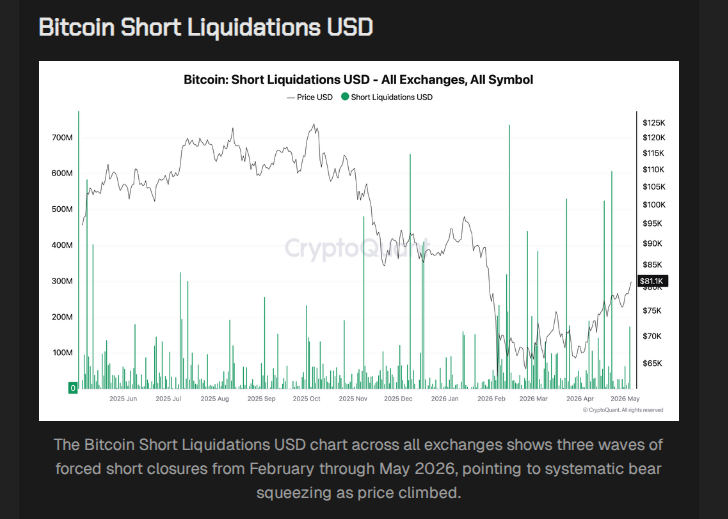
whales were shorting despite the bullish regime, so while the macro trend was up, warren was telling me to stay disciplined, paper test first, and not let the green candles make me reckless.
that’s the institutional briefing retail traders have never had access to.
i asked warren to deploy $50
i typed:
'if i deploy this strategy with $50, what guardrails would you set by default and what can i adjust?'
warren doesn’t let you start with real capital until the process is validated.
you can prove the strategy works on paper, then you graduate to live deployment with the same guardrails in place.
warren won’t just keep running a strategy because you deployed it. if the regime shifts, or if the trades start failing repeatedly, it flags you.
it sends a nudge, a calm, evidence-based prompt:
"a reallocation nudge is a concise alert i’ll send only when your strategy no longer fits the market regime. the aim: enable decision-ready shifts without turning you into a full-time risk manager."
then i asked the question every honest reviewer should ask.
'what can’t you do? what should i still be responsible for?'
the response was self explainatory:
the line that settled it for me:
"profit and risk control are always in your hands. you set the stakes and approve every risk. i keep you anchored to evidence, not emotions."
you’re not playing against other retail traders. you know that, right?
325,000 bloomberg terminals.
three hundred and twenty-five thousand.
every one of them reading data milliseconds before it reaches you.
every one of them part of an institutional machine that has been on the other side of your trades for thirty years.
and that’s just the screen, that doesn’t count the quant teams, the regime detection systems, the infrastructure budget that dwarfs the GDP of small countries.
you were never just competing against other retail traders, you were competing against that with your phone, your instincts and a platform designed to keep you busy, not winning.
the honest question was never whether you were skilled enough.
the honest question was whether you had the right machine behind you.
now you do.
warren is live and the infrastructure is open.
you don’t need $32,000 a year, a quant team, or a trading floor with green screens.
you need a risk profile, fifteen minutes, and the willingness to let the machine do the part of the job it was always better at anyway.
warren.kodeus.ai.
the traders who stay manual will keep racing algorithms on foot.
the ones who get a machine of their own are writing different statistics a decade from now.
go be one of them.
→ try warren at warren.kodeus.ai