Market Inflection Signals: Identifying High-Probability Reversal Zones Using Financial Astrology
 अक्षय तिवारी8 min read·Just now
--
Markets rarely move in straight lines. Even the strongest uptrend eventually pauses, weakens, and reverses. In the same way, deep declines often exhaust themselves just when sentiment turns most negative. For traders, investors, and risk managers, the central challenge is not only understanding trend direction but also identifying the moments when that trend is most likely to change. These moments are known as market inflection points. They are the zones where momentum fades, conviction breaks, and a new cycle begins.
Traditional finance attempts to identify these reversal zones through price action, volume behavior, macroeconomic releases, valuation signals, and technical indicators. These tools are useful, but they often react after the market has already begun to turn. Financial astrology introduces another layer to this process. Rather than focusing only on what has already happened in price, it studies timing itself. It asks a different question: when is the market environment more likely to become unstable, transitional, or prone to reversal?
This is where market inflection signals become especially powerful. In financial astrology, certain planetary alignments, transits, eclipses, lunations, retrogrades, and interplanetary aspects are viewed as timing markers that can correspond with heightened emotional intensity, volatility surges, capital rotation, and directional change. These signals do not guarantee that a reversal will happen on a specific date. Instead, they help define high-probability windows where the chance of a market turning point is greater than usual.
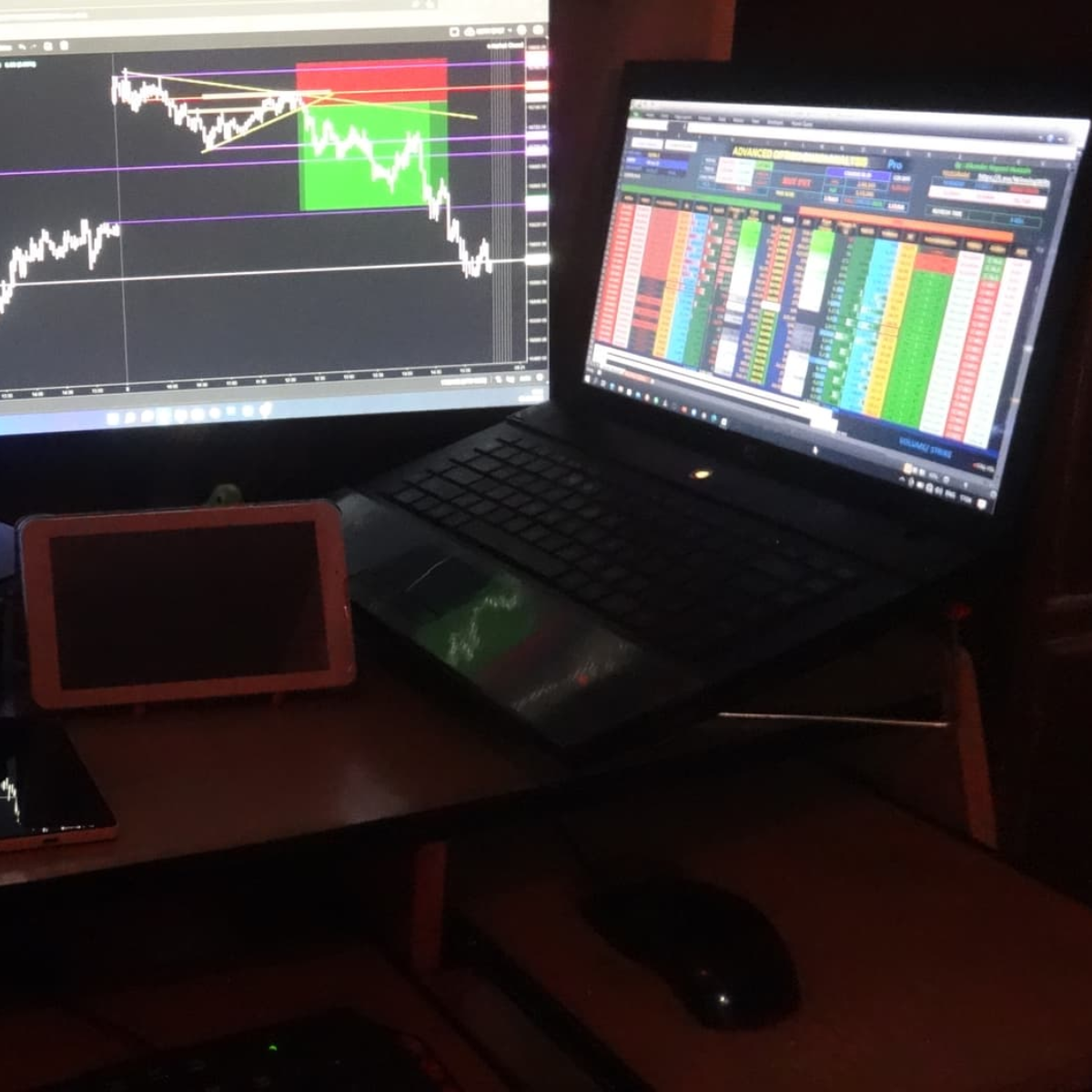
The value of this approach lies in context. A reversal zone becomes much more meaningful when several factors align at once. For example, if an index is extended after a long rally, momentum is weakening on technical charts, sentiment is overly bullish, and a major planetary trigger is approaching, the odds of a reversal increase. Likewise, if panic dominates the market, price is testing an important support band, and a supportive time cycle is forming in the astrological framework, traders may begin to prepare for a bottoming phase.
Financial astrology is not a replacement for technical or fundamental analysis. It works best as a timing overlay. It helps narrow the search window. Instead of asking traders to predict every movement, it guides attention toward periods when markets are more likely to shift from continuation to transition. That difference matters because most major gains and most painful losses often occur around turns, not during stable trends.
One of the core ideas behind financial astrology is that markets reflect human behavior, and human behavior moves in cycles. Fear, greed, hesitation, optimism, and collective emotion do not operate randomly. They rise and fall in waves. Astrology studies time-based structures that may correspond with these waves. When a key planetary pattern appears, it may reflect a change in tone across the broader financial environment. In some cases, this change shows up as volatility. In others, it shows up as a loss of momentum, a failed breakout, a capitulation low, or a sudden rotation from one sector to another.
Among the most closely watched astrological markers are New Moons and Full Moons. These lunar phases often coincide with emotional peaks, shifts in crowd psychology, and short-term market turns. A New Moon may align with the beginning of a fresh directional move, while a Full Moon may coincide with culmination, emotional excess, or reversal. On their own, these signals are not enough. However, when they occur near strong technical levels or within larger planetary cycles, they can become highly relevant.
Mercury retrograde is another widely discussed timing factor. In market terms, Mercury is associated with communication, data flow, transactions, and interpretation. During retrograde periods, confusion, noise, revisions, and market overreaction may become more common. This does not mean every retrograde is bearish. Rather, it suggests that clarity may weaken, false moves may appear more often, and traders should pay closer attention to failed breakouts and sudden reversals. In highly leveraged or headline-sensitive environments, these periods can become fertile ground for inflection signals.
Mars, Jupiter, Saturn, Uranus, Neptune, and Pluto are equally important in broader market timing. Mars can correspond with aggression, speed, and sharp directional movement. Jupiter is often linked with expansion, optimism, and overextension. Saturn relates to pressure, structure, discipline, and contraction. Uranus is associated with shocks, disruption, and surprise reversals. Neptune can distort clarity and amplify illusion, while Pluto speaks to deep transformation, power shifts, and structural change. When these planets form hard aspects, especially conjunctions, squares, or oppositions, the financial environment may enter a more unstable phase where markets become vulnerable to inflection.
A reversal zone becomes more credible when several astrological factors cluster together. This idea of clustering is essential. A single transit may create only mild influence. But when multiple time signals overlap in a narrow period, the market often enters a more sensitive state. For instance, a Full Moon near a major Saturn aspect, combined with a Mercury station and a stretched technical chart, may create conditions ripe for a reversal. Traders using this approach do not treat such clusters as certainties. They treat them as alerts, moments when risk should be managed more carefully and opportunity should be assessed more deliberately.
The concept of station points is also important. A planet is said to station when it appears to slow down before changing direction, either turning retrograde or direct. In astrology, station points are often seen as intensified moments because the symbolic energy of the planet becomes concentrated. In markets, this can correspond with hesitation, compression, and then abrupt repricing. These are the kinds of periods when a trend that looked stable suddenly loses balance. For short-term traders, station windows may offer early clues to an upcoming shift. For long-term allocators, they may highlight periods where rebalancing decisions deserve closer attention.
Another strength of financial astrology is that it encourages forward planning. Traditional analysis often becomes reactive, especially in fast markets. By contrast, time-cycle models allow investors to mark future windows in advance. This can improve discipline. Instead of chasing movement emotionally, traders can prepare scenarios. They can ask: if price reaches resistance during this window, does it become a potential short setup? If the market declines into support during this period, does it become a potential reversal candidate? This process transforms astrology from a vague idea into a structured decision-support framework.
Historical market behavior provides part of the appeal. Many analysts in this field study past turning points and compare them with planetary events. They may observe that certain indices have repeatedly reversed near eclipses, major Saturn-Uranus alignments, or Mars triggers to a national or corporate chart. Others may track sector-specific behavior, such as energy markets reacting strongly during fire-sign activations or technology names becoming more volatile during Mercury or Uranus-linked periods. Whether one views these relationships as causal or symbolic, the pattern-recognition value can still be useful if applied carefully and tested honestly.
The key phrase here is tested honestly. Financial astrology should not be used in a mystical or exaggerated way. The serious practitioner avoids sensationalism. No planetary event guarantees profit. No cycle works every time. The better approach is probabilistic. A timing signal increases awareness of when a reversal is more likely, not when it is certain. This is similar to how technical analysts use moving averages, RSI divergence, or support and resistance. None of those tools is perfect either. Their usefulness comes from disciplined application, context, and risk management.
That is why confirmation remains essential. A high-probability reversal zone identified through financial astrology should still be confirmed through market structure. Price must respond. Volume must reveal participation or exhaustion. Volatility may need to expand. Breadth may need to weaken or improve. Sentiment may need to reach an extreme. The best setups appear when astrology, technical analysis, and market psychology all point in the same direction. This fusion creates a more complete picture than any single method alone.
For institutional users, this approach offers a distinct advantage. Large portfolios do not always need precision to the exact day. They need awareness of when risk conditions are changing. If a fund manager knows that the next two weeks represent a potential inflection window, portfolio exposure can be adjusted more carefully. Hedging can be reviewed. New entries can be timed with greater patience. Sector rotation can be monitored more closely. In this sense, financial astrology becomes a framework for timing sensitivity, not prediction theater.
For retail traders, the benefit is often psychological as much as analytical. Most traders lose money not because they never see trends, but because they enter too late, overtrade noise, or fail to respect reversal risk. Time-based reversal zones can create discipline. They remind traders that not every breakout should be chased and not every selloff should be feared. Sometimes the highest-probability move is the one that emerges when the crowd is most convinced of the opposite.
Market inflection signals also matter across asset classes. Equities, indices, commodities, currencies, and even crypto can all experience reversal behavior around major timing windows. Gold may respond differently from tech stocks, and crude oil may show distinct sensitivity compared with government bonds, but the idea remains the same. Markets move through emotional and structural cycles. A well-built timing framework can help identify when those cycles are approaching transition.
As global markets become more interconnected, reversal zones can also appear across countries at once. A major planetary configuration may coincide with risk-off behavior in one region, currency pressure in another, and sector rotation elsewhere. This global perspective is one reason financial astrology continues to attract interest among investors looking for a broader market-timing lens. It helps connect local price action with wider cyclical conditions.
In the end, identifying high-probability reversal zones is not about predicting the future with certainty. It is about preparing for change before the majority recognizes it. Financial astrology offers a unique method for doing exactly that. By studying planetary cycles, time clusters, lunar phases, retrogrades, and major aspects, investors can identify periods when market behavior is more likely to shift. When these signals are combined with technical structure, sentiment analysis, and sound risk management, they become a serious timing tool rather than a speculative curiosity.
The modern market is crowded with data, models, indicators, and noise. Yet even with all that information, timing remains one of the hardest problems in investing. Financial astrology does not solve that problem completely, but it offers an overlooked edge. It helps investors focus less on random headlines and more on cyclical structure. It reveals that market turns may not be as chaotic as they seem. Often, they emerge when pressure has quietly built beneath the surface and time itself becomes the trigger.
For those seeking a deeper way to track reversal zones, volatility windows, and time-based market opportunities across global assets, explore the Financial Astrology Terminal here: