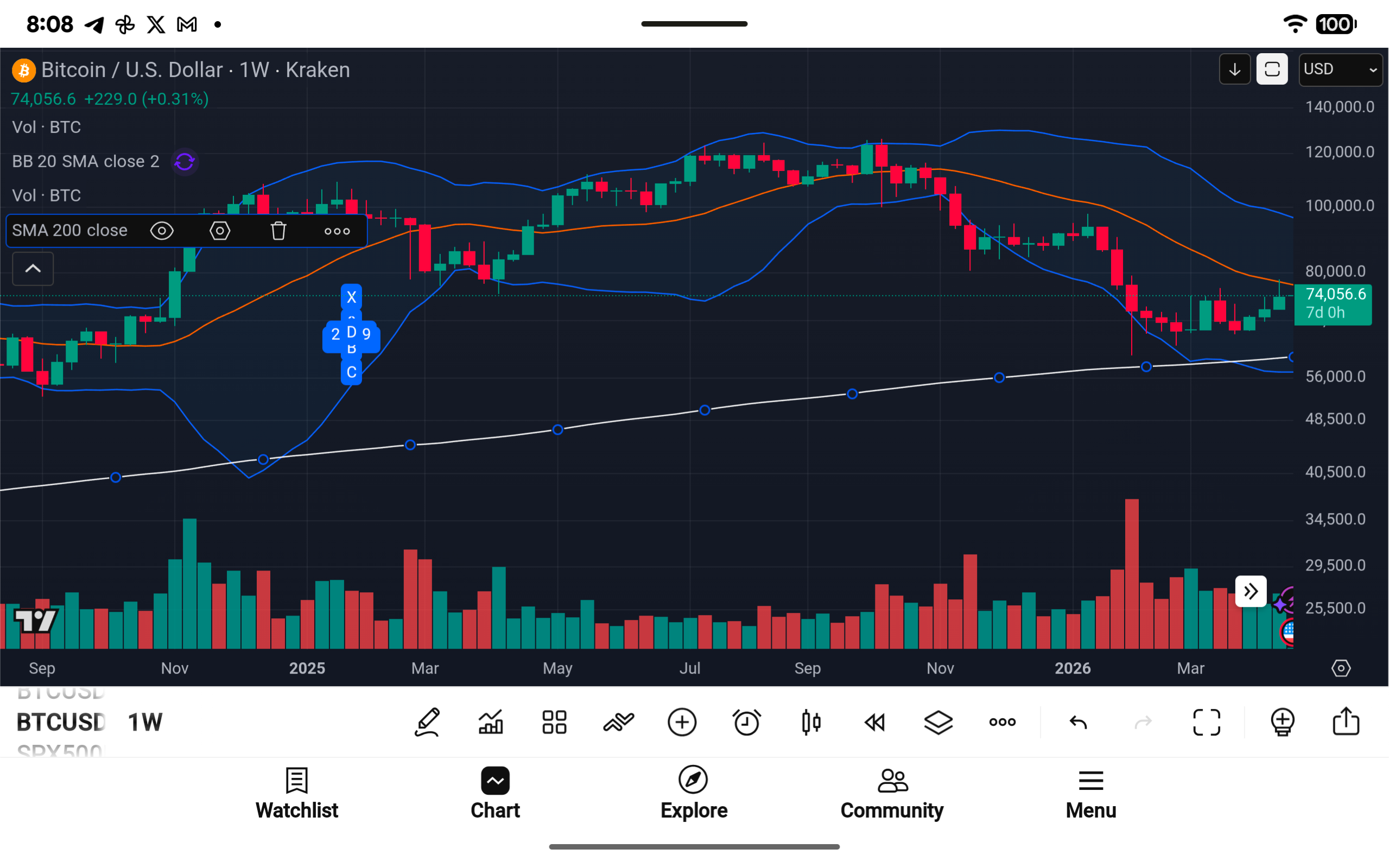
When nothing is moving, most traders look away. Charts flatten. Ranges narrow. Volume fades. The market looks dead.
It isn’t. It’s loading.
Low volatility isn’t the absence of activity. It’s the accumulation phase that precedes the next directional move. Understanding what compression actually represents changes how you respond to quiet markets.
What Compression Really Means
Price compresses for a reason. When a market narrows its range over days or weeks, it’s not because participants lost interest. It’s because opposing forces reached temporary equilibrium.
Buyers and sellers are both present. Neither side has enough conviction to push price decisively in either direction. So they trade within an increasingly narrow band, each side testing the other without committing.
This equilibrium is unstable by nature. The longer it holds, the more energy builds behind the eventual resolution. Positions accumulate. Stops cluster at the edges of the range. The market coils.
From the outside, this looks like nothing. Flat charts. Boring candles. No headlines. From the inside, the market is building the conditions for its next significant move.
Position Building Happens in Silence
Large participants don’t buy at the top of a move. They don’t sell at the bottom. They accumulate during the periods when price is quiet and attention is elsewhere.
Low volatility provides the perfect environment for position building. Spreads are stable. Price impact is minimal. A large order can be filled across multiple sessions without moving the market significantly. The accumulation happens beneath the surface, invisible to anyone watching the price chart.
This is why the biggest moves often follow the quietest periods. The positions were built during the compression. The move is the release.
Retail traders experience this as a surprise. Price was flat for weeks, then exploded in one session. It feels random. It wasn’t. The groundwork was laid during every boring candle that preceded the move.
If you leave the market during low volatility, you miss the setup. You return after the move has started, chasing a price that was available at much better levels just days earlier.
The Three Phases of Quiet
Not all low-volatility periods are equal. They tend to follow a structural progression that reveals where the market is in its cycle.
Phase one is the initial contraction. After a directional move exhausts itself, volatility drops. Participants who rode the trend take profits. New participants haven’t committed yet. The market rests. This phase is easy to identify because it follows a visible move. The chart shows a trend that flatlined.
Phase two is the compression. The range narrows further. Each day’s high and low sit inside the previous day’s range. Candle bodies shrink. Volume declines steadily. This is the accumulation phase. Large participants are building positions within the range, using the low volatility to fill orders without signaling direction.
Phase three is the coil. The range is at its narrowest. Daily candles are tiny. The chart looks like a flatline. This is maximum compression. Stops are clustered tightly on both sides of the range. The market is loaded. The next move of sufficient size will trigger a cascade.
The transition from phase three to the breakout is where the opportunity lives. But most traders have already left by phase two. They looked at the flat chart and decided nothing was happening.
Volatility Cycles Are Structural
Volatility is mean-reverting. High volatility leads to low volatility. Low volatility leads to high volatility. This isn’t a theory or a pattern that sometimes works. It’s a structural feature of markets.
After a period of expansion, participants take profits, reduce exposure, and wait. Activity declines. Ranges narrow. Volatility contracts. This contraction isn’t random. It’s the market processing the previous move and positioning for the next one.
After a period of compression, the accumulated positions and clustered stops create conditions where a small catalyst can trigger a large move. The breakout produces a new expansion phase. Volatility increases. The cycle continues.
Knowing where you are in the volatility cycle tells you more about what’s coming than any indicator or chart pattern. If volatility has been contracting for weeks, expansion is approaching. You don’t need to know the direction. You need to know the phase.
What Bollinger Band Width Actually Shows
Most traders use Bollinger Bands to identify overbought or oversold conditions. That’s a secondary use. The primary information is in the bandwidth itself.
When the bands narrow to their tightest point in weeks or months, the market is in maximum compression. This is a measurable, objective signal that volatility has contracted to an extreme and is likely to expand.
The squeeze doesn’t tell you direction. It tells you timing. The expansion is coming. Whether price breaks up or down depends on the positions that were built during the compression and the catalyst that triggers the release.
Traders who ignore the squeeze because the chart looks boring are ignoring the most reliable structural signal the market offers. Low bandwidth doesn’t mean low opportunity. It means opportunity is building.
The Accumulation Signature
During compression phases, certain patterns emerge in the data that suggest position building is underway.
Volume declines on a daily basis but doesn’t disappear. Consistent low volume across many sessions indicates steady participation at stable prices. If volume collapsed to near zero, it would suggest genuine disinterest. Steady low volume suggests quiet accumulation.
The range narrows but holds. Price respects both the upper and lower boundaries of the compression. Each test of the boundary gets absorbed without a break. This absorption suggests that participants on both sides are actively defending their positions within the range.
Open interest increases while price stays flat. In derivatives markets, rising open interest during low volatility means new positions are being opened. Traders are building exposure at current prices, preparing for a move that hasn’t happened yet.
None of these signals are dramatic. None of them will generate alerts or headlines. They’re subtle structural clues that the quiet market is quietly preparing for something.
Why This Matters for Timing
The practical application of understanding compression is simple: the best entries happen when the market looks worst.
During high volatility, everyone is paying attention. Entries are expensive, stops are wide, and the market is already in motion. You’re buying momentum, which sometimes works and sometimes reverses.
During low volatility, no one is paying attention. Entries are cheap, stops are tight, and the market hasn’t committed to a direction. You’re buying potential, which gives you favorable risk-reward before the move even starts.
A position entered during compression with a stop at the edge of the range has defined risk. If the range breaks in your direction, the reward is the entire expansion move. If it breaks against you, the loss is the width of the range. That asymmetry only exists during low volatility.
Once the expansion starts, the asymmetry disappears. You’re no longer buying compression. You’re chasing momentum. The risk-reward deteriorates with every candle.
The Setup You Keep Ignoring
The next time your charts look boring, pay attention. Measure the range. Check the bandwidth. Look at volume patterns. Ask whether the market is genuinely inactive or whether it’s building.
Compression is not the absence of opportunity. It’s the presence of opportunity that hasn’t been priced yet.
The traders who profit from big moves aren’t the ones who react to the breakout. They’re the ones who were already positioned during the quiet. They watched the compression form, understood what it represented, and committed before the crowd showed up.
The setup phase doesn’t feel like a setup. It feels like nothing is happening. That’s exactly why it works.
If this resonated
Most of these patterns are easier to see in hindsight than in the moment.
I wrote a short piece on when being right still feels wrong:
Follow on X: @SwapHunt
This content is for educational purposes only. Not financial advice.
Low Volatility Is Not Random — It’s a Setup Phase was originally published in Coinmonks on Medium, where people are continuing the conversation by highlighting and responding to this story.