A platform can look cheap on paper and still cost more once spreads, slippage, and funding are factored in.
A lot of traders choose platforms the same way shoppers choose discounts.
They see lower fees and assume they found the cheaper option.
A lot of the time, they did not.
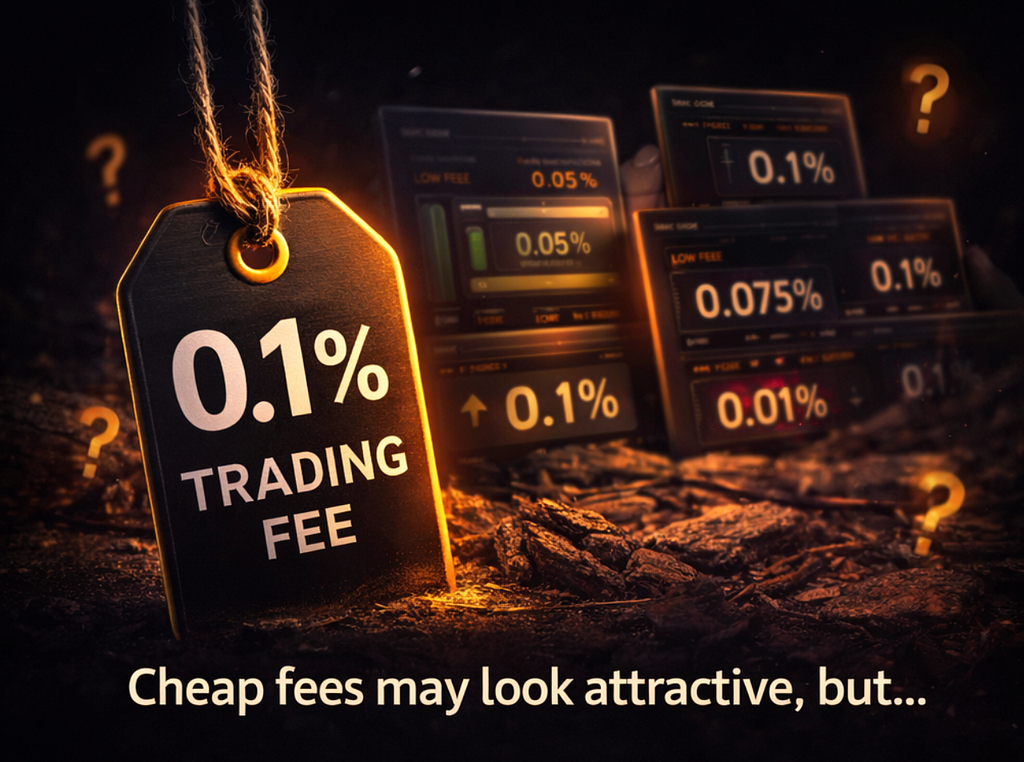
That mistake is more common than it looks, because “low fees” sounds like a complete answer. It feels measurable. Simple. Easy to compare.
But trading costs are rarely that simple.
A platform can advertise lower fees and still cost more where it matters most: inside the actual trade.
That is because fees are only one layer of cost. What sits around them is where the real difference starts to appear.
The first layer most traders miss is the spread.
That is the gap between the price you can buy at and the price you can sell at. Usually it looks small. Harmless, even. But it is there on every trade, quietly affecting both your entry and your exit.
Then there is execution quality.
In a fast market, the price you expect is not always the price you get. Orders do not fill in theory. They fill in live conditions, with real liquidity, real speed, and real friction.
That is where slippage starts to matter.
You enter expecting one price, and the execution lands slightly above or below it. On a single trade, the difference may feel minor. Repeated over time, it stops being minor.
And that is the part many traders overlook.
They focus on the visible fee because it is easy to compare. But the hidden costs are often more powerful precisely because they are less obvious.
Then there are the costs that depend on how you trade.
Funding is a good example. If you are trading futures and holding positions for longer, funding starts to become part of the equation. It is not the first thing most beginners think about, but it becomes very noticeable once trades stay open longer or get repeated often enough.
Individually, none of these costs always look dramatic.
Together, they shape the real result.

That is why two traders can take the same setup on two different platforms and still walk away with different outcomes, even if their timing looks identical on the chart.
The assumption is usually that one trader was simply better.
Often, the difference is structural.
One platform looked cheaper. The other actually traded cheaper.
That is the distinction that matters.
Because the real cost of trading is rarely one clean percentage on a pricing page. It is a combination of small frictions working in the background of every order.
Fees.
Spreads.
Execution quality.
Slippage.
Funding.
On their own, each one may seem manageable.
Together, they decide far more than most traders realize.
Understanding that does not change the market.
But it changes how you evaluate where and how you trade.
Instead of only asking, “What are the fees here?”
You start asking a better question:
“What does it actually cost me to trade here?”
That shift alone puts you ahead of most participants.
Tags:
- Cryptocurrency
- Trading
- Investing
- Finance
- Crypto Trading
Low Trading Fees Don’t Always Mean Lower Costs was originally published in DataDrivenInvestor on Medium, where people are continuing the conversation by highlighting and responding to this story.