
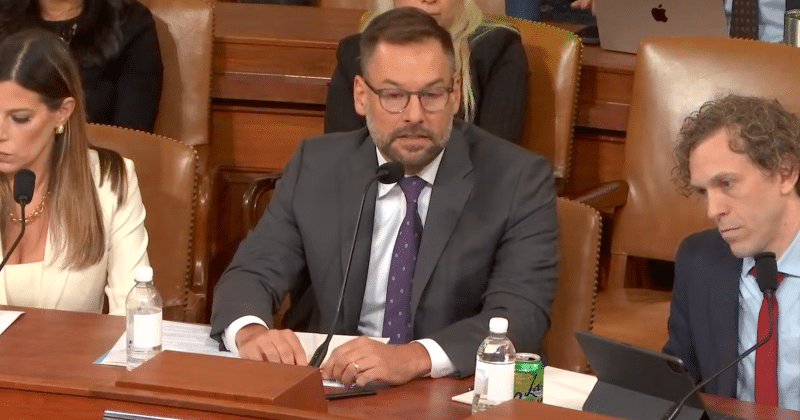
Jason Somensatto advocates for Bitcoin tax reforms before US lawmakers
Coin Center's policy director urged Congress to create a de minimis exemption for crypto transactions under $600, arguing the current tax framework punishes everyday users.
Share
Add us on Google by Editorial Team Jun. 9, 2026Every time you buy a coffee with Bitcoin, the IRS technically wants to hear about it. Jason Somensatto, Director of Policy at Coin Center, told Congress on June 9 that this needs to change.
Somensatto testified before the House Ways and Means Committee, the congressional body that controls tax policy, pushing for a de minimis exemption that would spare personal crypto transactions under $600 from triggering capital gains reporting. In English: if you spend a small amount of Bitcoin on everyday purchases, you shouldn’t need to calculate and report the gain or loss on that fraction of a token.
The $600 threshold and why it matters
The core problem traces back to 2014, when the IRS classified digital assets as property rather than currency. That single decision created a world where every Bitcoin transaction, no matter how small, generates a taxable event. Buy a sandwich for $12 in Bitcoin? You technically owe capital gains tax on whatever appreciation occurred between when you acquired that Bitcoin and when you spent it.
AdvertisementHis proposed fix mirrors how the US already treats foreign currency. When Americans use euros or yen for small personal transactions, they don’t need to report gains under a certain threshold. Somensatto argued that Bitcoin and other digital assets deserve the same treatment, at least for transactions under $600 including fees.
The hearing wasn’t just about one proposal, either. Lawmakers discussed six standalone digital asset tax bills during the session, a signal that there’s real bipartisan appetite for cleaning up the regulatory mess surrounding crypto taxation. No immediate legislative action was taken, but the sheer number of bills on the table suggests this issue has graduated from “interesting policy discussion” to “something Congress might actually do.”
Coin Center’s broader push
Somensatto’s testimony wasn’t a one-off appearance. He previously testified on July 16, 2025, and again on October 1, 2025, covering topics like staking taxation and broker reporting requirements.
His arguments align with a six-priority policy paper that Coin Center released in January 2026, laying out what the nonprofit considers the most urgent reforms needed to make digital asset regulation workable. The de minimis exemption sits near the top of that list, but the broader vision includes clarifying how staking rewards are taxed and addressing the scope of broker reporting rules that have drawn criticism from privacy advocates and DeFi developers alike.
What this means for investors
A de minimis exemption wouldn’t change much for traders moving large volumes or institutions managing crypto portfolios. Those transactions would still carry full reporting obligations. The reform targets a different audience entirely: the person who wants to tip a content creator $20 in Bitcoin, or pay for a rideshare, or split a dinner bill using a crypto wallet.
The bipartisan nature of the hearing is also worth noting. Tax policy in Washington is usually a partisan battlefield, but both sides of the aisle appear to recognize that the current rules create unnecessary burdens on ordinary people.
Investors should watch whether any of the six bills discussed in the hearing advance to markup, the stage where committee members actually amend and vote on legislation. With multiple bills, repeated testimony from organizations like Coin Center, and visible bipartisan interest, the probability of meaningful tax simplification for small crypto transactions is higher than it has been at any point since the IRS first issued its 2014 guidance.
Disclosure: This article was edited by Editorial Team. For more information on how we create and review content, see our Editorial Policy.