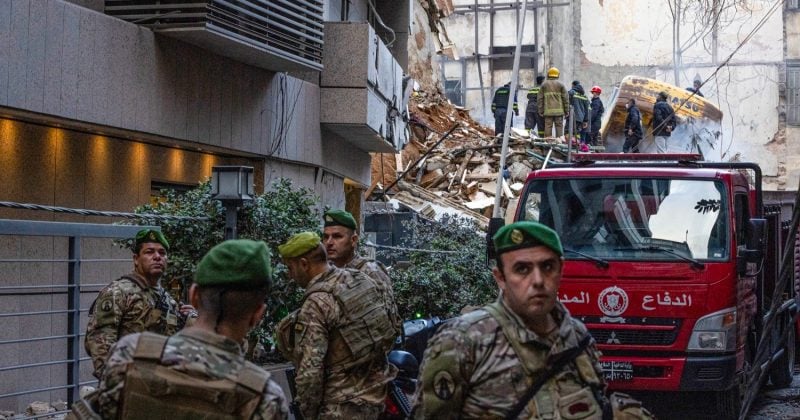
Israel expands military operations into Lebanon against Hezbollah despite ceasefire
Netanyahu orders troops beyond buffer zone with over 120 airstrikes, rattling crypto markets as Bitcoin slips below $80K.
Share
Add us on Google by Editorial Team May. 31, 2026Israeli Prime Minister Benjamin Netanyahu ordered a significant expansion of military operations into southern Lebanon on May 26, targeting Hezbollah positions well beyond the buffer zone established just weeks earlier. The move effectively upends the fragile US-brokered ceasefire framework that had been holding since April, and it’s already sending ripples through global risk markets, including crypto.
Bitcoin slipped below $80,000 as the escalation unfolded.
What happened on the ground
The Israeli Defense Forces launched more than 120 airstrikes against Hezbollah targets across two regions: southern Lebanon and the Bekaa Valley.
Netanyahu described the operation as a “decisive shift” designed to fortify the security strip protecting northern Israeli communities. Israeli forces advanced past the self-declared “Yellow Line” buffer zone, a boundary Israel itself drew after the April ceasefire to create separation between its northern towns and Hezbollah positions.
AdvertisementNetanyahu stated that Israeli forces are “operating with large forces in the field and capturing and controlling areas” to fortify the security strip.
Among the sites captured was Beaufort Castle, a hilltop fortress in southern Lebanon. Israeli forces seized the same position 44 years ago during the First Lebanon War.
Hezbollah responded with drone and rocket strikes against Israeli positions.
The ceasefire that wasn’t
The US-brokered ceasefire talks have been extended into early July, folded into a broader diplomatic framework that includes negotiations with Iran. The April ceasefire created the Yellow Line buffer zone as the tangible expression of that agreement. Crossing it isn’t just a military decision — it’s a statement that the diplomatic architecture is no longer constraining Israeli strategy.
The Bekaa Valley strikes are particularly notable. That’s deep into Lebanese territory, far from the southern border area where most of the fighting has been concentrated, suggesting Israel is targeting Hezbollah’s logistics and supply infrastructure across Lebanon.
What this means for crypto investors
Bitcoin struggling below $80,000 amid this escalation fits a pattern seen throughout 2026, where rising Middle East tensions have correlated with declining crypto prices.
Hyperliquid, the perpetual futures platform, saw spiked volumes in oil-linked perps during earlier regional escalations in 2026. The July deadline for ceasefire extension talks becomes the next key date on the calendar.
Disclosure: This article was edited by Editorial Team. For more information on how we create and review content, see our Editorial Policy.