Islamic Revolutionary Guard Corps strikes US air bases across Middle East, warns of stronger retaliation
Iran's 'True Promise 4' operation targeted facilities in Iraq, Kuwait, the UAE, and Bahrain, raising fresh questions about how geopolitical escalation ripples through crypto markets.
Share
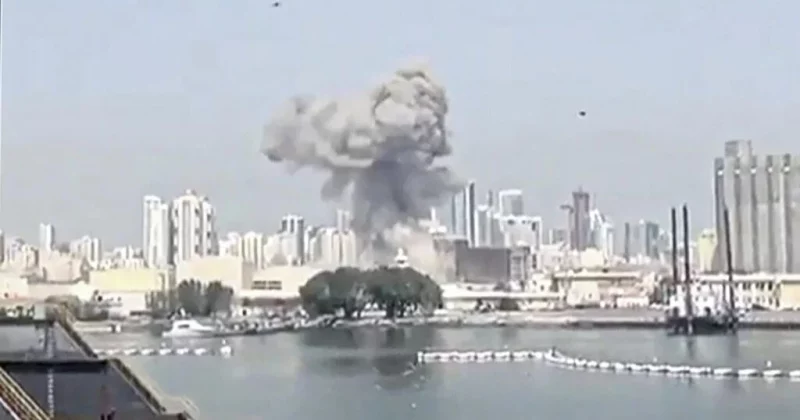
Add us on Google by Editorial Team May. 27, 2026Iran’s Islamic Revolutionary Guard Corps claimed responsibility for a coordinated wave of missile and drone strikes against multiple US air bases across the Middle East around March 15, 2026. The operation, dubbed “True Promise 4,” hit facilities in at least four countries and came with a blunt warning: any future aggression would be met with something worse.
The strikes reportedly targeted Al-Harir air base in Erbil, Iraq, along with Ali Al Salem and Arifjan bases in Kuwait, Al Dhafra Air Base in the UAE, and Sheikh Isa Air Base in Bahrain. Initial reports suggest no casualties were recorded at any of the targeted facilities, though the claims have not been independently verified.
AdvertisementA regional conflict widens
This is not the first time the IRGC has launched strikes against US military infrastructure. The most notable precedent was the January 2020 attack on Al-Asad Airbase in Iraq, which came in retaliation for the US killing of General Qasem Soleimani. That strike resulted in traumatic brain injuries for over 100 US service members, though no fatalities.
Hostilities between Iranian and US-Israeli forces began escalating sharply in late February 2026, with retaliatory actions from both sides creating a feedback loop of strikes and counter-strikes.
Al Udeid Air Base in Qatar, America’s largest military installation in the Middle East, was also referenced in connection with the operation, though the exact nature of any action there remains unclear.
The sanctions and stablecoin connection
USDT wallets have previously been linked to IRGC-connected entities, raising persistent questions about how sanctioned actors use stablecoins to move value outside traditional banking rails. No specific tokens have been tied to the strikes in any meaningful way, though this represents the primary intersection between the conflict and cryptocurrency markets.
Tether has historically cooperated with law enforcement requests to freeze wallets, but the speed and thoroughness of that cooperation tends to come under scrutiny whenever Iran is in the headlines.
Disclosure: This article was edited by Editorial Team. For more information on how we create and review content, see our Editorial Policy.