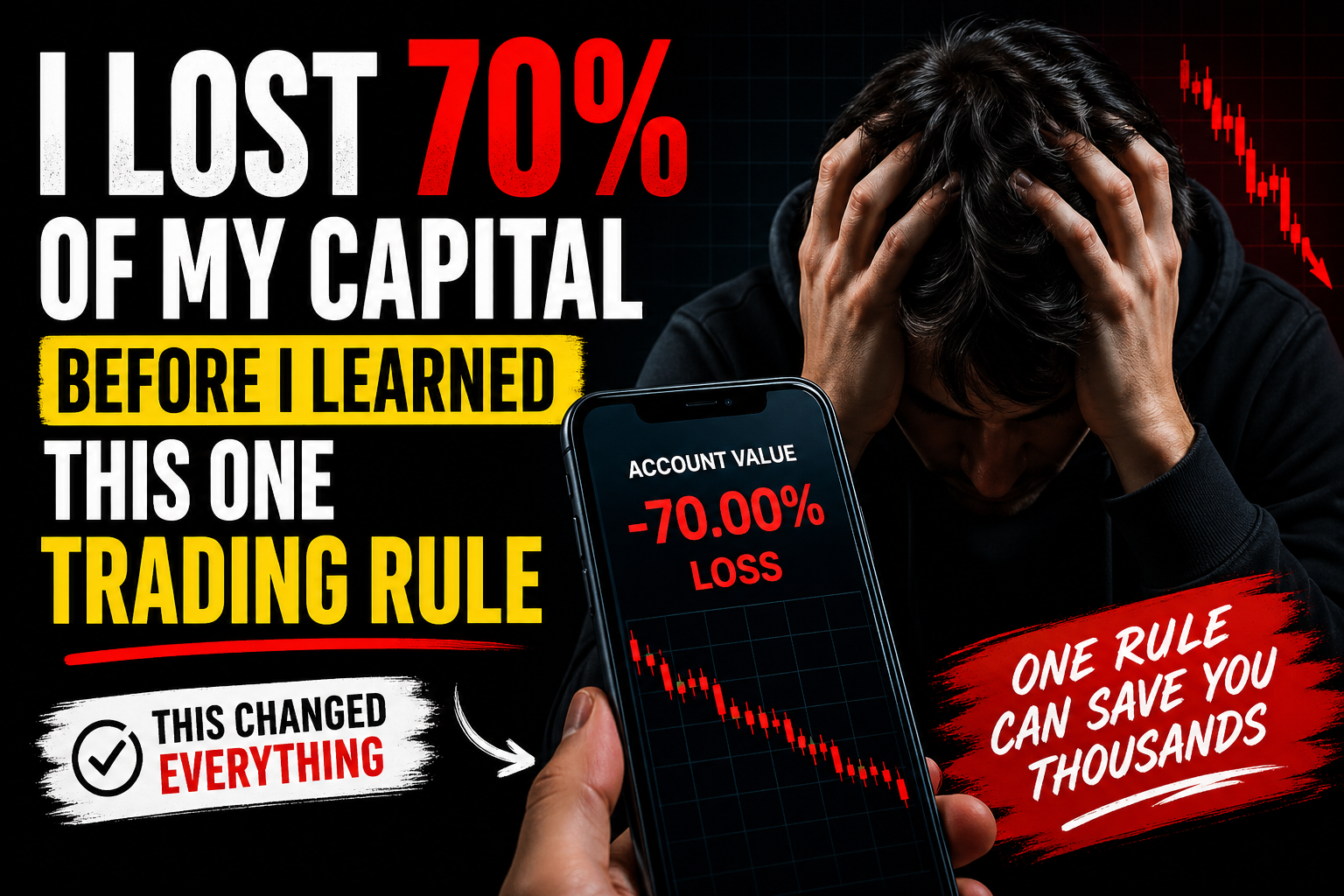
IS TRADING A GOOD SIDE HUSTLE IN 2026? HERE IS THE HONEST ANSWER
Is trading a good side hustle in 2026? Discover the real risks, platforms, strategies, and income potential before you risk your first dollar.
 Income Drops Official6 min read·Just now
--
IS TRADING A GOOD SIDE HUSTLE IN 2026? HERE IS THE HONEST ANSWER What most finance influencers won’t tell you about making money trading online
The trading side hustle dream is everywhere right now. TikTok traders flashing profits, YouTube channels promising consistent returns, Reddit threads full of people claiming they quit their jobs. But is trading actually a realistic way to earn extra income in 2026, or is it a fast track to losing the money you already have? This article breaks it all down, so you can make an informed decision before you put a single dollar on the line.
What Trading as a Side Hustle Actually Means
Trading as a side hustle means using your own capital to buy and sell financial instruments, stocks, ETFs, forex pairs, commodities, or crypto, with the goal of generating profits beyond your regular income. Unlike investing, which is passive and long-term, active trading requires time, attention, and a real strategy. Most people who try it treat it like a game. The ones who succeed treat it like a business.
There are several styles of trading that work for part-time participants. Swing trading holds positions for days or weeks and suits people with full-time jobs. Options trading can generate income through strategies like covered calls. Crypto trading runs 24/7, which gives flexibility but also adds risk. Each style has its own learning curve, capital requirement, and risk profile.
The Real Numbers Behind Trading Income
Here is the statistic most influencers skip. Studies consistently show that between 70 and 80 percent of retail traders lose money over a 12-month period. A 2023 report by the European Securities and Markets Authority found that 74 percent of retail CFD traders lost money. In 2026, with higher market volatility driven by AI disruptions, geopolitical shifts, and interest rate uncertainty, those odds have not improved dramatically for beginners.
That said, the traders who do succeed are not mythical creatures. They are disciplined people who treated the learning phase seriously, risked small amounts at first, and did not expect overnight results. The average profitable retail swing trader makes between 10 and 25 percent annually on their trading capital. On a $5,000 account, that is $500 to $1,250 per year, which is a side income, not a salary replacement.
The 5 Side Hustles Beating Inflation in 2026 (And Trading Is Only One of Them) Most people chase one income stream and wonder why they feel financially stuck. The real earners in 2026 are combining multiple low-effort strategies that compound over time.
- One freelancer added $1,100 a month in passive income without leaving their day job
- A 27-year-old from Ohio turned a $300 investment into a recurring $800 monthly stream
- The strategy ranked number one requires zero experience and under two hours a week to set up Read the full story → click here
The Best Platforms for Trading Extra Income in 2026
Choosing the right platform makes a significant difference. In the US, Webull and Tastytrade are popular for commission-free stock and options trading. Interactive Brokers remains the go-to for serious traders who want access to global markets and advanced tools. For crypto, Coinbase Advanced and Kraken offer reliable infrastructure with reasonable fees.
For those interested in forex, platforms like OANDA and IG Markets provide educational resources alongside live trading. If you are in Southeast Asia or other emerging markets, Exness and Pepperstone have grown significantly in 2025 and 2026, offering tighter spreads and localized support. Always verify that your chosen broker is regulated in your country before depositing funds.
How Much Capital Do You Actually Need
The make money trading online dream often glosses over the capital question. The honest answer is this: the less capital you start with, the harder it is to generate meaningful income without taking excessive risk. Most experienced traders recommend starting with at least $1,000 to $2,000 for stock swing trading, and never risking more than 1 to 2 percent of your account on a single trade.
With $500, you can learn and develop discipline, but your income potential is extremely limited. With $5,000, you can realistically target $300 to $600 in monthly income through options strategies if you know what you are doing. With $20,000 or more, trading starts to function like a genuine part-time income source. These numbers assume skill and consistency, not luck.
How Beginners Are Making Their First $1,000 Online in 30 Days Without Trading Experience Not everyone who makes money online starts with markets. A growing group of first-time earners found a smarter entry point that requires no capital, no prior knowledge, and no special equipment.
- A stay-at-home parent from Texas made $1,200 in her first month using a single free tool
- One beginner documented every step publicly and hit $847 in week three alone
- The method works on a phone and takes less than 90 minutes a day to run Read the full story → click here
The Skills You Need Before You Start Trading for Extra Income
Trading is not a get-rich shortcut. It is a skill-based activity that rewards preparation. Before placing your first live trade, you should understand basic technical analysis, how to read candlestick charts, what support and resistance levels mean, and how to manage risk with stop-loss orders. These are not advanced concepts, but they take time to internalize through practice.
Most serious traders recommend spending at least 30 to 90 days paper trading, which means simulated trading without real money, before going live. Platforms like Thinkorswim by TD Ameritrade offer full paper trading environments. This phase is not optional if your goal is to protect your capital and actually build a side income rather than just gamble.
The Psychological Side No One Talks About
Fear and greed are the two forces that destroy most trading accounts. A trader who lets a losing position run because they cannot accept the loss, or who takes profits too early because they are afraid the market will reverse, will struggle regardless of their strategy. Emotional discipline is not something trading platforms teach you, and it is not something you develop overnight.
Keeping a trading journal is one of the most effective habits you can build early. Logging every trade, your reasoning for entering, your emotional state, and the outcome creates a feedback loop that accelerates learning. Traders who journal consistently report better decision-making within three to six months compared to those who do not.
Is Trading the Right Side Hustle for You in 2026?
Trading for extra income in 2026 is neither a scam nor a guaranteed path to financial freedom. It is a legitimate skill that takes time, capital, and emotional maturity to develop. For analytical people who enjoy markets, can handle uncertainty, and are willing to invest in education before chasing profit, it can become a meaningful second income stream over one to three years.
If you want quick returns with little preparation, trading will likely cost you more than it earns. But if you are willing to approach it like a craft, learn proper risk management, choose a regulated platform, and start with realistic expectations, the trading side hustle can absolutely deliver in 2026.
Start with paper trading this week. Pick one style, one platform, and one strategy. Give yourself 60 days to learn it properly before touching real money. That single decision could be the difference between joining the 75 percent who lose and the 25 percent who do not.