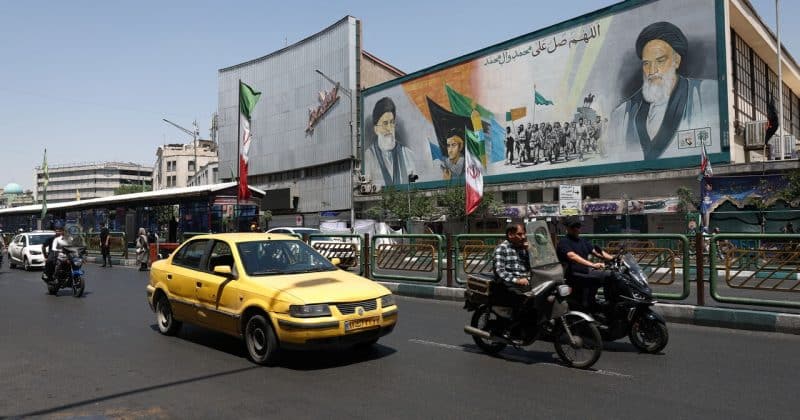
Iran targets US bases in Jordan and Gulf after Trump orders strikes near Hormuz
The IRGC launched missile and drone attacks on American military installations across three countries, sending shockwaves through crypto markets already rattled by months of escalation.
Share
Add us on Google by Editorial Team Jun. 10, 2026Iran’s Islamic Revolutionary Guard Corps fired missiles and drones at US military bases in Jordan, Bahrain, and Kuwait on June 10, marking one of the most direct confrontations between Tehran and Washington in decades. The attacks, which targeted the Al-Azraq base in Jordan and Ali Al-Salem base in Kuwait among others, were framed by Iran as retaliation for US airstrikes that President Trump ordered against Iranian air defense systems and surveillance installations near the Strait of Hormuz.
What happened and why it matters
The IRGC’s strikes represent a calculated escalation. Targeting US bases across three separate countries, rather than a single installation, signals Tehran’s willingness to broaden the geographic scope of its retaliation. Jordan, Bahrain, and Kuwait all host significant American military infrastructure, and hitting all three simultaneously was clearly designed to demonstrate reach.
AdvertisementThe trigger was Trump’s order to strike Iranian air defenses near the Strait of Hormuz, one of the most strategically important chokepoints on the planet. Roughly 20% of the world’s oil passes through that narrow waterway.
Bitcoin’s geopolitical volatility pattern
During previous escalation events earlier this year, Bitcoin dropped below $64,000 before rebounding above $100,000. The range between the panic low and the recovery high has been enormous, reflecting just how sensitive crypto markets have become to geopolitical headlines.
The sanctions dimension
US authorities have previously frozen hundreds of millions in Bitcoin linked to Iranian entities. The broader universe of Iranian crypto holdings subject to sanctions pressure is believed to total approximately $7.7 billion.
That’s a meaningful amount of capital sitting in a regulatory gray zone. Every time the conflict escalates, the likelihood of additional enforcement actions increases. More seizures would remove liquidity from the market, while also sending a signal to other state actors about the risks of using crypto to circumvent sanctions.
The compliance burden on exchanges operating in this environment has grown substantially. Platforms that facilitate transactions even tangentially connected to sanctioned entities face significant legal exposure, which means tighter screening, slower processing, and potentially reduced liquidity during exactly the moments when traders need it most.
Disclosure: This article was edited by Editorial Team. For more information on how we create and review content, see our Editorial Policy.