Iran demands access to frozen assets in US negotiations over sanctions relief
Tehran wants $12 billion released upfront as a goodwill gesture, while Washington holds firm against unconditional concessions.
Share
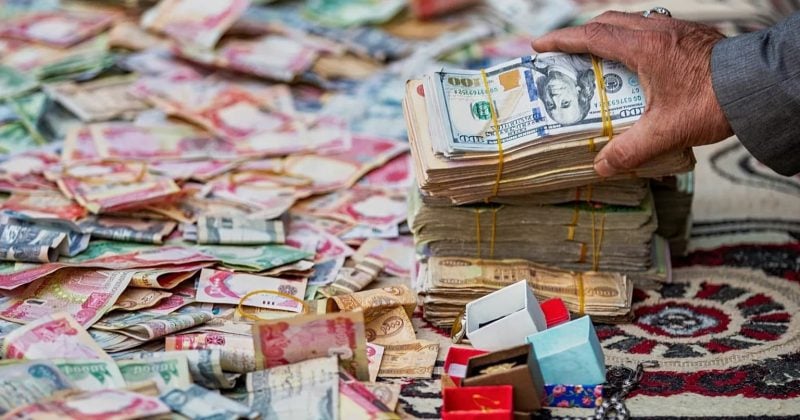
Add us on Google by Editorial Team Jun. 4, 2026Iran is pushing the US to unlock roughly $12 billion in frozen assets as a precondition for signing a memorandum of understanding, a demand that has effectively stalled diplomatic progress between the two nations. The funds are part of a larger $24 billion tranche held primarily in accounts in Qatar, and Iranian negotiators want the money released through controlled or indirect channels rather than direct transfers.
Washington isn’t budging. The Trump administration has rejected any form of broad sanctions relief or asset releases before a formal agreement is reached, creating a standoff that has rippled through oil markets and risk assets alike.
A $100 billion question with a $12 billion down payment
Iran’s total frozen assets abroad are estimated at $100 billion or more, scattered across international financial institutions and locked up under layers of US sanctions. The $24 billion tranche currently under discussion represents what Iranian officials view as the most immediately accessible portion. Much of it sits in Qatari accounts, a legacy of energy trade revenues that Tehran can see on paper but can’t touch in practice.
Iran’s negotiating position is straightforward: release $12 billion now as a gesture of good faith, and we’ll keep talking. The mechanism they’ve proposed, controlled or indirect channels for fund disbursement, is designed to address Washington’s concern that cash could flow to sanctioned entities or military programs.
AdvertisementThis isn’t without precedent. In 2023, a prisoner swap deal saw approximately $6 billion in frozen Iranian funds accessed through a similar controlled mechanism. That arrangement drew fierce criticism from Republican lawmakers who argued it amounted to paying ransom, a political reality that makes any current administration deeply reluctant to repeat the playbook.
US negotiators have made their position clear: no money moves until ink dries on a comprehensive agreement. The administration views any pre-agreement release as leverage surrendered.
Oil volatility and the crypto wrinkle
The stalemate has consequences well beyond the negotiating table. A fragile ceasefire linked to ongoing US-Iran tensions has kept oil prices volatile. Every leaked report of progress sends crude lower on expectations of increased Iranian supply. Every report of an impasse sends it higher.
The US has recently sanctioned Nobitex, Iran’s largest cryptocurrency exchange, freezing over $1 billion in Iranian digital assets. The $12 billion in traditional frozen assets and the $1 billion-plus in frozen crypto assets exist in almost entirely separate narratives. No major crypto protocols have meaningful exposure to the traditional funds under negotiation, indicating a decoupling of traditional finance and crypto narratives even as Bitcoin and other digital assets react to broader geopolitical uncertainty.
A breakthrough in Iran negotiations would likely move oil prices more dramatically than crypto prices. But a breakdown, especially one that escalates tensions, could hit risk assets across the board, crypto included.
What this means for investors
For oil market participants, if negotiations produce even a partial asset release, it signals a warming of relations that could eventually lead to increased Iranian oil exports. If talks collapse entirely, the opposite applies, with the added risk of military escalation that could disrupt Gulf shipping lanes.
For crypto investors, the Nobitex sanctions are the more immediately relevant development. Freezing over $1 billion in digital assets signals that regulators are getting better at tracing and seizing crypto connected to sanctioned entities. Exchanges operating in jurisdictions with weak compliance frameworks should be taking notes.
The $12 billion demand also sets up a potential domino effect. If Iran secures even partial access to frozen funds, other sanctioned nations will be watching closely for precedent, a scenario with implications far beyond the current US-Iran standoff.
Disclosure: This article was edited by Editorial Team. For more information on how we create and review content, see our Editorial Policy.