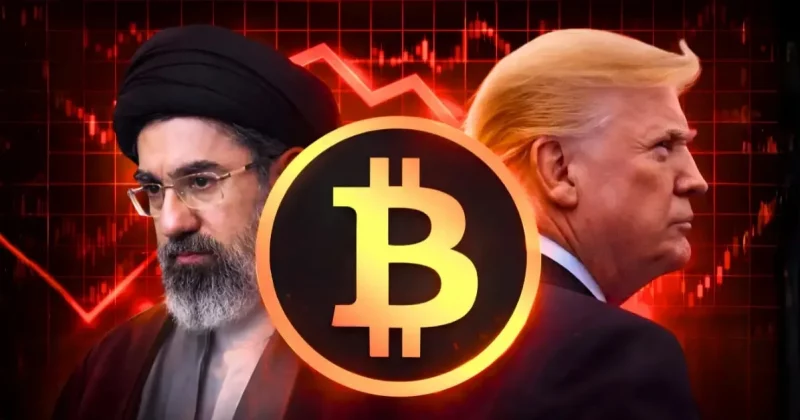
Iran condemns US strikes as ceasefire violation, vows response as crypto markets brace for volatility
US Central Command calls the May 26 strikes on Iranian missile sites near Bandar Abbas 'self-defense,' while prediction markets see record volumes and Bitcoin reacts to every headline.
Share
Add us on Google by Editorial Team May. 26, 2026The fragile ceasefire between the US and Iran lasted about seven weeks before things got complicated again. On May 26, US forces struck Iranian missile launch sites and mine-laying vessels near the strategic port city of Bandar Abbas, prompting Iran’s Foreign Ministry to condemn the action as a direct violation of the April 8 ceasefire agreement.
What happened and why it matters
US Central Command characterized the strikes as acts of self-defense, targeting what it described as active threats: missile launch sites and boats engaged in mining operations near Bandar Abbas. That city sits along the Strait of Hormuz, one of the most consequential chokepoints in global energy logistics. Roughly a fifth of the world’s oil passes through it on any given day.
AdvertisementIran sees it differently. The Foreign Ministry labeled the strikes a breach of the two-week ceasefire framework that was agreed upon in April 2026. That framework was itself the product of escalating hostilities involving Iran, the US, and Israel earlier this year, with maritime disruptions near the Strait serving as the primary flashpoint.
Prediction markets and Bitcoin react in real time
Polymarket, the blockchain-based prediction platform, saw trading volume exceed $529 million on contracts related to various US-Iran conflict outcomes during this latest escalation.
Bitcoin’s price action has mirrored the headlines almost tick for tick. During earlier ceasefire announcements, Bitcoin surged past $72,700 as traders interpreted de-escalation as a risk-on signal.
The broader conflict landscape
The US-Iran confrontation didn’t start in April. It intensified throughout early 2026, driven by Iranian threats to disrupt shipping through the Strait of Hormuz and a series of proxy engagements involving Israel. The April ceasefire was meant to be a circuit breaker, giving both sides space to negotiate without the pressure of active hostilities.
What this means for crypto investors
The Polymarket volumes point to a broader shift in strategy. Traders are increasingly using prediction markets as a leading indicator, essentially a crowdsourced intelligence feed for geopolitical risk. If a ceasefire contract’s implied probability starts dropping hours before any official news, that’s a signal. And signals like that are already being wired into crypto trading strategies.
Disclosure: This article was edited by Editorial Team. For more information on how we create and review content, see our Editorial Policy.