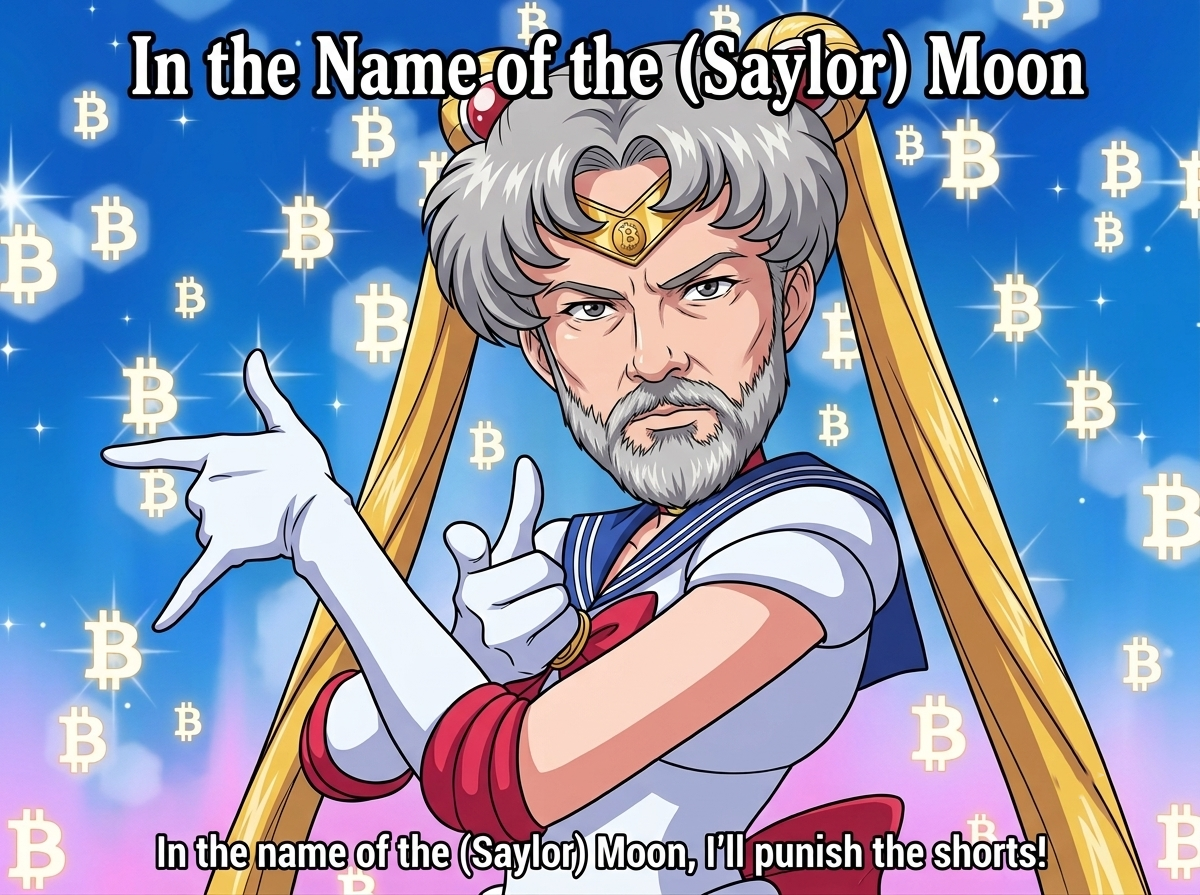
In the Name of the (Saylor) Moon
 Dick Lo4 min read·Just now
--
08-June-2026
- The fragile Middle East ceasefire fractured further over the weekend as localised skirmishes devolved into direct state-on-state missile strikes. On Saturday, U.S. Central Command intercepted multiple Iranian drone attacks heading toward the Strait of Hormuz, triggering retaliatory U.S. strikes on radar installations in Goruk and on Qeshm Island.
- The northern front also intensified as Israeli airstrikes targeted Hezbollah infrastructure in Lebanon, prompting Hezbollah to launch a salvo of rockets and drones at military barracks in northern Israel. Crucially, Tehran initiated its first direct missile offensive against Israel since the April ceasefire, unleashing waves of strikes in retaliation of Israel’s military operations in Lebanon.
- Despite President Trump’s appeals to Israeli Prime Minister Netanyahu to defer retaliation to afford Washington more time to negotiate a diplomatic framework with Tehran, the IDF confirmed it has already struck military targets across western and central Iran. While President Trump maintains that a peace deal could be reached as early as this week, the market has grown wary of such assertions against a backdrop of escalating regional hostilities.
- Last Friday’s employment report delivered a massive headline surprise, with May non-farm payrolls surging by 172k, more than doubling the consensus estimate of 85k. Adding hawkish fuel to the fire, the prior two months were revised upward by a net 93k. However, it should be noted that net job creation was highly concentrated within just two sectors: leisure and hospitality, and local government. This concentration implies that the headline growth was not driven by a broader private-sector expansion. Nonetheless, the hot employment data, arriving alongside sticky and elevated inflation, has prompted the market to fully price in a rate hike by December. Cleveland Fed President Beth Hammack further underscored this hawkish shift, reiterating statements from her speech a few days prior that “it may soon be appropriate to act” on monetary policy.
- Tonight’s Strategy announcement is expected to be pivotal, following Michael Saylor’s Sunday evening social media post implying a resumption of Bitcoin purchases after an unexpected 32 BTC sale the week prior. Market participants are speculating on several potential scenarios. Chief among them is a structure in which the firm may have sold up to $2 billion of Bitcoin to shore up cash reserves and allay market fears regarding its dividend runway, while simultaneously realising tax losses on higher-cost-basis BTC. Under this thesis, the firm could have concurrently issued MSTR equity, deploying those proceeds to repurchase BTC to maintain its core net exposure while securing a distinct tax advantage. Any confirmation of an improved corporate cash position, thereby removing the overhang of a potential forced liquidation, would be supportive for near-term BTC price action and allow Saylor Moon to punish the shorts with an optimised capital framework. A word of caution is warranted however, given MSTR only raised a modest $128 million from common stock issuance the previous week, it would have been a gargantuan task to issue $1 billion+ into a falling market with fragile sentiment. A modest improvement in cash position will likely be insufficient to erase the recent downside momentum.
Trading Roadmap
A trifecta of headwinds including Friday’s robust employment report, accelerating escalations in the Middle East, and persistent supply overhang concerns surrounding Strategy, weighed heavily on Bitcoin over the weekend, briefly driving it below the $60k psychological support level. Clients capitalised on this pullback as a tactical opportunity to harvest rich premiums on OTM puts, selling a variety of tenors and strikes spanning August through December. The steepening volatility skew also enhanced the appeal of risk reversals, with notable interest in the December $50k/$75k structure.
While structural bears have grown increasingly confident during this correction, their loudest declarations of victory historically coincide with generational bottoms, much like the frantic calls for $10k Bitcoin following the FTX bankruptcy. The eager speculation surrounding Strategy’s demise, paired with rapidly falling near-term price targets, evokes a psychological environment remarkably similar to the 2022 market floor, albeit an active geopolitical conflict has been thrown into the mix this time around.
The primary driver of the current selloff is less likely due to Saylor’s sale of 32 BTC but more likely stems from the SpaceX IPO, where a massive $75 billion capital raise has created a temporary liquidity vacuum, as investors liquidate highly liquid risk proxies such as BTC to fund their allocations.
Meanwhile, we may be witnessing the initial stages of a structural correction in AI equities following a year of parabolic gains, a trend exemplified by the heavy selloff in Korean semiconductor titans like Samsung Electronics and SK Hynix. Looking beyond Friday (after the listing of SpaceX), the return of capital from IPO oversubscriptions and the cash harvested from the semiconductor cooldown is primed to rotate directly into the asset class that has most aggressively underperformed: a wash-out, potentially double-bottomed BTC.
Disclaimer
All information, levels, prices and documents provided herein are being provided for general informational purposes only and should not be considered as a solicitation, offer or recommendation by TDX Strategies Ltd or any of its affiliates. Please read and fully understand our “Electronic Communication Disclaimer” which can be found at https://www.tdx-strategies.com/electronic-communication.