--
If You Don't Understand Your Yield, You're Probably Paying For It
This week, I've been sitting with an uncomfortable truth about DeFi that I think we need to talk about more openly:
In markets, if you don't understand the source of your return — you're often the one providing it.
I've spent time digging into this, and what I found changed how I look at yield forever. Let me walk you through what I learned.
The Illusion of Easy Yield
We've all seen it. You open a DeFi dashboard and there it is — a beautiful, glowing APY. 50%, 100%, sometimes even higher.
The interface makes it look incredibly simple: deposit your tokens, watch the numbers go up. The design is clean, the flow is smooth, and honestly, it feels like you'd be foolish not to participate.
But here's what kept nagging at me: where is this money actually coming from?
Most platforms don't really explain it. They show you the headline number and leave it at that. And look, I get it — simplicity sells. But simplicity can also be dangerous.
Yield looks effortless on the surface, but the reality underneath? That's where things get complicated.
The Gap Between What You See and What You Get
Here's what I discovered after digging deeper: the APY you see is rarely the return you get.
It sounds obvious when I say it out loud, but how often do we actually calculate it?
Let me break down what eats away at those attractive numbers:
Gross vs. Net Return The APY displayed is typically a gross figure. It doesn't account for what you lose along the way.
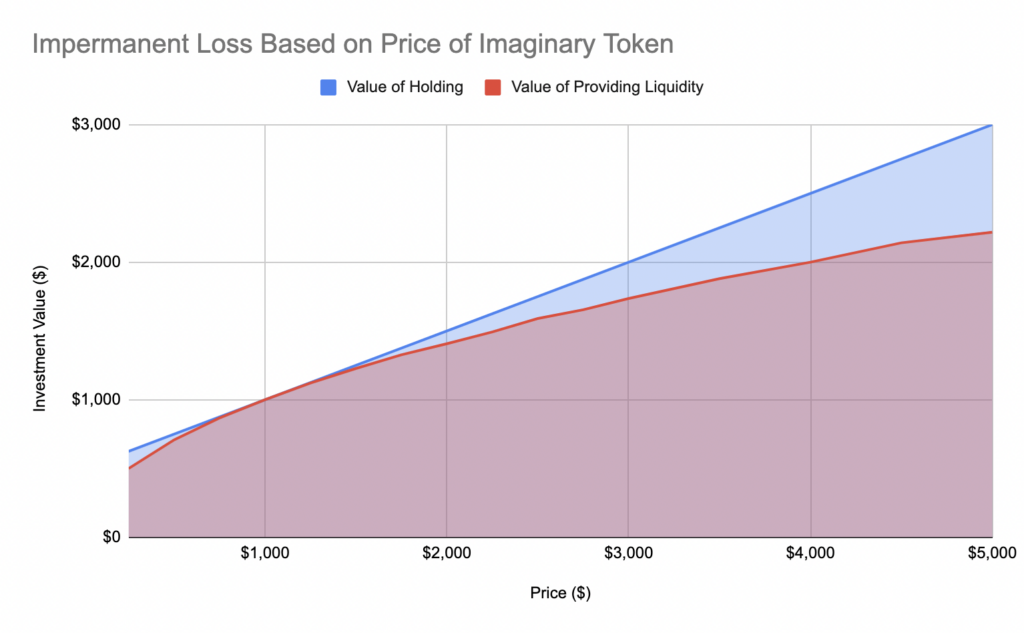
Impermanent Loss If you've provided liquidity to a pool, you've probably heard this term. But have you actually calculated it? When the price of your assets moves, you might end up with less value than if you'd just held them. That "yield" you earned? It might just be your own principal being returned to you in a different form.
Rebalancing Costs Strategies need maintenance. Every rebalance costs gas, and in volatile markets, those costs add up fast.
Execution Friction Slippage, timing, market impact — there are a dozen small leaks that compound over time.
Volatility Impact Markets move. Strategies that work in one environment can fall apart in another.
When you stack all of these together, a 50% APY can compress to something far less impressive. Sometimes it even turns negative.
This was eye-opening for me. The gap isn't small — it's often the entire difference between profit and loss.
Where Yield Actually Comes From
This is the part that really matters, and it took me a while to fully understand.
Yield isn't magic. It has sources. Here are the main ones:
Trading Fees This is probably the most straightforward. Liquidity pools earn fees from every trade that goes through them. This is sustainable yield — it's real economic activity.
Lending Activity When you deposit into lending protocols, borrowers pay interest. Simple, relatively predictable, and tied to actual demand for capital.
Arbitrage Price discrepancies between markets create opportunities. Sophisticated players capture these for profit. This is competitive and requires skill and speed to execute.
Liquidations When borrowers get over-leveraged, their positions get liquidated. Liquidators earn a fee for cleaning up the mess. It's real, but it's sporadic.
Incentives and Emissions This one's tricky. Protocols often pay yield in their own tokens to attract capital. It can look like high returns, but here's the question: is this sustainable revenue, or just a temporary subsidy?
Not all yield is created equal.
Some of these sources are durable — trading fees, lending interest. Others are fragile — token emissions can (and often do) dry up. Understanding which is which is the difference between building wealth and catching a falling knife.
The Hidden Value Transfer
This is where things get uncomfortable, but I think we need to say it plainly:
If you don't understand the system, you may be the one subsidizing it.
I'll give you some examples of what this looks like in practice:
Providing liquidity without understanding risk: You might earn fees, but if you're not accounting for impermanent loss, you could be slowly bleeding your own capital while thinking you're profiting.
Earning incentives while absorbing downside: Those token rewards look great... until the token price collapses and you realize the yield didn't cover the loss in value.
Participating without modeling outcomes: You deposit into a complex strategy without fully understanding the mechanics. Someone else — probably more sophisticated — is optimizing against you.
This is the uncomfortable truth behind the headline I started with. In any market, there are people who understand the game deeply and people who don't. The first group tends to profit. The second group tends to provide that profit.
The system doesn't break — it works exactly as designed.
Why Different People Get Different Results
Here's something I noticed: two people can enter the same protocol and have completely different outcomes.
Why?
It comes down to approach:
Some users optimize purely for APY. They chase the highest number on the dashboard. It feels productive, but it often leads to the outcomes we just discussed — being the one providing yield rather than earning it.
Others analyze structure, cost, and risk. They dig into the mechanics. They model scenarios. They understand what they're actually participating in.
Institutions model before deploying capital. They don't guess. They simulate, stress-test, and calculate expected outcomes before committing funds.
Same system. Different approaches. Wildly different outcomes.
The difference isn't luck. It's understanding.
The Shift From Chasing to Engineering
This research led me to an important realization: DeFi is evolving.
We're moving from:
Yield Chasing → Yield Engineering
What does this mean?
Instead of hunting for the highest displayed number and hoping for the best, yield engineering involves:
Modeling expected outcomes before you deploy
Managing risk deliberately rather than ignoring it
Optimizing over time as conditions change
Focusing on net returns — what actually ends up in your pocket
This is the difference between gambling with better branding and building a sustainable strategy.
This Is Where Infrastructure Matters
All of this raises a question: if understanding yield requires this much work, how is anyone supposed to do it effectively?
This is exactly why I've been paying attention to what Concrete Vaults are building.
They're creating infrastructure that addresses these problems directly:
Automated Allocation Instead of manually moving funds between strategies, the system handles it. Fewer errors, better execution.
Managed Strategies The complexity of yield engineering — understanding sources, modeling outcomes — is built into the design.
Position Rebalancing When conditions change, the system adapts. You're not stuck in a strategy that stopped making sense.
Reduced Manual Errors Let's be honest — we all make mistakes. Automation removes human error from the equation.
What this creates is a path from guessing to structured exposure.
You're not hoping you found a good yield opportunity. You're accessing infrastructure designed to capture real yield while managing real risk.
The Core Insight
After all this research, here's what I want to leave you with:
Yield is not just a number.
It's a formula:
Yield = Revenue − Costs − Risk
That's it. Everything else is noise.
Revenue comes from real economic activity — trading fees, lending interest, legitimate market operations.
Costs are everything that leaks value along the way — transaction fees, slippage, time, complexity.
Risk is what you're exposed to when things don't go according to plan — and in crypto, things often don't.
When you see an APY, you're seeing a projection. When you understand the components, you're seeing reality.
Understanding that distinction changes how you approach DeFi entirely.
You stop being the person providing yield. You start being the person capturing it.
Final Thoughts
This week's exploration was uncomfortable, but I think that's the point. Growth requires confronting what we don't know.
The DeFi space is maturing. The days of naive yield chasing are giving way to something more sophisticated — and honestly, more honest.
If you want to see what this looks like in practice, I'd encourage you to explore what's being built at Concrete:
👉 app.concrete.xyz
The infrastructure exists now. The choice is yours: keep chasing numbers, or start engineering outcomes.
Until next time.
This article is part of an ongoing research series by app.concrete.xyz, exploring the deeper mechanics of DeFi. None of this is financial advice — it’s simply what I’ve learned from spending time in these systems. Always do your own research.