If You Can’t Explain Yield, You Are the Yield
--
DeFi made yield visible.
It put real-time dashboards in front of users. It simplified participation into a few clicks. Deposit assets, watch numbers go up, track APY as it fluctuates.
On the surface, earning yield has never looked easier.
But in making yield easy to see, DeFi made it much harder to truly understand.
Because behind every clean interface and attractive APY lies a more complicated reality — one most users never stop to question:
Where is that yield actually coming from?
The Illusion of Simplicity
Open any DeFi dashboard and you’ll see the same pattern:
- High APYs displayed prominently
- Simple “deposit → earn” flows
- Minimal explanation of underlying mechanics
The experience is intentionally frictionless. Capital goes in, yield comes out.
But this simplicity is an illusion.
Yield is not a static number. It is the result of multiple moving parts — market conditions, participant behavior, protocol design, and hidden costs — all interacting in real time.
What looks like a clean percentage is often the surface layer of a much messier system.
The Gap Between Displayed and Real Yield
The number you see is rarely the number you keep.
Displayed APY is typically a gross figure. It does not fully account for the factors that shape your actual outcome:
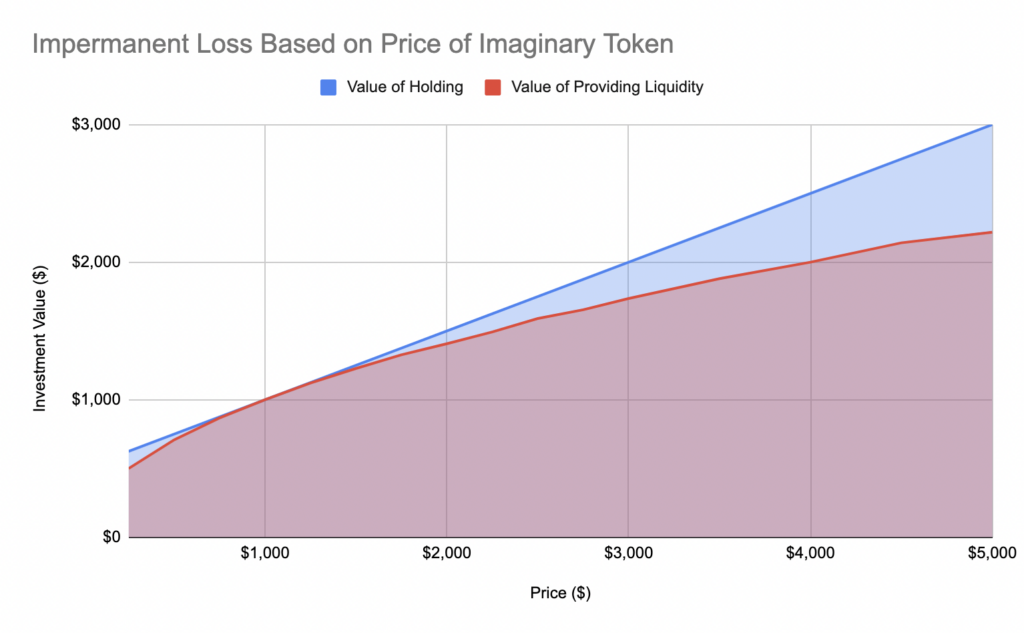
- Impermanent loss can erode gains in liquidity pools
- Rebalancing costs reduce efficiency over time
- Execution friction (slippage, gas, timing) impacts returns
- Volatility changes the value of underlying assets
- Compounding assumptions may not hold in practice
A 40% APY can compress dramatically once these elements are accounted for. In some cases, what appears profitable on paper becomes marginal — or even negative — in reality.
Understanding yield requires moving from headline numbers to net outcomes.
Where Yield Actually Comes From
Yield is not generated out of thin air. It always has a source.
In DeFi, the primary sources include:
- Trading fees paid by users swapping assets
- Lending activity, where borrowers pay interest
- Arbitrage, capturing inefficiencies across markets
- Liquidations, where risk is priced and enforced
- Token incentives / emissions, used to bootstrap participation
But not all yield is equal.
Some sources are organic and sustainable, like fees from real usage. Others are subsidized and temporary, like emissions designed to attract liquidity.
Treating all yield as the same is one of the most common mistakes users make.
Hidden Value Transfer
This is where the system becomes more subtle.
If you don’t understand how yield is produced, you may not realize what role you are playing in producing it.
In many cases, users are:
- Providing liquidity without fully pricing risk
- Earning incentives while absorbing downside volatility
- Participating in systems they haven’t modeled
That means the “yield” they receive may actually be a transfer of value — one that favors more informed participants.
In other words:
If you can’t explain the yield, there’s a good chance you are the one funding it.
Why Outcomes Differ
Not everyone in DeFi earns the same result — even within the same protocol.
Why?
Because participants operate with different levels of understanding:
- Some users chase the highest APY
- Others evaluate structure, cost, and embedded risk
- More sophisticated players model scenarios before allocating capital
The system is the same.
The outcomes are not.
The difference is not access — it’s comprehension.
From Yield Chasing to Yield Engineering
DeFi is beginning to evolve.
The early phase was defined by yield chasing — moving capital quickly to wherever APY appeared highest.
The next phase is yield engineering.
This shift involves:
- Modeling expected returns rather than assuming them
- Managing risk as actively as return
- Optimizing strategies over time
- Focusing on net yield, not just displayed yield
It’s a move from reactive behavior to structured decision-making.
Toward Structured Exposure: Concrete Vaults
This is where infrastructure starts to matter.
Instead of relying on manual execution and fragmented strategies, systems like Concrete Vaults introduce a more structured approach to yield.
Concrete Vaults help by:
- Automating capital allocation across strategies
- Managing positions dynamically
- Rebalancing in response to market conditions
- Reducing operational and execution errors
Rather than guessing where yield comes from, users gain exposure to strategies that are designed, monitored, and adjusted over time.
This shifts participation from intuition-based decisions to engineered outcomes.
Explore Concrete at: https://app.concrete.xyz
The Core Insight
Yield is not just a number on a screen.
It is:
- Revenue
- minus cost
- adjusted for risk
Understanding that changes everything.
It changes how you evaluate opportunities.
It changes how you allocate capital.
It changes whether you are capturing value — or unknowingly giving it away.
Because in markets, the rule is simple:
If you can’t explain the yield, you are the yield.