If You Can’t Explain Yield, You Are the Yield
--
DeFi made yield easy to see.
Dashboards are clean.
APYs update in real time.
Deposit, wait, earn.
It feels simple.
Too simple.
Because most users never stop to ask the only question that actually matters:
Where is that yield coming from?
The Illusion of Simple Yield
On the surface, DeFi looks frictionless.
You deposit into a pool.
You see a percentage.
Your balance starts going up.
No explanation required.
Yield is presented like a product —
something you can just “get.”
But under the hood, it’s not simple at all.
It’s a system of flows, trades, incentives, and risk transfers.
And if you don’t understand those flows,
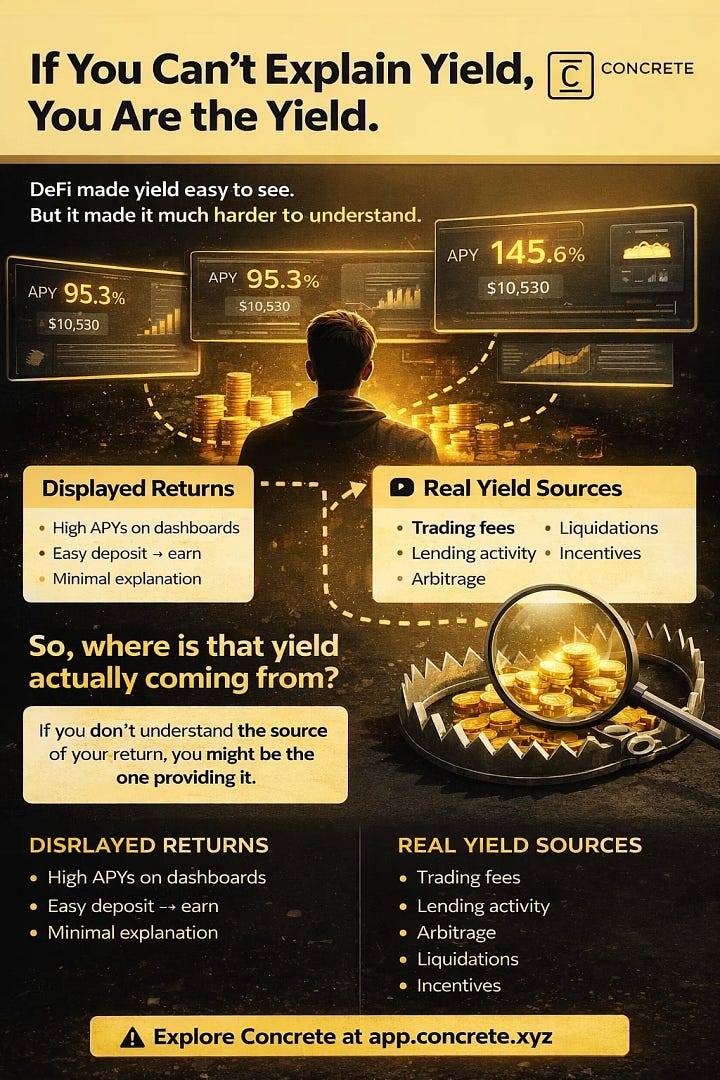
you’re not just earning yield —
you might be providing it.
The Gap Between Displayed and Real Yield
The number you see is rarely the number you get.
APY is usually gross yield.
What matters is net outcome.
Between those two, a lot happens:
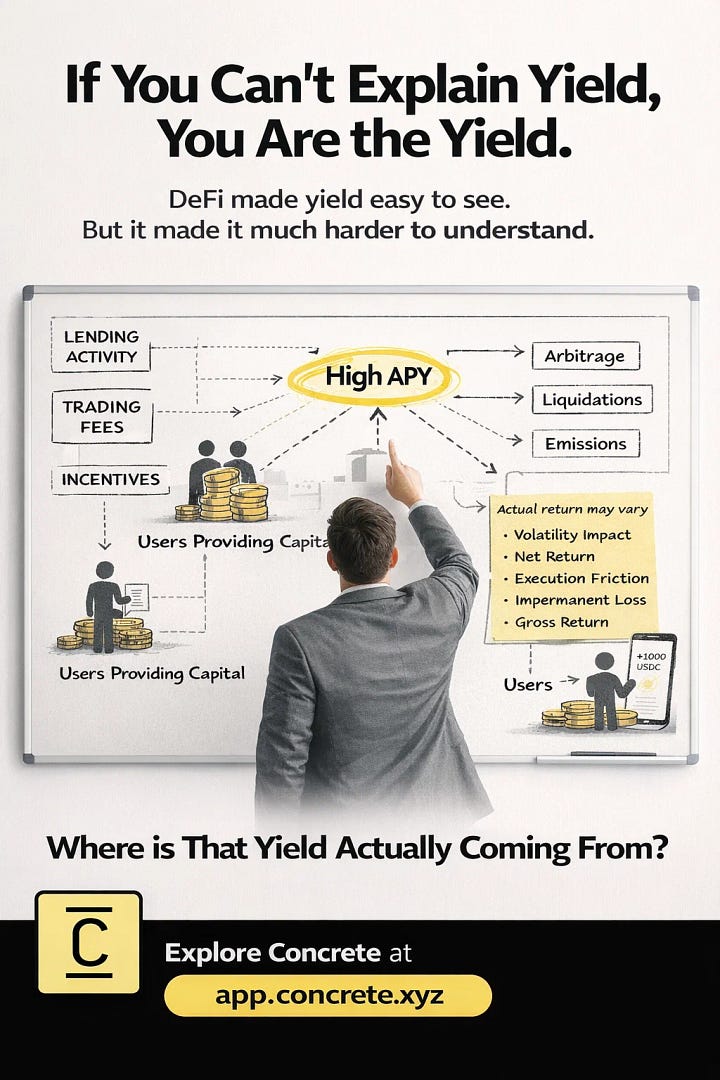
Impermanent loss eats into returns.
Rebalancing introduces timing costs.
Gas fees reduce compounding efficiency.
Volatility changes the payoff profile.
Liquidity shifts affect execution quality.
That “20% APY” can compress fast.
Not because it was fake —
but because it was incomplete.
Where Yield Actually Comes From
Yield doesn’t appear out of nowhere.
It comes from somewhere. Always.
In DeFi, that usually means:
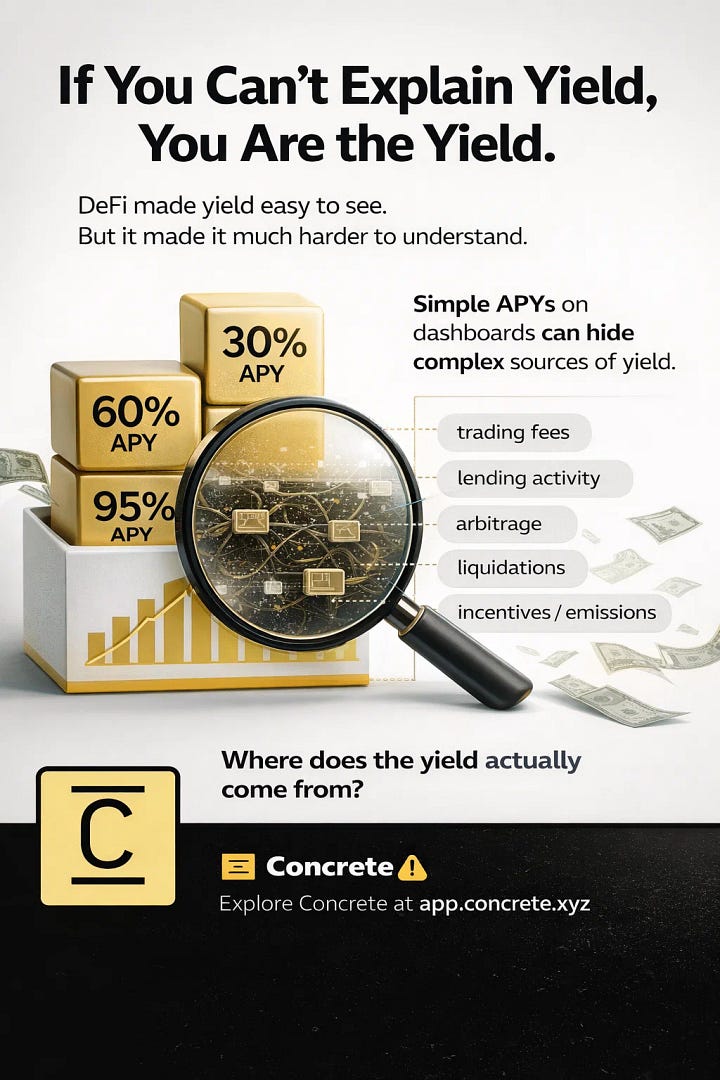
Trading fees from market activity
Borrowing demand in lending markets
Arbitrage between price differences
Liquidations during market stress
Token incentives and emissions
Some of these are sustainable.
Some are temporary.
Some depend on other participants making mistakes.
That’s the part people don’t like to think about.
Hidden Value Transfer
Here’s the uncomfortable truth:
If you don’t understand the system,
you might be the one subsidizing it.
Providing liquidity without modeling downside
Earning incentives while absorbing volatility
Holding positions that others are hedging against
You think you’re farming yield.
But in reality, you’re part of the mechanism that creates it.
This is what the title means.
If you can’t explain the yield, you might be the yield.
Same System, Different Outcomes
Not everyone in DeFi gets the same result.
Even when they use the same protocol.
Some users chase the highest APY.
Others analyze structure, cost, and risk.
Institutions model expected outcomes before deploying capital.
Same system.
Different approach.
Different results.
The gap isn’t access.
It’s understanding.
From Yield Chasing to Yield Engineering
DeFi is starting to shift.
Slowly, but clearly.
From:
“Where is the highest APY?”
To:
“What is the expected outcome after cost and risk?”
This is the move from yield chasing to yield engineering.
It means:
Modeling returns, not guessing
Managing risk, not ignoring it
Optimizing over time, not reacting daily
Focusing on net yield, not headline numbers
This is how capital starts to behave seriously.
Where Concrete Vaults Fit In
This is exactly the problem Concrete Vaults are designed to address.
Instead of users trying to manually optimize everything, vault infrastructure handles it structurally.
Concrete Vaults:
Automate capital allocation
Manage strategies continuously
Rebalance positions over time
Reduce execution friction
Enforce risk-aware deployment
The goal isn’t to promise higher APY.
It’s to deliver structured exposure.
Users move from guessing → to participating in a system that’s designed to manage capital properly.
That’s a very different experience.
The Only Insight That Matters
At the end of the day, yield is not a number.
It’s a result.
A result of:
Revenue
Minus cost
Adjusted for risk
If you understand that, you approach DeFi differently.
You stop chasing numbers.
You start evaluating systems.
And that’s when things begin to compound the right way.
Explore Concrete at app.concrete.xyz 🚀