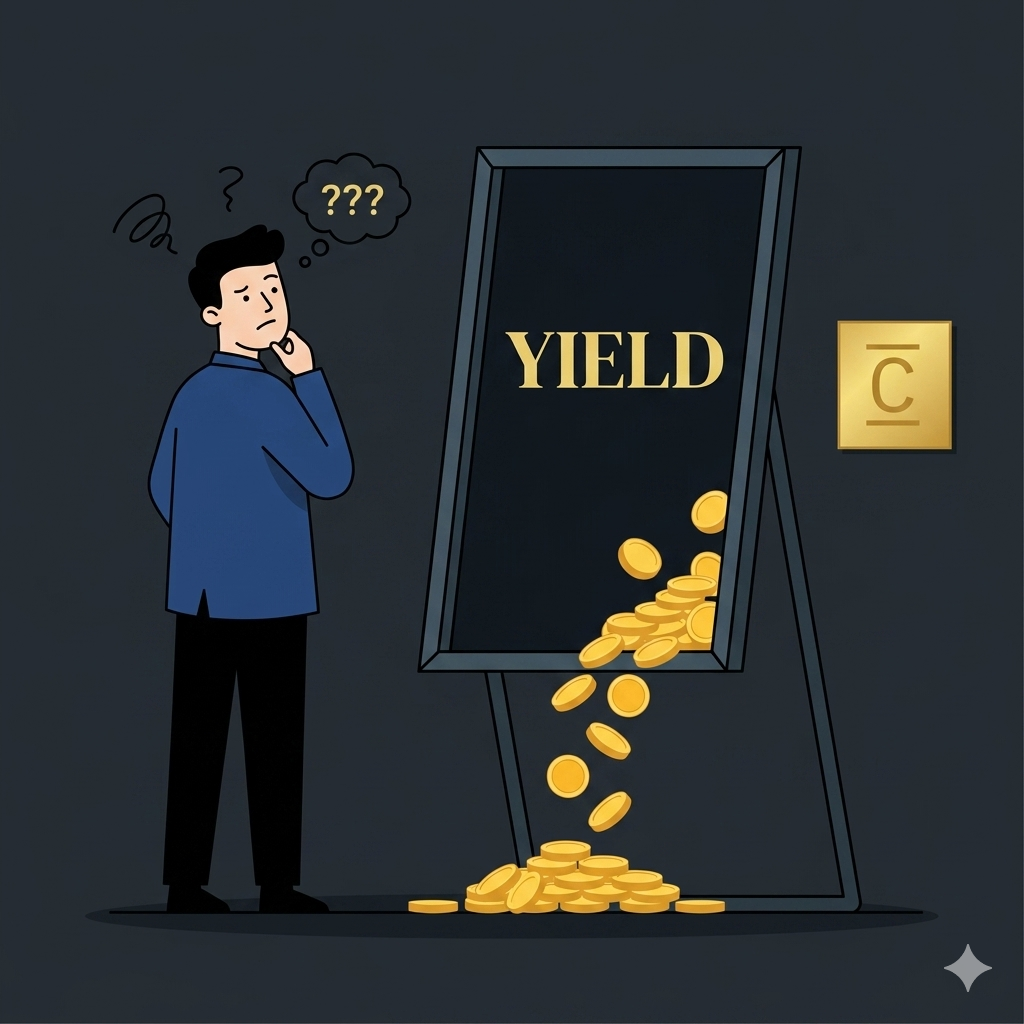
If You Can’t Explain Yield, You Are the Yield.
--
DeFi made yield easy to see. Understanding where it actually comes from is a different matter entirely.
There is an old saying in financial markets: if you sit down at a poker table and you cannot spot the sucker, you are the sucker. DeFi has its own version of this.
If you cannot explain where your yield is coming from, who is paying it, why they are paying it, and what you are giving up in return, there is a reasonable chance you are the one providing value to someone else’s strategy without fully realising it.
That is not a comfortable thought. But it is an honest one. And understanding it is the first step toward participating in DeFi in a way that actually works in your favour over time.
The Illusion of Simple Yield
DeFi does something that traditional finance never quite managed: it makes earning yield feel frictionless. You connect a wallet, deposit an asset, and a number starts ticking upward. The interface is clean. The APY is visible. The whole experience is designed to feel straightforward.
And in a narrow technical sense, it is. The mechanics of depositing into a pool or vault are not particularly complicated. But the experience of depositing is not the same thing as understanding what is happening after you do. The dashboard shows you a return. It almost never explains the machinery generating it.
This gap between how yield looks and what yield actually is, is where most of the confusion lives. And confusion, in financial markets, tends to be expensive.
Yield looks simple on the surface. The reality underneath is almost always more complex — and the people who understand that complexity tend to do significantly better than those who don’t.
The Gap Between the Number and the Reality
Start with the most obvious problem: the APY you see on a dashboard is almost never the return you actually receive. There is a meaningful difference between gross yield (the headline figure) and net yield, which is what ends up in your wallet after the real costs of participating are accounted for.
Those costs are not hidden exactly, but they are rarely advertised prominently either. They include:
- Impermanent loss: in liquidity pools, price divergence between paired assets quietly erodes your position, often eating a substantial portion of the fees you earned.
- Rebalancing costs : every time capital shifts between positions, there is friction. Gas fees, slippage, routing costs. Each one is small but they add up.
- Execution friction: entering and exiting strategies is not free. The spreads, timing, and transaction costs involved in actually moving capital all subtract from your headline return.
- Volatility impact: when yield is denominated in volatile assets, a strong APY in token terms can translate to a weak or negative return in dollar terms if the token declines.
None of this means DeFi yield is not real. It absolutely can be. But the number on the screen is the beginning of the analysis, not the end of it. Treating it as the end is where people get into trouble.
So Where Does Yield Actually Come From?
This is the question most DeFi interfaces are not particularly eager to help you answer. But it is the most important one to ask. All yield in DeFi has a source, and the nature of that source tells you almost everything about whether it is sustainable, who is bearing the risk, and what you are implicitly agreeing to when you participate.
The main sources of real, structural yield in DeFi are:
- Trading fees. Liquidity providers earn a share of the fees generated every time someone trades through a pool. This is genuine economic activity, real revenue produced by real demand.
- Lending activity. Borrowers pay interest for the privilege of accessing capital. Lenders receive a portion of that interest. Again, a real transaction with a real counterparty.
- Arbitrage. Keeping prices aligned across markets generates value for the ecosystem and compensates those whose capital enables it. This yield is structural but competitive.
- Liquidations. When leveraged positions fall below collateral thresholds, liquidators step in and earn a fee. This is essential infrastructure, not speculation.
- Incentives and emissions. Protocols distribute governance tokens to attract liquidity. This yield is real in the short term but entirely dependent on the token retaining its value, a condition that many protocols have failed to maintain.
That last category deserves special attention. Emissions-driven yield is not the same as fee-driven yield. One is produced by economic activity. The other is a transfer from the protocol’s treasury to early participants — effectively a subsidy that ends when the incentives do. Confusing the two is one of the most common and costly mistakes in DeFi.
If You Don’t Understand the System, You May Be Subsidising It
Here is the uncomfortable version of everything above.
In every market, value flows somewhere. When a liquidity provider earns fees but suffers impermanent loss that exceeds those fees, the net result is a transfer of value to the traders who used their pool. When a yield farmer earns governance tokens that subsequently depreciate, the net result is a transfer of value from the farmer to whoever sold them those tokens at a higher price. When a depositor participates in a strategy without understanding its risk parameters, the net result is often that their capital absorbs the downside of scenarios they never modelled.
This is not a conspiracy. It is just how markets work. Informed participants structure their exposure to earn from the system. Uninformed ones often end up funding it. The difference between the two is not intelligence or luck, it is almost always preparation.
The people who consistently do well in DeFi tend to share one habit: they ask where their return is coming from before they put capital in, not after it has already moved.
In markets, value flows toward those who understand the system and away from those who don’t. Yield is not free money, it is compensation for something. The question is always: compensation for what?
Same System, Very Different Outcomes
Two people can use the exact same DeFi protocol and end up in very different positions twelve months later. This is not random. It is the predictable result of different levels of engagement with the underlying mechanics.
The first person sees a high APY, deposits, and checks back periodically to see their balance growing. They do not track impermanent loss. They do not notice when emissions are tapering. They do not model the cost of their exit. They participate on the surface.
The second person asks what the yield is made of before depositing. They account for IL in their expected return. They set a time horizon that makes sense given the strategy’s mechanics. They know what a realistic net return looks like, and they have a plan for when conditions change.
Neither is more sophisticated in any innate sense. The second person just asked different questions going in. That habit of modelling before deploying, of distinguishing gross from net, of understanding incentive structures rather than just responding to them is what separates disciplined capital allocation from yield chasing.
Institutions do this by default. Risk models, stress tests, scenario analysis, all of it exists to answer one core question before capital moves: do we understand this well enough to participate deliberately? The shift happening in DeFi right now is that individual users are beginning to ask the same thing.
From Yield Chasing to Yield Engineering
The early era of DeFi was defined by discovery. New protocols appeared constantly, yields were extraordinary, and the game was largely about moving fast and staying close to the newest opportunities. That era rewarded boldness and speed over analysis.
That era is not completely over, but it is no longer the whole game. A more mature layer of DeFi is emerging — one that looks less like a gold rush and more like a functioning capital market. And in functioning capital markets, the edge does not belong to whoever moves fastest. It belongs to whoever models best.
Yield engineering, as a concept, is simply the application of this logic to onchain capital. It means:
- Modelling expected outcomes before deploying, not after.
- Distinguishing between sustainable and unsustainable yield sources.
- Accounting for the full cost of participation — not just the gross return.
- Managing risk across a portfolio rather than optimising individual positions in isolation.
- Focusing on net returns over a meaningful time horizon, not peak APYs over a week.
The shift from chasing to engineering is not about being more cautious. It is about being more deliberate. The goal is still to earn but just to earn in a way you can actually understand and repeat.
Yield chasing is reactive. Yield engineering is deliberate. The difference is not caution , it is understanding.
How Concrete Vaults Are Built for This Shift
The practical challenge with yield engineering is that doing it well is genuinely hard. Modelling outcomes across multiple protocols, tracking impermanent loss in real time, accounting for rebalancing costs, staying on top of strategy performance as conditions change. For most users, handling all of it manually is not realistic.
This is the problem that Concrete vault infrastructure is built to solve. Not by removing the need for good judgement, but by handling the operational complexity that gets in the way of it.
Concrete vaults automate the layer of capital management that most individual users either get wrong or simply do not have time to do properly:
- Allocation is handled programmatically; capital moves toward the best available strategies within a defined, risk-aware universe, without requiring manual decisions on every shift.
- Rebalancing happens continuously; the vault does not wait for a user to notice that conditions have changed. It adjusts.
- Compounding is automatic; yield is reinvested without requiring claims, gas payments, or timing decisions from the user.
- Risk parameters are enforced at the execution level; not as a guideline, but as a structural constraint. Capital cannot drift into positions that fall outside the vault’s defined boundaries.
The result is that users move from guessing to structured exposure: participating in a system that is actively managing capital on their behalf, within a framework they can understand and trust.
The Insight That Changes Everything
Yield is not a number. It never was.
It is revenue, that is, real economic activity generating real returns. Minus cost; the gas, the slippage, the impermanent loss, the execution friction that quietly subtracts from what you actually receive. Adjusted for risk — the probability and magnitude of outcomes that are worse than expected, which need to be priced in before the net picture is complete.
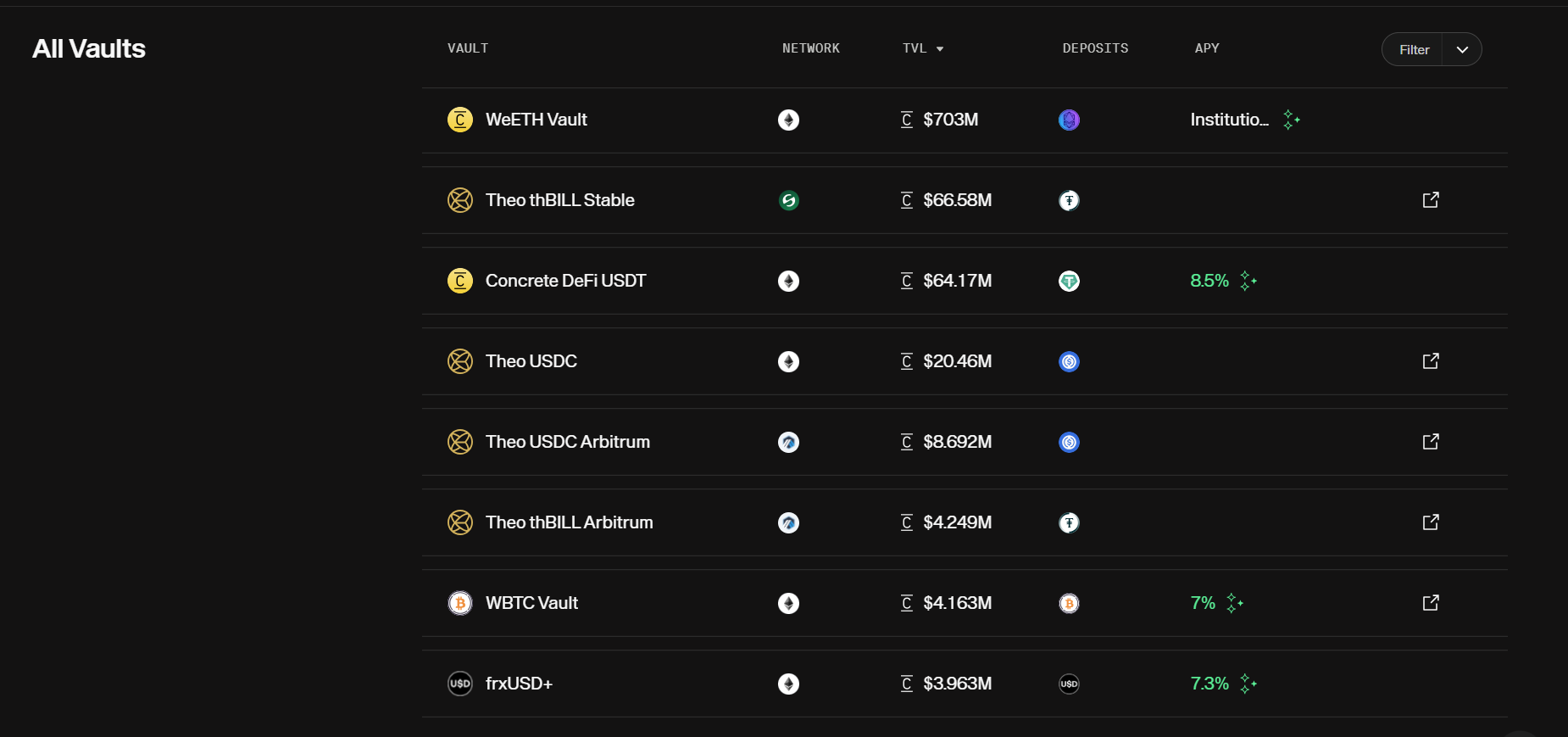
When you see it that way, the whole landscape of DeFi looks different. A 40% APY in an emissions-heavy pool is not obviously better than an 8.5% stable yield from a structured vault. It might be much worse, once the full cost and risk picture is incorporated. The number on the dashboard is just the starting point of the analysis.
The users and institutions that are building lasting positions in DeFi are the ones who have internalised this. They do not ask “what is the APY?” first. They ask “what is generating this yield, what does it cost me to participate, and what happens if conditions change?” Those three questions, asked consistently before capital moves, are what separate informed participation from uninformed subsidisation.
If you are ready to participate on the informed side, start by exploring what structured vault infrastructure actually looks like in practice.
Yield = Revenue − Cost, adjusted for risk. Understanding that equation changes how you approach DeFi entirely.
Explore Concrete at app.concrete.xyz