IF YOU CAN’T EXPLAIN YIELD, YOU ARE THE YIELD
--
DeFi made yield easy to see. But it made it much harder to understand.
Dashboards show numbers. APYs update in real time. Returns appear to compound. Everything looks clean, simple, and profitable.
But most users never ask the most important question:
Where is that yield actually coming from?
In markets, traditional or on-chain, there is a rule that rarely gets mentioned in the protocols that want your deposits:
If you don’t understand the source of your return, you are often the one providing it.
The Illusion Is The Product
Open any major DeFi dashboard right now. You'll see triple-digit APYs sitting next to a simple deposit button. One click. Money in. Numbers go up.
The interface is designed to make this feel effortless, and that design is intentional.
What it doesn't show you:
- How that APY is calculated
- Whether it's gross or net
- What conditions sustain it
- What happens when those conditions change
The yield looks like a feature. In many cases, it is the trap.
High APYs create urgency. Urgency removes analysis. The user deposits without understanding. And in that gap, between what the dashboard shows and what the user actually earns, value quietly transfers.
Not to the protocol. Not to the liquidity pool.
To the participants who did understand.
The Gap Between Displayed and Real Yield
Let's make this concrete.
A pool shows 45% APY. You deposit $10,000. A year later, you've earned less than 10% in real terms. How?
· Gross vs Net Return: The displayed APY almost never accounts for fees, gas costs, or compounding friction. Every rebalance, every harvest, every claim has a cost. On congested networks, those costs compound quickly.
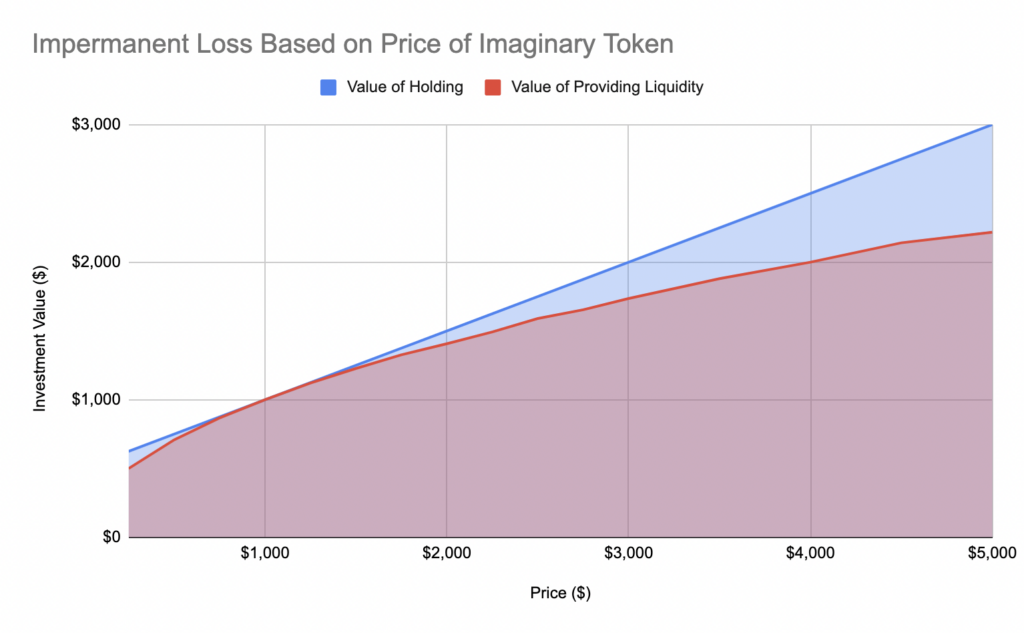
· Impermanent Loss: In liquidity pools, your exposure to two assets means that if one outperforms the other significantly, you would have been better off simply holding. The APY must more than compensate for this divergence, and often doesn’t.
· Rebalancing Costs: Strategies that require frequent repositioning accumulate execution costs that erode returns silently. A strategy that looks stable on paper can leak value continuously in practice.
· Execution Friction: Slippage, spread, and timing all reduce the yield you actually capture versus the yield that was theoretically available.
· Volatility Impact: In volatile markets, the underlying assets you’re earning yield on can move against you faster than the yield accumulates. You earn 40% APY on an asset that drops 60%.
A high APY is not a return. It is a starting point for an analysis that most users never perform.
Where Yield Actually Comes From
Yield is not magic. It is not generated by the interface. Every percentage point originates somewhere, and understanding the source tells you whether it will last.
· Trading Fees: When you provide liquidity to a DEX, traders pay fees each time they swap through your position. This yield is real and relatively sustainable, but only if trading volume persists, and only if impermanent loss doesn’t overwhelm it.
· Lending Activity: When you deposit into a lending market, borrowers pay interest. This yield exists as long as demand for credit exists. It is sensitive to market conditions, in low-volatility, low-leverage cycles, borrowing demand drops, and so does your yield.
· Arbitrage: Some protocols generate yield by capturing price discrepancies across markets. This is real, but it is also competitive, as more capital enters, arbitrage margins compress, and yields fall.
· Liquidations: Liquidation mechanisms reward participants who help maintain protocol solvency. This yield is episodic and spiky, it appears in high-volatility environments and disappears in calm ones.
· Incentives and Emissions: This is where most of the high APYs live. A protocol distributes its own token as a reward for depositing. The yield looks real. But you are being paid in a token whose value depends on continued demand for that same incentive. When emissions slow or token price falls, the APY collapses, often suddenly.
Not all yield is equal. Some is durable. Some is borrowed from the future.
Knowing the difference is not optional. It is the analysis.
Hidden Value Transfer: You Might Be the Yield
Here is the concept that most DeFi content avoids:
Every market has participants who understand the mechanics and participants who don't. Value tends to flow from the second group to the first.
In DeFi, this plays out in precise, repeatable ways.
– Providing liquidity without understanding the risk: You deposit into a pool to earn fees. You don’t model impermanent loss against expected volume. A sophisticated counterparty on the other side of that pool does. Their trades extract value from your position systematically.
– Earning incentives while absorbing downside: You see a high emissions APY and deposit. You earn tokens. But you hold those tokens as the price declines , because you didn’t model the sell pressure from every other participant doing the same thing. The protocol used your capital. You absorbed the depreciation of the reward.
– Participating without modeling outcomes: You don’t know what your net return will be. You know what the dashboard says. The difference between those two numbers, multiplied across thousands of users, represents value transferred to those who did the modeling.
The system is not fraudulent. It is simply asymmetric.
Information is the asymmetry. Understanding is the edge.
If you can't explain the yield, you are, in some meaningful sense, producing it for someone else.
Why the Same Protocol Produces Different Outcomes
Two users. Same pool. Same deposit size. Same time period.
Different results.
This is not luck. It is structure.
— The yield chaser sees APY, deposits, harvests occasionally, sells rewards at market, exits when yield drops. Net return: often negative when total costs and token depreciation are counted.
— The yield analyst models expected fee income, estimates impermanent loss under various price scenarios, factors in gas costs, holds or hedges reward tokens based on vesting schedules and sell pressure, exits on a thesis rather than a feeling. Net return: often materially positive.
— The institution builds a model before deploying a single dollar. They stress-test assumptions, size positions against risk limits, and track net performance against a benchmark. They are not chasing APY. They are engineering exposure.
Same protocol. Same smart contracts. Entirely different experiences.
The difference is not access. It is understanding.
From Yield Chasing to Yield Engineering
DeFi is maturing. The era of unsustainable emissions and click-to-earn simplicity is fading. What is emerging is something closer to institutional-grade yield management, but built on-chain and accessible to anyone.
This shift looks like:
· Modeling outcomes before deploying capital: Not just "what is the current APY" but "what is the expected net return given realistic assumptions about fees, costs, and market movement?"
· Managing risk as a first-order concern: Yield is only valuable if it isn’t consumed by downside. Structured approaches treat risk management as part of the strategy, not an afterthought.
· Optimizing over time, not just at entry: Markets change. Strategies that were optimal at deposit may not remain so. Active management, or systems that automate it , compounds advantage.
· Focusing on net returns, not gross numbers: The only number that matters is what you actually keep after everything is accounted for.
· This is yield engineering: It is the practice of treating on-chain capital allocation with the same rigor that professionals apply to any other financial strategy.
It is not complicated. But it requires a shift in mindset, from consumer to analyst.
How Concrete Vaults Change the Equation
The gap between yield chasing and yield engineering is real, but most users don’t have the time, tools, or technical depth to close it manually.
This is precisely what Concrete Vaults are built to address.
Concrete doesn't just show you a number. It builds the infrastructure beneath the number.
Concrete Vaults automate capital allocation across multiple lending markets and strategies, continuously routing deposits toward the best risk-adjusted opportunities without requiring manual intervention. They rebalance positions as market conditions change, reducing the execution friction and timing errors that silently compress returns for manual depositors.
The result is structured exposure, not guesswork. Users access strategies that have been designed and optimized at the infrastructure level, rather than improvised at the interface level.
For users who understand the problem this article has outlined, Concrete represents something significant: a way to participate in DeFi yield with the discipline of an institution, without needing to be one.
For users who are still clicking on APY dashboards without asking deeper questions, it is a starting point for a better approach.
Explore Concrete at [app.concrete.xyz](https://app.concrete.xyz)
The Only Takeaway That Matters
Yield is not a number on a dashboard.
Yield is revenue, minus cost, adjusted for risk.
That single reframe changes everything.
It means high APYs are questions, not answers. It means understanding the source of return is not optional analysis, it is the only analysis. It means that in any market, sophistication compounds just as surely as capital does.
The users who thrive in the next phase of DeFi will not be the ones who found the highest number. They will be the ones who understood what was underneath it.
If you can explain your yield, you are earning it.
If you can’t, now you know what to do next.
Explore Concrete at [app.concrete.xyz](https://app.concrete.xyz)