If You Can’t Explain Yield, You Are the Yield.
 MikeOnChain4 min read·Just now
--
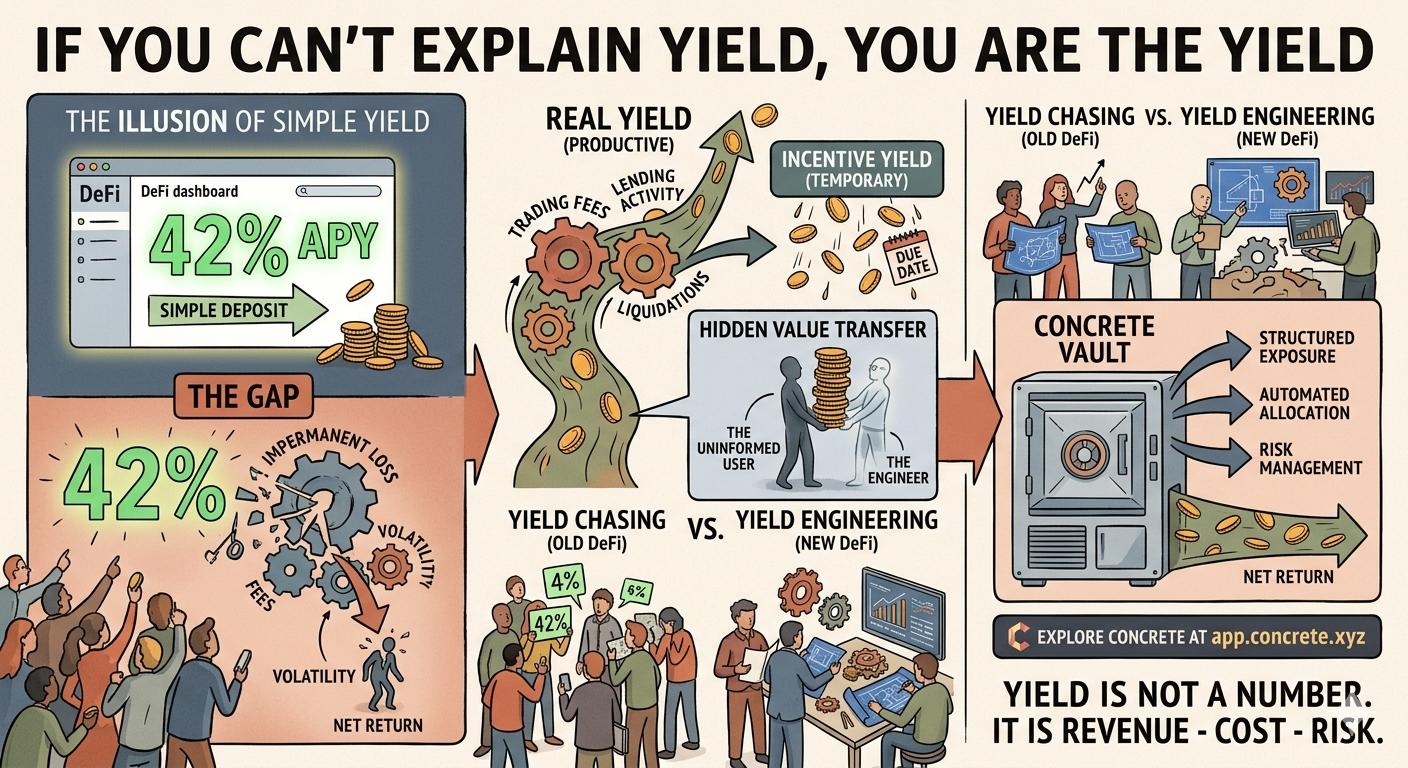
The Illusion of Easy Yield in DeFi
This week, we want people to really sit with a deeper idea that doesn’t always get talked about enough. If you look at how DeFi presents yield today, it’s easy to see why this gets overlooked.
Everything feels clean and straightforward dashboards showing high APYs, simple “deposit and earn” buttons, and smooth user flows that make it seem almost effortless to grow your money. You put your funds in, watch the numbers go up, and it feels like the system is just working in your favor. But what’s often missing is a clear explanation of what’s happening behind the scenes.
Those returns don’t just appear out of nowhere they’re coming from somewhere, whether it’s trading fees, incentives, inflationary token rewards, or even other users taking on risk. That’s where the tension starts to show. On the surface, yield looks simple, almost too easy. But once you start digging, you realize the reality underneath is layered, sometimes messy, and not always obvious especially if you’re not actively questioning it.
The Truth Behind High APYs: What You’re Really Earning
Most platforms show gross yield before costs. What you actually earn is the net, after things like fees, slippage, and market movement.
Then you’ve got impermanent loss, which can quietly eat into your gains if prices shift. Add rebalancing costs and execution friction (gas fees, spreads), and your returns shrink even more.
And in a volatile market, that nice-looking APY can drop fast.
Where Does Yield Actually Come From?
Yield doesn’t just appear out of nowhere. Some of it comes from real activity like trading fees from users swapping, or lending, where borrowers pay interest. You also get yield from arbitrage and liquidations, which keep markets efficient.
But then there’s incentives/emissions — basically extra rewards to attract users. These can boost APY, but they usually don’t last.
So yeah, not all yield is the same.
Some is earned. Some is just… temporary.
You Might Be the Exit Liquidity
Sometimes it looks like you’re earning… but you’re actually the one making it possible for others to cash out. If you’re providing liquidity without really understanding the risks, or chasing incentives without thinking about downside, you might be absorbing the losses while someone else locks in profit. That’s the hidden value transfer not obvious at first, but very real. If you’re not modeling what could happen, there’s a chance you’re not playing the game… you’re funding it.
Why Not Everyone Gets the Same Results
Everyone’s in the same system, but not everyone plays it the same way. Some chase the highest APY and hope for the best, while others actually break things down costs, risks, how the strategy works. Then you’ve got institutions that model everything before putting in money. Same opportunities, totally different approach. And over time, that difference in understanding is what separates the results.
The Future of DeFi: Engineered Yield
DeFi is moving past the days of blindly chasing the highest APY and hoping for the best. the future now is toward “engineered yield” a more thoughtful approach where outcomes are modeled ahead of time, risks are actively managed, and strategies are adjusted as conditions change. Instead of jumping from one opportunity to another, the focus is on consistency: optimizing positions over time and paying attention to what actually matters net returns after fees, volatility, and downside risk.
How Concrete Vaults Make This Real
Concrete Vaults take the guesswork out of DeFi. Instead of constantly moving funds around and second guessing decisions, they handle the heavy lifting for you. automating allocations, running strategies, and rebalancing positions as markets shift. That also means fewer manual mistakes and more consistency. The result is simple, you move away from reacting and hoping, and toward a more structured, reliable way to stay exposed to yield.
The Core Insight About Yield
Yield isn’t just a number you see on a dashboard. In reality, it’s the revenue you earn, minus the costs you pay for gas fees, and adjusted for the risks you’re taking along the way. When you start looking at yield this way, DeFi stops being about chasing the highest percentage and becomes more about understanding whether the return actually makes sense for the risk you’re taking.
“Concrete Vaults turn complex strategies into consistent execution “
🌐CONCRETE OFFICIAL LINK :
🔗Website: https://www.concrete.xyz/
📺Application: https://app.concrete.xyz/
✅Points Campaign: https://points.concrete.xyz/home
🐤X / Twitter: https://x.com/ConcreteXYZ
📖Documentation: https://docs.concrete.xyz/