If You Can’t Explain Yield, You Are the Yield
--
But it didn’t make it understandable.
Open any dashboard and you’ll see numbers moving in real time.
APYs updating. Returns compounding.
But almost no one asks the only question that matters:
Where does this yield actually come from?
The Illusion of Simple Yield
DeFi interfaces are designed for clarity.
Clean dashboards. Real-time APY. One-click deposits.
From the surface, yield looks effortless:
Deposit → Earn → Compound
But that simplicity is an abstraction.
Behind every APY is a system of trades, incentives, risks, and costs.
And those layers are rarely visible.
Yield feels simple — but it isn’t.
What you see is the output. What matters is the structure behind it.
The Gap Between Displayed and Real Yield
The number you see is rarely the number you get.
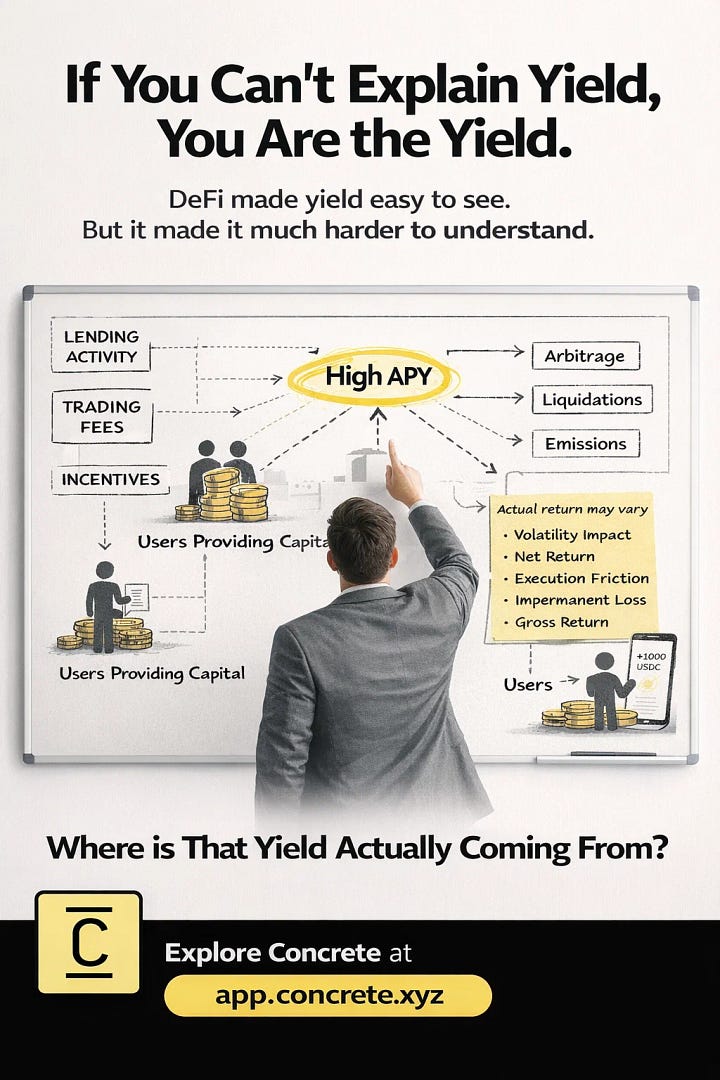
APY is often a gross figure, not a net outcome.
Once you account for real-world factors, returns change:
- impermanent loss
- rebalancing costs
- execution friction (gas, slippage)
- volatility of underlying assets
A strategy showing 20% APY might deliver far less in reality.
Because yield isn’t just what you earn.
It’s what you keep after everything else is accounted for.
Where Yield Actually Comes From
Yield never appears out of nowhere.
It always comes from somewhere.
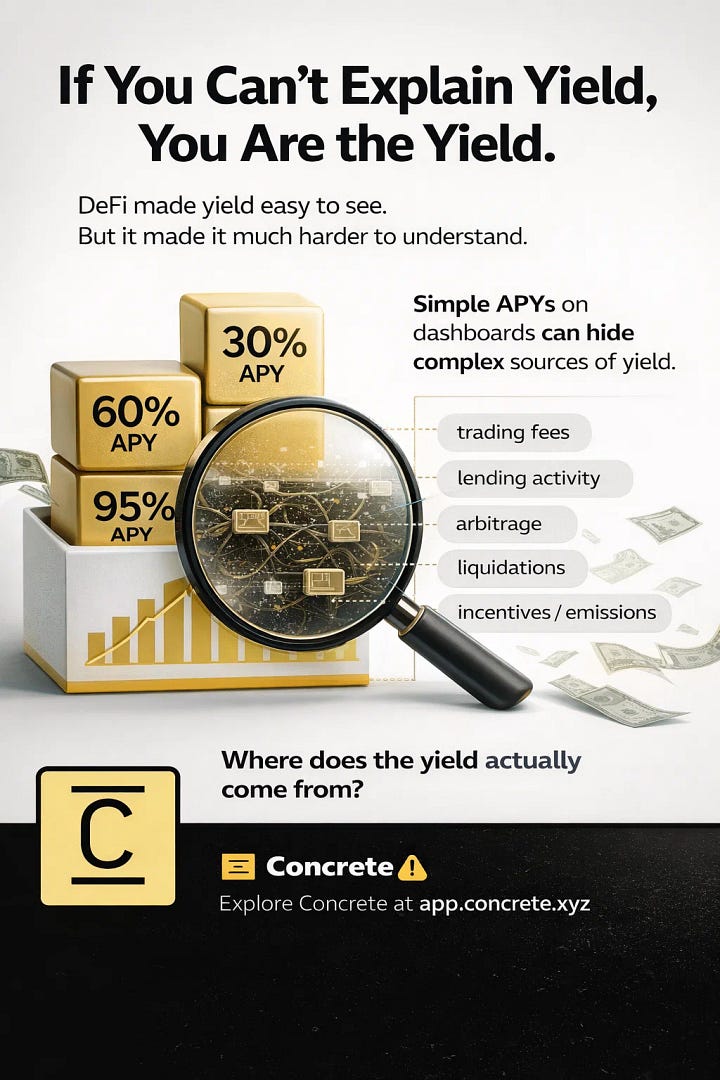
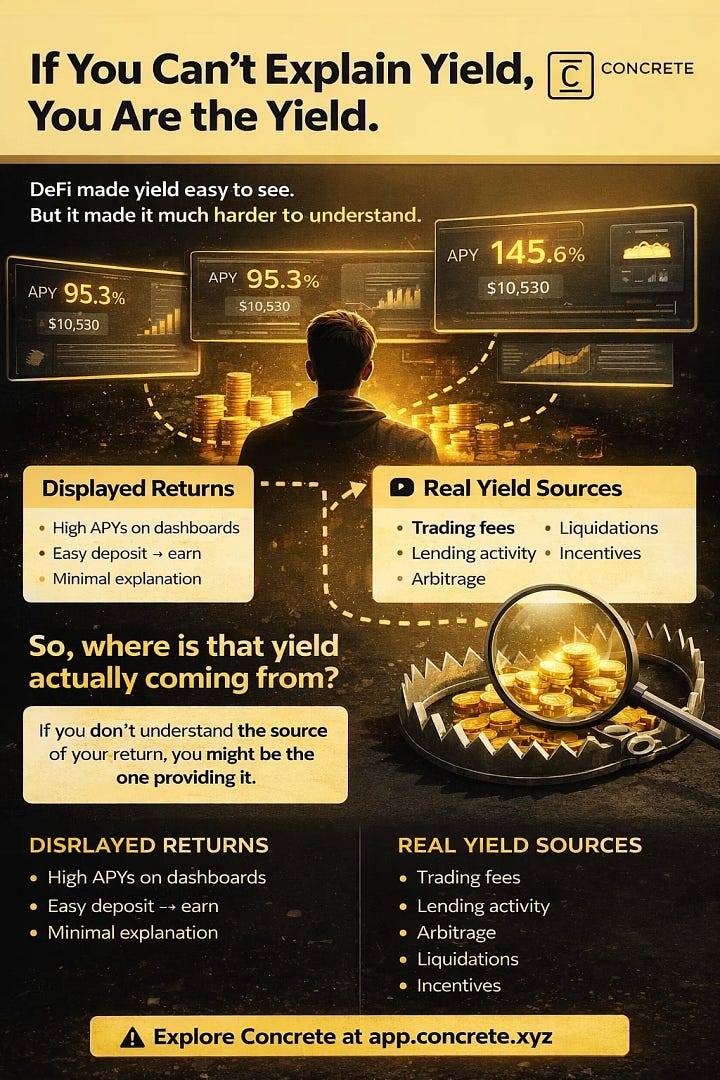
In DeFi, the main sources include:
- trading fees
- lending activity
- arbitrage
- liquidations
- token incentives / emissions
But not all yield is equal.
Some sources are organic and sustainable.
Others are temporary and extractive.
Understanding the source of yield is what separates participants from counterparties.
Because every yield strategy implies someone on the other side of the trade.
Hidden Value Transfer
Here’s the uncomfortable truth:
If you don’t understand the system, you may not just be earning yield…
you may be subsidizing it.
This happens more often than people realize:
- providing liquidity without pricing in risk
- chasing incentives while absorbing volatility
- entering systems without modeling downside
In these cases, your yield is simply compensation for risks you don’t fully understand.
Or worse — it may not compensate you enough.
Value doesn’t just get created. It gets transferred.
And if you’re not sure how the transfer works, there’s a real chance you’re on the wrong side of it.
Same System, Different Outcomes
Two users can interact with the same protocol…
…and walk away with completely different results.
Why?
Because they approach it differently.
Some users:
- chase the highest APY
- move capital frequently
- ignore underlying risks
Others:
- analyze structure and incentives
- model expected outcomes
- optimize for net returns
Institutions go further.
They evaluate risk, cost, liquidity, and sustainability before deploying capital.
Same system.
Different outcomes.
The difference is understanding.
From Yield Chasing to Yield Engineering
DeFi is evolving.
The early phase was about yield chasing — finding the highest number.
The next phase is about yield engineering.
This means:
- modeling expected returns
- understanding risk exposure
- optimizing over time
- focusing on net yield, not gross APY
This is the difference between reacting to yield and designing it.
The Role of Concrete Vaults
Managing all of this manually is difficult.
Tracking strategies. Rebalancing positions. Minimizing costs.
Adjusting to market conditions.
That’s where Concrete Vaults come in.
Concrete enables managed DeFi through structured vault strategies that:
- automate allocation
- manage positions
- rebalance dynamically
- reduce operational complexity
Instead of guessing, users gain structured exposure.
This is how DeFi starts to resemble institutional finance — where capital is deployed with structure, not guesswork.
From Guessing to Structured Exposure
The biggest advantage of vault infrastructure isn’t just convenience.
It’s consistency.
By systematizing decisions, vaults reduce:
- emotional reactions
- inefficient execution
- fragmented strategies
And improve:
- capital efficiency
- risk management
- long-term performance
This is how DeFi evolves toward institutional-grade onchain capital allocation.
The Core Insight
Yield is not just a number.
It is:
revenue
— cost
adjusted for risk
Once you understand that, everything changes.
You stop chasing APY.
You start questioning it.
You stop asking:
“How high is the yield?”
And start asking:
“Where does it come from — and what am I giving up to earn it?”
Because if you can’t answer that question…
you might be the yield.
And over time, the market doesn’t reward the highest APY.
It rewards the ones who understand it.
Explore Concrete and experience structured, risk-aware yield at:
👉 app.concrete.xyz