Anubhav Das3 min read·Just now
--
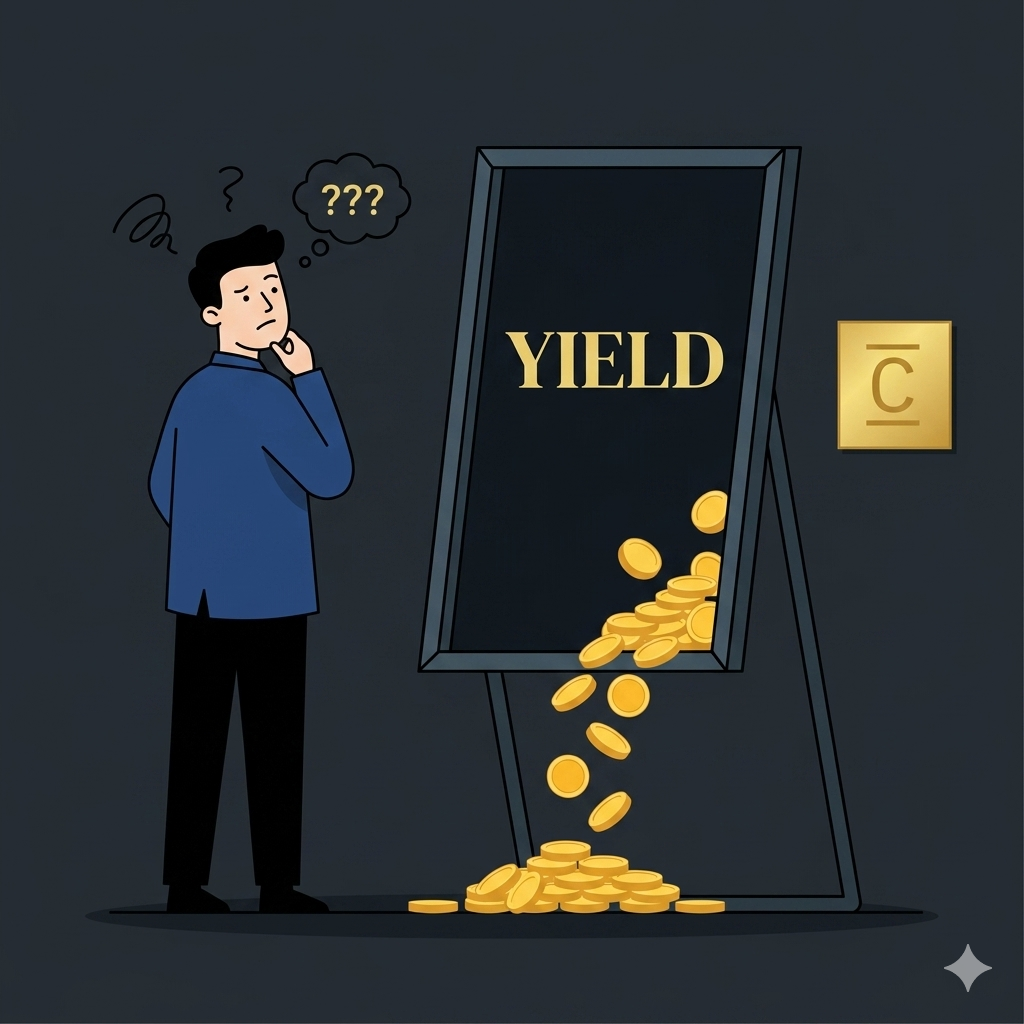
🧱 If You Can’t Explain Yield, You Are the Yield.
DeFi made yield visible.
But in doing so, it made it dangerously easy to misunderstand.
Open any dashboard and you’ll see it: High APYs. Clean interfaces. A simple flow — deposit, sit back, earn.
It feels effortless.
But that simplicity is an illusion.
Because behind every percentage point of yield… there’s a system. And if you don’t understand that system, there’s a good chance you’re not earning from it — you’re feeding it.
---
The Illusion of Easy Yield
Modern DeFi UX is designed for clarity:
Deposit assets
Watch balance grow
Track APY in real time
No spreadsheets. No deep analysis. No friction.
But what’s missing is context.
Where is that yield coming from? What risks are being taken? What costs are being hidden?
Yield looks simple on the surface — but underneath, it’s a complex web of strategies, incentives, and trade-offs.
---
The Gap Between Displayed and Real Yield
The number you see is rarely the number you get.
Displayed APY is often a gross figure — before accounting for:
Impermanent loss
Rebalancing costs
Gas and execution friction
Slippage
Market volatility
A pool showing 40% APY might deliver far less in reality.
In some cases, returns can even turn negative once all factors are considered.
The gap between perception and outcome is where most users lose.
---
Where Yield Actually Comes From
Yield isn’t magic. It has sources.
In DeFi, returns typically come from:
Trading fees generated by market activity
Lending demand from borrowers
Arbitrage opportunities across markets
Liquidations in leveraged systems
Token incentives and emissions
But not all yield is equal.
Some is organic and sustainable — like trading fees.
Some is artificial and temporary — like emissions designed to attract liquidity.
Understanding the difference is everything.
---
Hidden Value Transfer
Here’s the uncomfortable truth:
If you don’t understand how yield is generated, you may be the one providing it.
This happens when users:
Provide liquidity without understanding downside risk
Chase incentives without modeling outcomes
Accept volatility exposure unknowingly
You might be earning tokens…
…but simultaneously absorbing risk that benefits someone else.
That’s the hidden value transfer.
And it’s why:
If you can’t explain the yield — you are the yield.
---
Why Outcomes Differ
Not all participants in DeFi experience the same results.
Even in the same pool.
Some users:
Chase the highest APY
React to trends
Move capital frequently
Others:
Analyze structure and incentives
Model potential outcomes
Optimize for net returns, not headline yield
Institutions go even further — they simulate scenarios before deploying capital.
Same system.
Different approach.
Different outcome.
The difference isn’t access.
It’s understanding.
---
The Shift: From Yield Chasing to Yield Engineering
DeFi is maturing.
We’re moving from:
Chasing yield → Engineering yield
This means:
Modeling expected returns
Actively managing risk
Optimizing strategies over time
Focusing on net performance, not headline APY
It’s a shift from passive guessing to structured decision-making.
---
Enter Vault Infrastructure
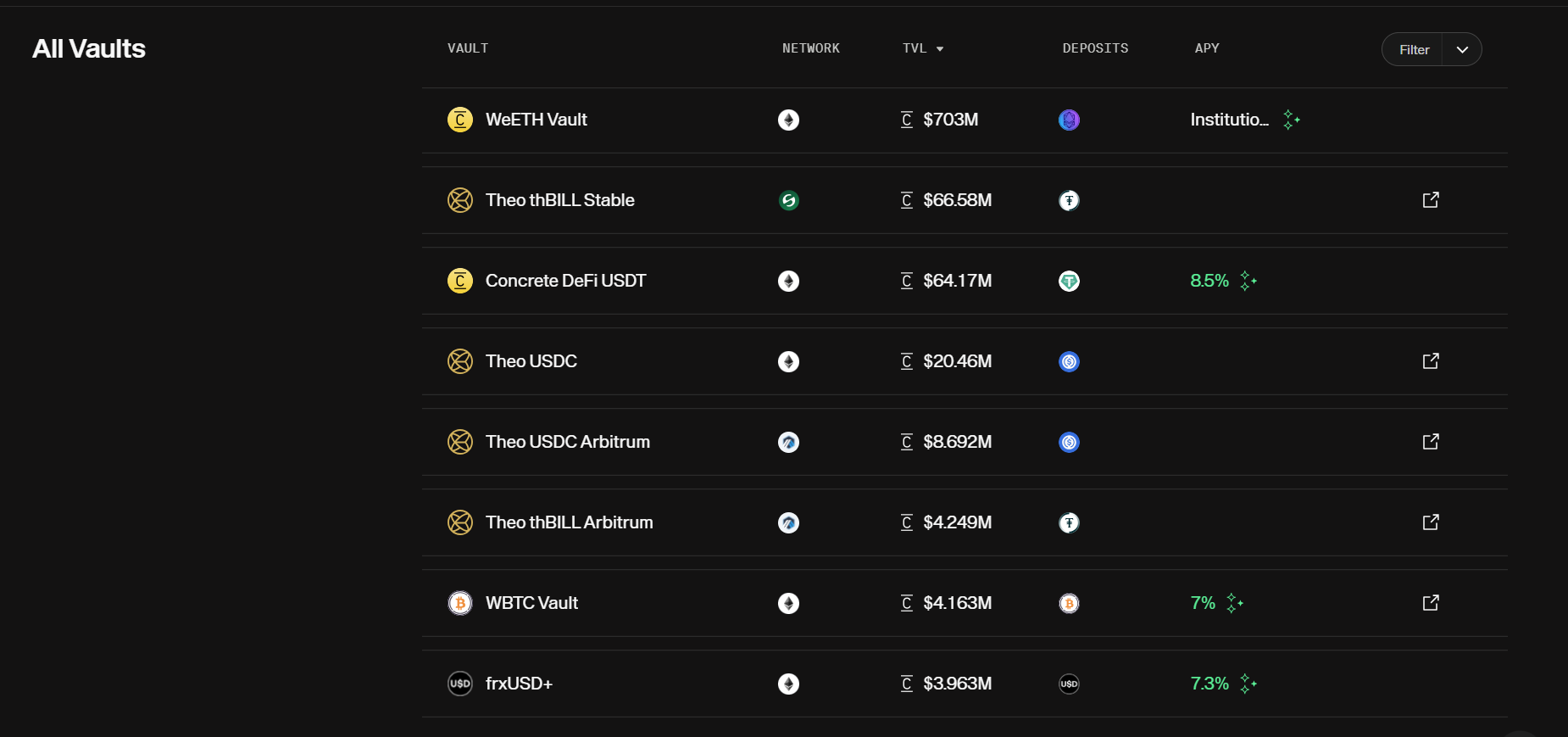
This is where systems like Concrete Vaults come in.
Instead of requiring users to manually manage complexity, vault infrastructure:
Automates capital allocation
Executes and adjusts strategies
Rebalances positions dynamically
Reduces human error and inefficiency
It transforms DeFi from a reactive experience into a structured one.
From:
“I hope this yields well”
To:
“This is how this strategy is designed to perform”
---
The Real Meaning of Yield
At its core, yield is not just a number on a screen.
It is:
Revenue
Minus costs
Adjusted for risk
When you understand that, everything changes.
You stop chasing. You start analyzing. You move from being a participant…
…to being in control.
---
🚨 Explore Concrete at app.concrete.xyz 🚨