IDEX’s Hybrid Model: A New Approach to Decentralized Exchange Development
 Stomhardy4 min read·Just now
--
The high pace of the cryptocurrency system expansion has enhanced innovation in digital trading platforms. The decentralized exchanges (DEXs) have taken up a significant portion of this development as they allow trading peer-to-peer without using centralized intermediaries.
Traditional DEXs have however been prone to speed, scalability and user experience issues.
As a reaction to these shortcomings, hybrid models of decentralized exchanges have appeared, and IDEX is one such example. It has a centralized performance but decentralized security based architecture giving it a better trading environment.
Understanding the Hybrid DEX Model
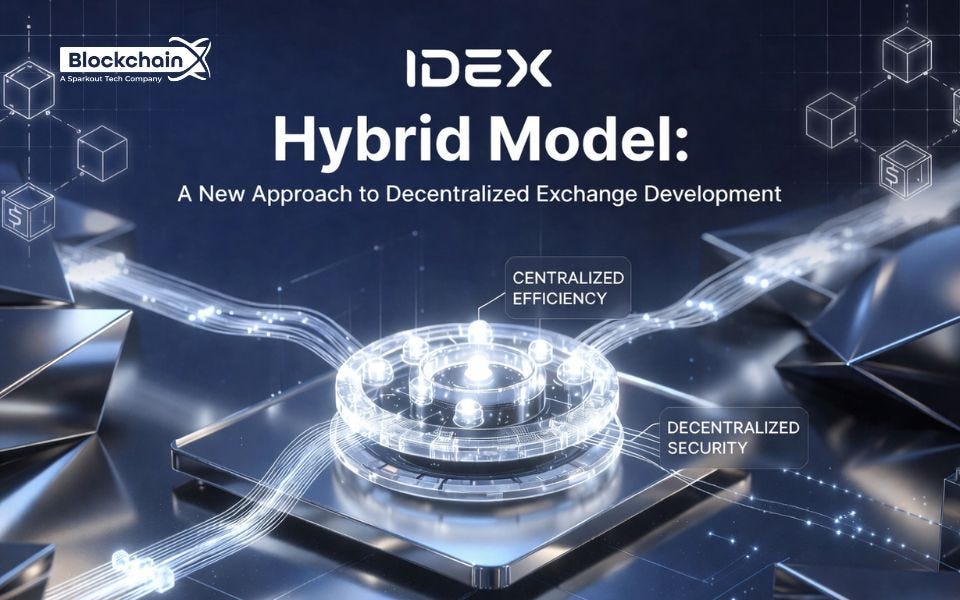
In contrast to the traditional system of decentralized exchanges that only depends on on-chain transactions fully, IDEX presents a hybrid system in which the matching of the trades happens off-chain and the settlement takes place on-chain.
This design will tremendously minimize the congestion and delay that is normally caused by blockchain networks. SE will make transactions quicker and more efficient because IDEX splits the order matching process with the blockchain but uses it to settle the transaction.
The issue of front-running is also one of the main concerns of decentralized trading and is addressed through this hybrid model. Due to the off-chain order book structure that orders are handled with, the platform is able to offer a more regulated and transparent trading experience while retaining decentralization in terms of asset custody.
Improved Trading Performance and Liquidity
Slow transaction confirmation was one of the largest shortcomings of the initial decentralized exchanges. The traders needed to wait till they received blockchain confirmations to have their orders fulfilled, and this often missed out on market opportunities. IDEX addresses this issue with the solution of order matching in real time, and still ensuring verification of final settlement via blockchain.
This will make the trading experience smoother like centralized exchanges, many of the traders already know how to operate the centralized exchanges. Rapid execution will also bring more people to the platform, which will promote liquidity and build a healthier trading environment.
With the increase in demand for sophisticated trading platforms, companies and startups are beginning to consider decentralized exchange development services in order to create scalable and user-friendly DEX platforms inspired by models such as IDEX.
Security and User Asset Control
The issue of security is a major concern in the blockchain ecosystem. The major advantage of decentralized exchanges is that an individual retains their assets instead of sending them to a centralized authority. IDEX maintains this value by making sure that every money is locked up in smart contracts on the blockchain.
Although the matching of orders takes place off-chain, transparency and the control of the assets are not compromised on the platform. Any trade is eventually confirmed and resolved in the blockchain giving an irreversible account of transactions. This hybrid architecture provides a trade off between efficiency on the operational and decentralized security.
Scalability for the Future of Crypto Trading
Trading platforms should be in a position to support more transactions as the use of blockchain increases. The scaling of decentralized trading infrastructure with the hybrid approach adopted by IDEX provides an adequate solution. This means that the platform can handle more trades without stressing the underlying blockchain network with the number of on-chain interactions that are necessary to handle the order management.
This is a scalable structure that is gaining importance in the entrances of institutional investors and giant trading companies into the cryptocurrency sector. If platforms enhance efficiency and security, it is more probable to have professional traders who would require a secure and efficient trading platform.
Companies that seek to develop innovative trading platforms are currently considering superior blockchain development solutions to incorporate hybrid frameworks, enhance the performance, and overall user experience.
The Future of Hybrid Decentralized Exchanges
The success of IDEX shows that hybrid decentralized trading platforms can provide a viable alternative to traditional centralized exchanges as well as to entirely decentralized on-chain DEX. This model provides a solution to several of the shortcomings that early decentralized exchanges had due to speed, security, and scalability concerns.
Companies, developers, and technology providers are beginning to adopt these new frameworks in order to build decentralized exchanges that address the needs of the modern crypto traders and retain the fundamental beliefs of blockchain technology.
The hybrid model introduced by the IDEX platform is a significant step in the changing world of decentralized finance as the accelerated, safer, and more user-friendly digital trading platforms are engineered.
Conclusion
The trend of hybridization of decentralized exchanges such as IDEX also points to a significant change in the development of crypto trading platforms. Adding the off-chain matching of orders and on-chain settlement, this model manages to eliminate most of the challenges to the performance and scalability of the classic decentralized exchanges.
The model systems that are based on the IDEX model prove that efficiency and decentralization can be achieved, which makes them a favorable option to both businesses and traders. As the blockchain infrastructure continues to be innovative, there is reason to expect that in the future, hybrid decentralized exchange will become a part of the future of crypto trading solutions.