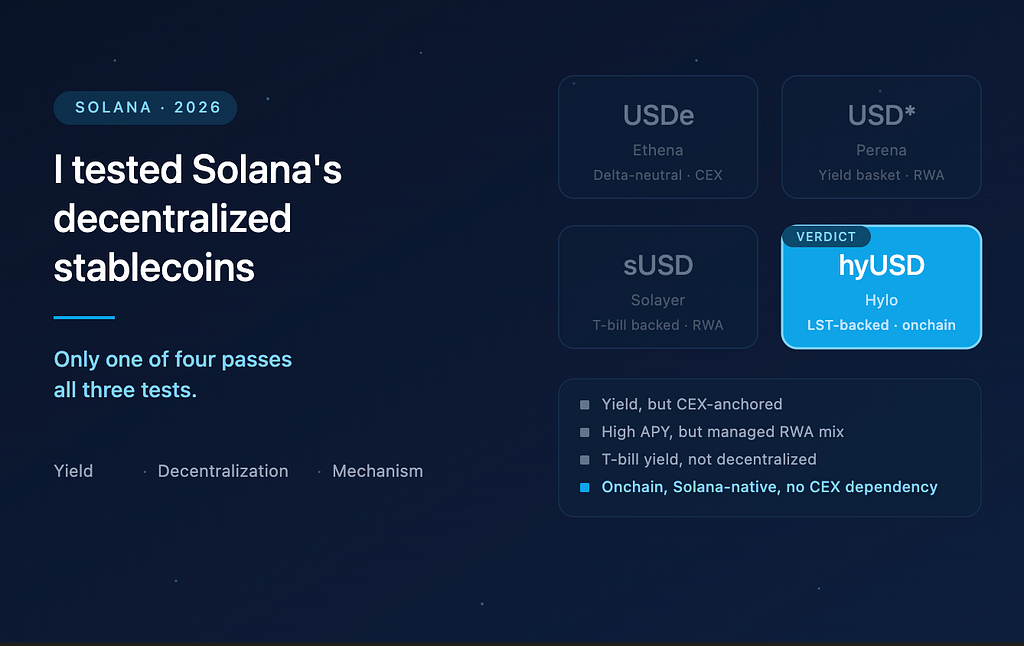
Yield, decentralization, mechanism. Only one of these four passes all three tests.
Quick note: this is editorial. I read the docs, ran small positions on most of them, and verified yields against each protocol’s own dashboard. APYs change constantly, so verify before deploying real capital. Some links in this article are referral links; if you sign up through them I may earn a small commission at no extra cost to you. Nothing here is investment advice.
I went looking for a decentralized stablecoin on Solana and came back with an opinion most listicles don’t give you.
Out of the four most-recommended options, only one is actually decentralized. The other three are useful. Two of them pay better yields. But “decentralized” turned out to be doing a lot of work in their marketing copy.
Here’s what I found, in the order I think most readers should care about them.
The four:
- Ethena USDe — the delta-neutral one most people already know
- Perena USD* — the new yield-bearing one with the high APY
- Solayer sUSD — the T-bill-backed yield stablecoin
- Hylo hyUSD — the LST-backed one nobody’s talking about yet
Three things to compare:
- What backs the stablecoin, and whether that backing is actually on-chain
- Where the yield comes from, and whether it can disappear
- What happens in a stress event (peg, redemption, counterparty risk)
Going in order.
TL;DR
- Ethena USDe — high yield, but funding-rate-dependent and CEX-anchored. Bridged to Solana, not native.
- Perena USD* — best stable yield around 15%, but the backing is a managed portfolio with RWA and off-chain components. You can use this referral code DLYBMN to get up to 15% off fees.
- Solayer sUSD — clean T-bill-backed yield stablecoin. Honest, simple, not decentralized.
- Hylo hyUSD — actually decentralized, fully onchain, Solana-native, with the most interesting product wedge in xSOL.
Don’t pick by yield alone. Pick by what you want the stablecoin to actually be.
1. Ethena USDe
Most readers know USDe already. It’s the delta-neutral stablecoin from Ethena. You mint by depositing crypto, the protocol opens a perp short to hedge, and the funding rate becomes your yield via sUSDe.
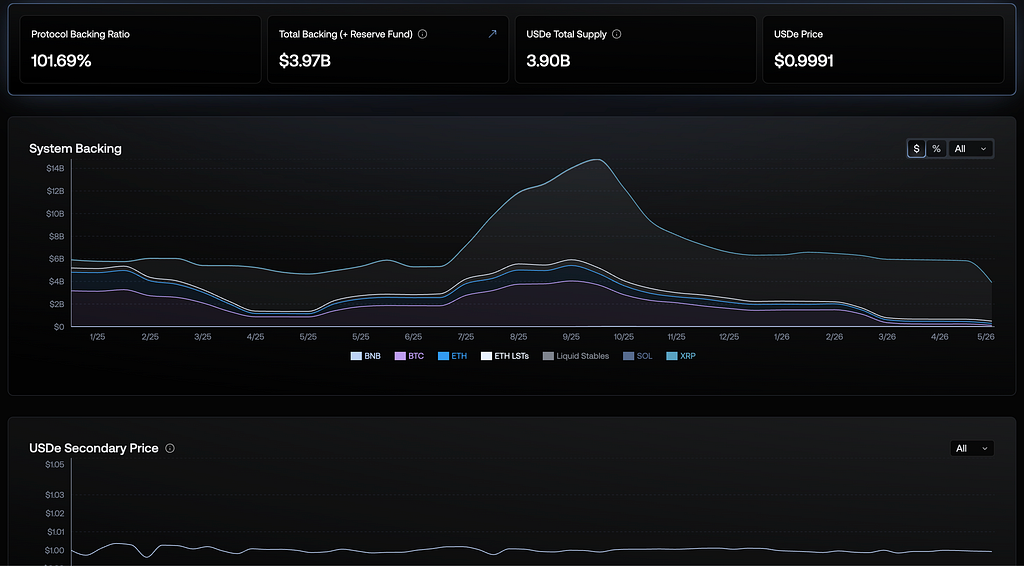
The yield is the headline. When perp funding is positive, sUSDe pays double-digit APY. During the 2024 cycle peaks, that was 20–30%. In quieter markets it can drop to single digits. Always check the live dashboard before depositing.
The catches.
It’s not Solana-native. USDe lives on Ethereum. The Solana version is bridged via Wormhole. Functional, but you have an extra dependency that hyUSD or sUSD don’t.
It depends on centralized exchanges. Ethena’s perp shorts run on Binance, Bybit, OKX, and Deribit. That’s where the funding rate comes from. If perp funding flips negative for an extended stretch, USDe yield disappears. If a major venue has trouble, the hedge is in trouble.
“Decentralized” is generous. USDe is non-custodial in the sense that you hold it yourself. But the backing isn’t onchain. It’s collateral spread across CEX accounts. That’s not the same as DAI-style or hyUSD-style decentralization.
The yield is real. The mechanism is clever. Just don’t read “decentralized stablecoin” in the marketing and assume that means what it meant in 2020. It doesn’t.
2. Perena USD* (perena.org)
Perena is the newer entry, founded by alumni of the Solana Foundation’s stablecoin team and Jump Trading. USD* is their yield-bearing dollar token.
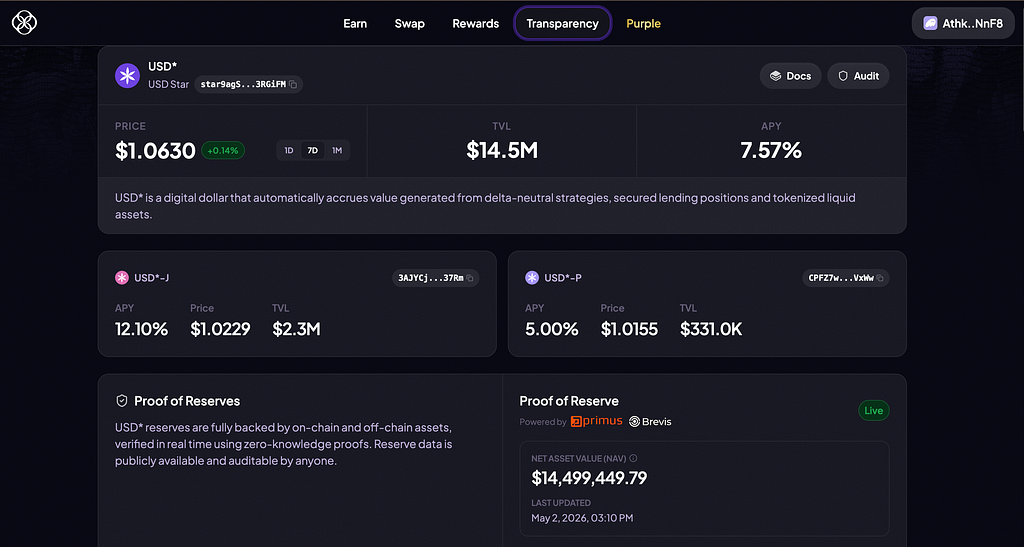
The mechanism is different from anything else on this list. USD* is pooled stable-value capital deployed across yield strategies: delta-neutral hedged positions, secured onchain lending, T-bill-style allocations, and stablecoin reserves. Yield embeds directly into the token’s price rather than rebasing balances.
The headline number people quote is around 15% APY, which is what DeFi Development Corp publicly announced when they partnered to deploy treasury reserves into USD* in late 2025.
Where it wins:
- Yield is genuinely competitive
- Real adoption (DFDV, Brale partnership)
- Proof-of-Reserves implementation with Brevis and Primus is live
- Solana-native
Where it loses on the “decentralized” axis:
- The portfolio mix includes RWA and CEX-hedged positions
- Yield strategies are managed at the protocol level, not user-controlled
- Off-chain reserves are a meaningful part of the backing
This is closer to a tokenized hedge fund product than a DAI-style decentralized stablecoin. That’s not bad, just a different category. The 15% yield reflects the strategy mix; users who want stable yield without thinking about funding rates will find it useful.
3. Solayer sUSD (solayer.org)
sUSD from Solayer is the most honest about what it actually is. It’s a yield-bearing stablecoin backed by short-term US Treasury Bills, issued through OpenEden’s tokenized T-bill infrastructure.
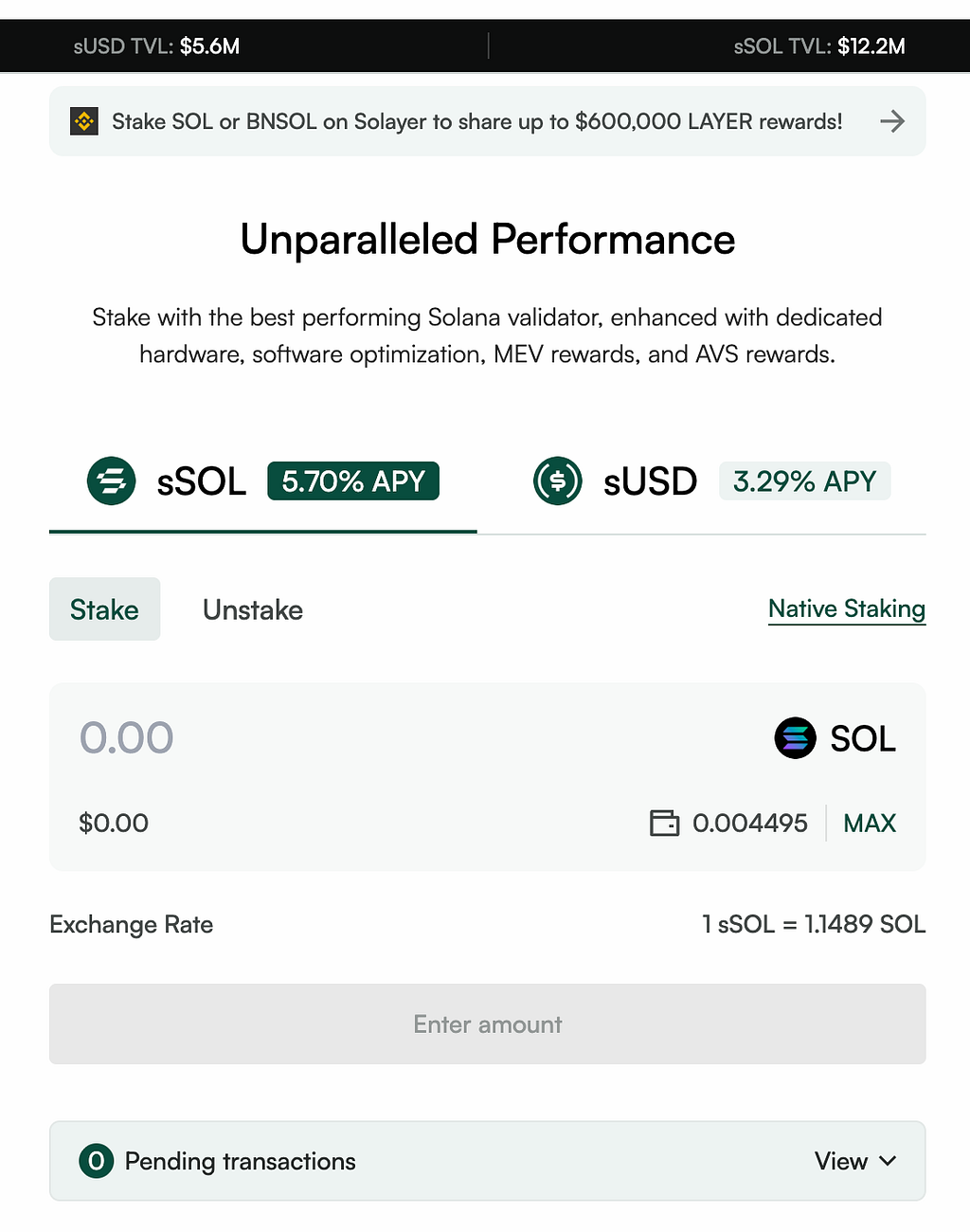
Yield is around 4–5% APY, distributed automatically via Solana’s Token-2022 interest-bearing extension. No staking, no claiming. The balance just goes up.
The use case is simple. Instead of holding USDC at zero yield, you hold sUSD and earn the T-bill rate.
The honesty problem isn’t with sUSD itself. It’s with the category label. sUSD is a real-world-asset stablecoin. The collateral is T-bills, custodied at regulated infrastructure, with a Moody’s rating on the underlying tokenized T-bill product.
That’s good. It’s also not decentralized.
If you want a yield-bearing stablecoin on Solana with stable, predictable returns and minimal complexity, sUSD is excellent. If “decentralized” is the box you actually need to check, this one doesn’t.
4. Hylo hyUSD (hylo.so)
This is the one most people haven’t tried yet, and the one that most resembles what “decentralized stablecoin” used to mean.
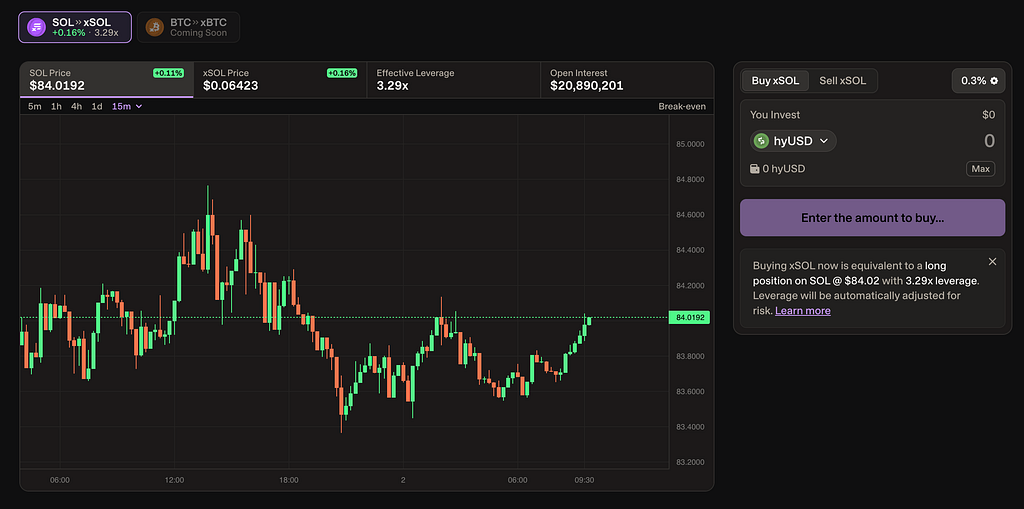
hyUSD is backed entirely by Solana liquid staking tokens (LSTs) like jitoSOL, mSOL, and Hylo’s own hyloSOL. The collateral is onchain. There are no T-bills. No CEX perps. No off-chain custody. The yield from staked SOL flows through the protocol, which is what makes the whole system work.
Two related tokens worth knowing:
- xSOL — long-term leveraged SOL exposure with no liquidations and no funding rate. The collateral pool absorbs volatility; xSOL holders capture the upside (and downside) of SOL beyond the stable layer.
- sHYUSD — staked hyUSD, the yield-bearing version. Earns protocol revenue from LST yields and trading fees.
The honest tradeoffs:
- Market cap is small compared to USDe or sUSD. You’re early. Liquidity is real but thin.
- The system depends on Solana LSTs working correctly. If a major LST has issues, that risk flows up.
- xSOL is genuinely interesting, but it’s a leveraged asset, not a stablecoin. Don’t confuse the two.
What you get in exchange:
- A stablecoin where every dollar of backing is onchain and verifiable
- Yield from network economics (SOL staking) rather than funding rates or T-bill rates
- An XP program that rewards holders directly. xSOL holders earn 20 XP per dollar per day. hyUSD earns 5. sHYUSD earns 1
- Referrals stack on top: refer a friend and you earn 10% of their total XP, and they get a 5% XP boost on their own activity
- A protocol with published audits and openly listed onchain addresses
This is what people meant by “decentralized stablecoin” before the category got watered down by half-onchain hybrid products.
So which do I actually pick?
- Want the highest yield right now and don’t mind centralization tradeoffs? Perena USD* (~15%) or Ethena USDe (variable, often 10–25%). Both work. USD* is more stable; USDe pays more in bull conditions and less when funding flips.
- Want a stable, predictable yield from a low-risk source? Solayer sUSD. T-bill yields with zero drama. Just don’t call it decentralized.
- Want a stablecoin that’s actually onchain and Solana-native, with yield earned from network economics rather than off-chain instruments? Hylo hyUSD. Pair it with sHYUSD if you want yield, or hold xSOL if you want leveraged SOL exposure with no liquidations.
- Want one stablecoin and one leveraged Solana position from the same protocol? This is where Hylo gets genuinely interesting. hyUSD plus xSOL is a single-protocol setup that gives you a stable layer and an upside layer with no funding rate, no liquidations, and an active XP program rewarding both positions.
I ended up holding all four because each does something different. The one I added the most exposure to was hyUSD, because it’s the only one that delivers what the category originally promised.
If you want to try Hylo, my referral link is below. You get a 5% XP boost on everything you do; I earn a small share of your XP.
Sources
If this saved you some research, a clap on Medium helps it find other Solana DeFi readers. Got a take that contradicts mine? Drop it in the comments. I read every reply.
Editorial comparison, not financial advice. Pricing and yields based on each protocol’s documentation and dashboards at time of writing — verify current details before deploying capital. Some links above are referral links; if you sign up through them, I may earn a small commission at no extra cost to you. This does not influence the views above.
I Tested Solana’s Decentralized Stablecoins: hyUSD vs USDe vs USD* vs sUSD was originally published in Coinmonks on Medium, where people are continuing the conversation by highlighting and responding to this story.