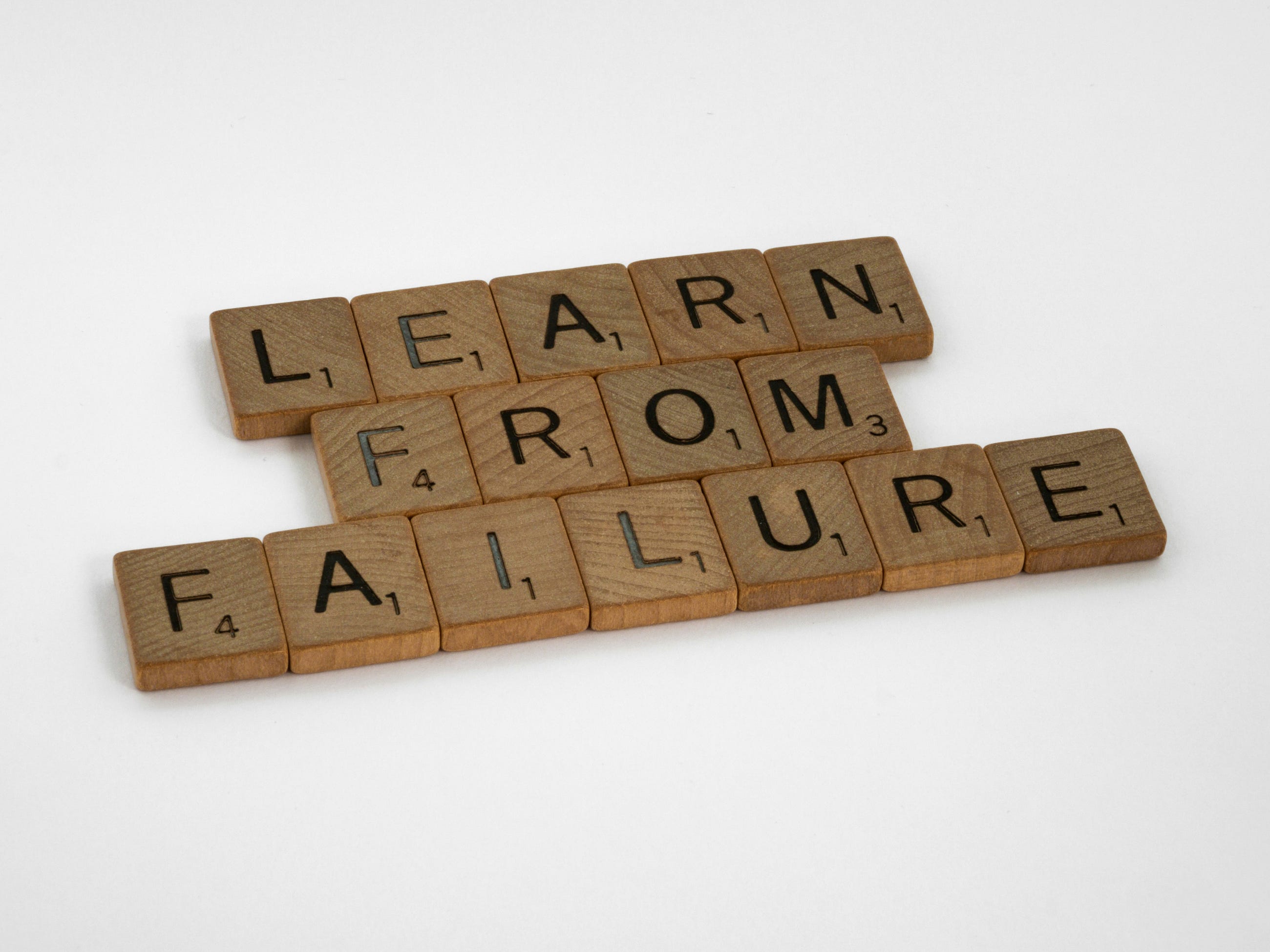
I Made One Small Mistake and My Portfolio Crashed. Here Is What I Learned
It was not a bad strategy. It was not bad timing. It was one decision I almost did not notice making until the damage was already done.
--
There is a specific kind of silence that comes after a big loss. Not the dramatic kind you see in movies. Just a quiet numbness while you stare at numbers on a screen that used to look very different. I have sat in that silence more than once. But one loss in particular changed how I think about trading entirely, not because it was the biggest, but because it started so small.
I had a plan. I had levels. I had a stop loss set. And then I moved it. Just once. Just a little. That was the mistake.
The Anatomy of a Small Mistake
Traders talk a lot about strategy, entry signals, indicators, risk reward ratios. What gets discussed far less is the moment between having a rule and breaking it. That moment is where portfolios actually get destroyed.
My trade was in a mid cap stock I had been watching for two weeks. The setup looked clean. I entered with a defined stop loss, which would limit my downside to roughly 1.8% of my total account. Manageable. Then the stock moved against me by about half that distance and stalled. The price action looked weak but not yet broken. And my brain, helpful as always, started generating reasons why the stop was too tight.
Maybe the support level is actually a few points lower. Maybe this is just noise before the real move. Maybe I should give it room.
I gave it room. The stock did not recover. It broke through my original stop, then broke through my new one, then kept going. What should have been a 1.8% loss became a 6.4% drawdown on that position alone.
That gap between 1.8% and 6.4% sounds like math. In practice it felt like falling through a floor you thought was solid.
Why Traders Move Their Stop Losses
The illusion of giving it room
Moving a stop further away feels rational in the moment. The reasoning almost always sounds sensible. The market needs space to breathe. This volatility is temporary. The thesis is still intact. What those justifications are actually doing is converting a risk management decision into an emotional one.
A stop loss is not a prediction. It is a boundary you set before you are under pressure, when you were thinking clearly. Once a position moves against you, your ability to evaluate it objectively drops sharply. You are no longer analyzing the market. You are negotiating with your losses.
Loss aversion and the brain’s accounting tricks
Behavioral research has shown repeatedly that losing feels roughly twice as painful as the equivalent gain feels pleasurable. This asymmetry drives a lot of irrational trading behavior. When a position moves against you, the prospect of locking in that loss triggers a kind of cognitive resistance. The brain starts searching for evidence that the trade will recover, not because the evidence is there, but because accepting the loss feels unbearable.
This is why traders with years of experience still widen stops. Knowledge does not automatically override emotional response. Structure does.
The Cascade Effect Nobody Talks About
The loss itself was painful. What made it worse was what came next.
After a larger than planned loss, most traders do not calmly reassess. They either freeze completely or, more dangerously, they try to recover. The recovery trade is almost always taken under worse conditions, rushed entry, unclear thesis, oversized position. The first mistake creates the emotional state that produces the second mistake.
This is the cascade. One bad decision degrades your decision making capacity for the decisions that follow.
- The loss triggers frustration or anxiety
- Frustration pushes you toward overtrading
- Overtrading with a depleted mindset leads to poor entries
- Poor entries confirm the feeling that markets are against you
- That confirmation leads to either rage trading or paralysis
Neither state is good for a portfolio.
What Proper Risk Management Actually Looks Like
The pre trade checklist that matters
Before entering any position, the questions that matter most are not about which direction the price will move. They are about what happens if it does not. Where exactly does your thesis break? What price level tells you the setup is invalid, not just uncomfortable? How much of your account are you willing to lose on this specific trade?
Answering those questions before you enter is not pessimism. It is the only way to make a rule you will actually follow when you are under pressure.
Position sizing is risk management
Traders spend enormous energy finding entries. Far less goes into deciding how large the position should be. Size determines how much a stop loss actually protects you. If you risk 5% of your account on every trade, a normal losing streak of five trades in a row leaves you down 25%. If you risk 1%, the same streak is a manageable setback.
The goal of position sizing is not to maximize profit on any single trade. It is to survive long enough that your edge, if you have one, has room to play out.
Writing it down before you enter
One practice that helped me more than almost anything else: writing a brief trade journal entry before opening a position, not after. The entry includes the setup rationale, the exact stop loss level, the target, and this part is critical, the specific condition under which I would exit early. Not if I feel nervous. An actual price or event.
When a trade moves against you and you have a written record of why you originally set the stop where you did, it is much harder to convince yourself the original reasoning was wrong.
The Psychological Architecture of Discipline
Discipline in trading is not willpower. Willpower is a depleting resource. Discipline is a system.
Professional traders who survive long enough to compound their accounts are not people who never feel the urge to widen a stop or revenge trade after a loss. They are people who have built structures that make it harder to act on those urges. Automated stop orders that cannot be easily moved. Rules about not trading on the same day as a significant loss. Maximum daily drawdown limits that force a break.
The goal is to make the right behavior the path of least resistance, not the heroic choice you have to make under pressure.
Markets are not fair, and they are not logical on a day to day basis. Discipline is the one variable you actually control.
What Changed After That Loss
I did not stop trading. I did not overhaul my entire strategy. What I changed was much more specific: I switched to hard stop orders placed immediately at entry, rather than mental stops I intended to honor manually. The technology removed the temptation.
I also started tracking not just my winning percentage and average return, but specifically how often my actual exit differed from my planned exit and in which direction. The pattern was uncomfortable to see clearly. I was consistently giving losses more room than I gave winners. That data, more than any book or article, changed my behavior.
A Realistic View of What Trading Requires
There is no system that removes risk. Markets punish overconfidence reliably and do not reward effort in the way most people expect. Weeks of disciplined trading can be followed by a single session that undoes a meaningful portion of the gains, usually when discipline slips, sometimes when it holds and the market simply moves against you anyway.
Anyone who tells you that a specific strategy or method removes this uncertainty is either uninformed or selling something. Experienced traders do not aim for certainty. They aim for a framework that keeps losses small enough that the wins can eventually matter.
The mistake that cost me 6.4% on a position was not a complex failure. It was forgetting, for about thirty seconds, that the stop loss existed to protect me from my own judgment under pressure, not to be overridden by it.
That is still the most important lesson I carry from it.