An Interview with the founder of SyncDevTime, Carrington Junior
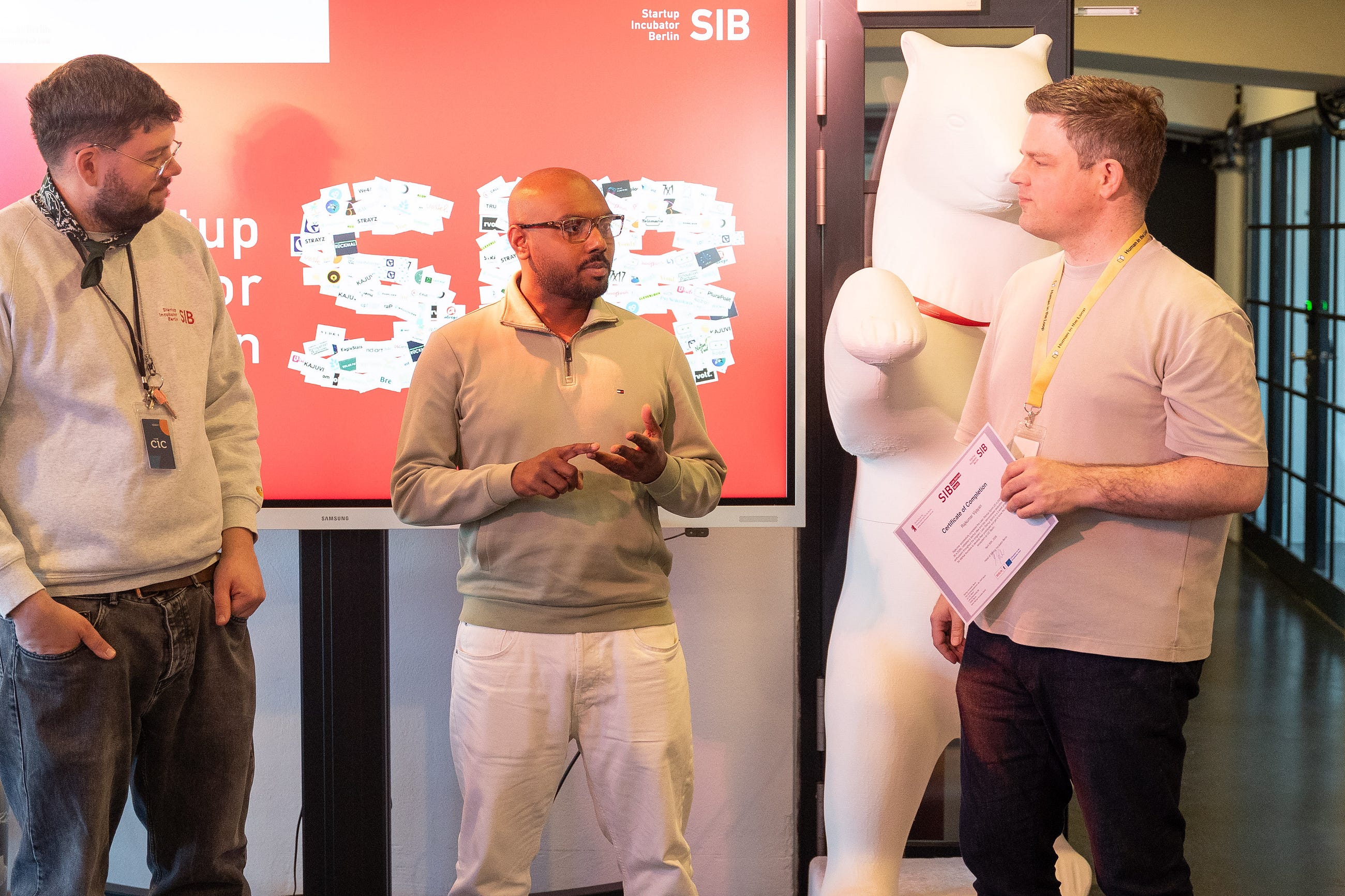
This week we interviewed Carrington Junior, and he shares his experience as the founder and CTO of SyncDevTime. Time is our most valuable asset, and he has built a rapidly growing tool that allows developers to manage their time effortlessly.
What is your name, role, and brief career background?
My name is Carrington “CJ” Junior (Denver, CO). I’m the founder/builder behind SyncDevTime.
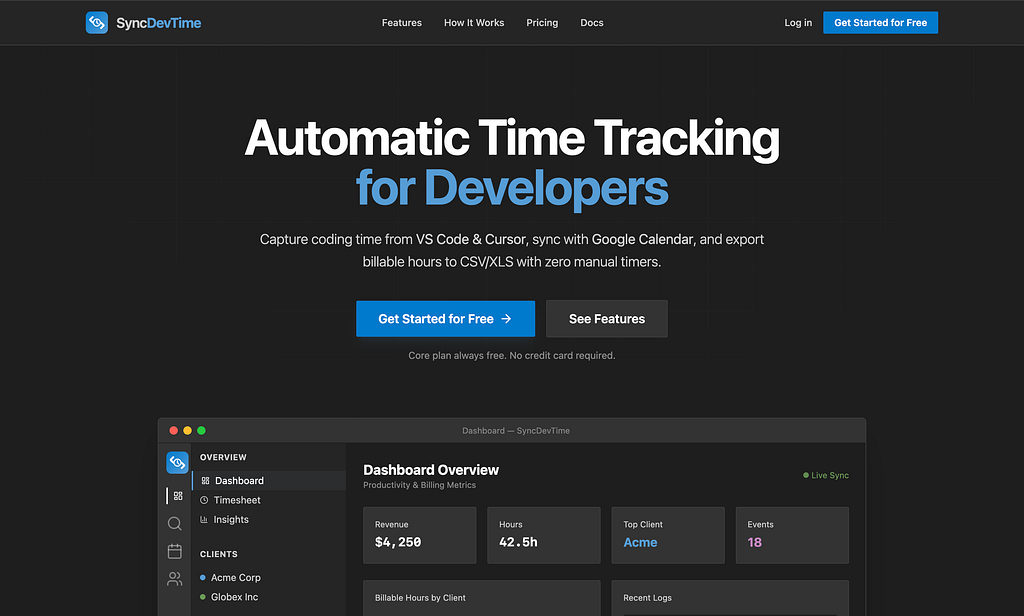
Developer Time Tracking & Billing Automation | SyncDevTime
My background is in building systems that reduce operational drag: data engineering, automation, analytics/reporting, and applied AI/ML. Over the past decade I’ve done that as a founder/consultant (Info Age Consulting) and in leadership roles like CIO, where I’ve been responsible for building and maintaining infrastructure, data systems, and automation across teams.
How long have you been at your company and what are you responsibilities?
SyncDevTime is early-stage; I’ve been working on it since inception.
Responsibilities: product direction, full-stack engineering, integrations (calendar + editor), billing/pricing, docs/content, and early customer support.
https://medium.com/media/809498525287800a6ac3323b2602aafa/hrefWhat does your company do?
SyncDevTime is a developer-first time tracking + billing platform that mirrors the VS Code/Cursor workflow.
It combines:
- Editor activity (VS Code/Cursor extensions sending lightweight “heartbeats” while you work)
- Google Calendar sync (meetings and planning blocks)
- Manual entries (for offline work and edge cases)
…into a single reviewable timesheet you can tag by client/project and export as clean CSV for invoicing/reporting.
What motivated you to pursue working on this?
Time tracking is one of those “simple” problems that becomes painful at the exact moment it matters: billing.
Most tools either force you into constant timer babysitting, or they capture data that still requires a lot of cleanup before it’s client-ready. SyncDevTime was motivated by a straightforward workflow goal: capture automatically, review quickly, export cleanly.
How did the company start? What went into building the initial product?
It started from the need to make consulting/team work billable without the month-end scramble.
The initial product was intentionally boring and practical:
- a single canonical time entry model (manual + calendar + editor all become the same thing)
- a fast “review and fix” loop (resolve unassigned/mis-tagged time quickly)
- exports that match how people actually invoice (CSV first)
Once the vertical slice worked end-to-end, we layered in dashboards, budgets, automations, and team/workspace features.
What technology stack do you use, and why did you choose this stack?
Frontend: React + TypeScript + Vite (fast iteration, strong typing, great developer experience)
UI: Tailwind (lightweight configuration), lucide-react icons, Recharts for charts
Backend/data: Supabase (Auth + Postgres) via @supabase/supabase-js (move fast without reinventing auth + data access)
Integrations:
- Google Calendar API (OAuth + sync)
- VS Code/Cursor extensions sending activity “heartbeats” to an ingestion endpoint
- Payments: Stripe Checkout links (minimal billing complexity)
- Deploy: Vercel (simple deploy + serverless API routes)
- Quality/tools: Biome (format/lint), Vitest (tests)
How has AI impacted your development process?
AI has been most helpful in two places:
- Product: enabling optional automation (like tagging suggestions) while keeping everything reviewable so the user stays in control.
- Development: faster scaffolding, refactor suggestions, and tightening copy/UX text. We treat AI as an assistant — not a substitute for architecture/security judgment.
What makes your company or product unique?
SyncDevTime is built around a few bets that feel “developer-native”:
- VS Code/Cursor-first: the editor is a primary source of focused time.
- Calendar + coding in one timeline: meetings matter for billing and honest reporting.
- Review is the workflow: automation helps, but the review step is what makes exports accurate.
- Privacy-first: SyncDevTime is designed to not store source code contents.
Is there anything interesting about your company or culture you would like to share?
Early-stage culture: ship small loops, listen to users, iterate quickly.
What are the most exciting parts of working at your company?
Turning “messy signals” into something users are comfortable invoicing with — and earning trust through UX.
What is your business model?
SyncDevTime is a freemium SaaS product.
- Free: try the workflow with basic limits
- Standard / Premium: increased history retention, export/usage limits, automation capacity, and team/integration limits
- Enterprise: custom workflows, unlimited seats, tailored reporting/support
Payments are handled via Stripe Checkout.
How have you attracted users and grown your company? (if applicable to your role)
Early growth has been:
- sharing with people we know (freelancers, consultants, small teams)
- word of mouth driven by “this finally makes billing easy”
- docs/content that reduce setup friction and answer real workflow questions (exports, privacy, integrations)
What are some of the most interesting problems you’re solving? Either technical problems or business problems
The interesting part is that this isn’t just a CRUD app — people use it for money conversations.
Problems we’re solving:
- Signal → truth: turning editor and calendar signals into entries people trust.
- Idle vs active time: sensible defaults and controls so users believe the totals.
- Overlaps/de-duping: meetings overlap coding; multiple sources can double-count; resolution must be understandable and fast.
- Timezones + DST: calendar time edge cases can destroy trust if you get them wrong.
- Idempotent ingestion: integrations retry; ingestion needs to tolerate duplicates gracefully.
- Privacy boundaries: delivering useful attribution without ever needing to store code contents.
Are there any challenges your team has overcome that you are particularly proud of?
Getting to a workflow where automation helps, but the user can correct anything in seconds.
Any super hard problems that are stumping you?
The ongoing challenge is always the same: improving accuracy without making the product feel invasive or complicated.
What will the world look like once your company achieves its vision?
Developers won’t have a separate “timesheet job.”
Work happens naturally (editor + calendar), you do a quick review to keep things accurate, and billing/reporting becomes a routine export instead of a monthly reconciliation project.
What does a typical day look like for you?
- building product (core workflow + integrations)
- watching where onboarding/troubleshooting breaks down and smoothing it out
- talking to users about attribution, review flow, and exports
- writing docs/content that removes friction
Are there any technologies or tools you’re playing around with right now that you’re excited about?
I’m excited about tools that increase shipping velocity without increasing fragility:
- Cursor/VS Code as an IDE + AI-assisted workflows
- Supabase for pragmatic auth/data iteration
- Vite + React for fast UI development
- Biome for fast, consistent formatting/linting
Describe your computer hardware setup
Computer and OS
- OS: Windows (primary dev machine)
- Hardware: typically a multi-monitor workstation setup (IDE + docs + dashboards side-by-side). I keep the specifics flexible depending on travel/work mode.
Describe your computer software setup
Text Editor or IDE: (ex. VS Code)
- VS Code + Cursor
Source control: (ex. GitHub)
- Git + GitHub
Email: (ex. Gmail, Missive, Superhuman, etc)
- Gmail
Chat: (ex. Slack)
- Slack/Discord depending on the team/community
Essential tools: (anything that you find very valuable, ex. Notion, Docker, etc)
- Supabase
- Vercel
- Stripe
- Figma (when design iteration is needed)
- Docs-first workflow (Markdown)
How do you get into a flow while coding?
Caffeine?
Coffee
Music or silence?
Music
When are you most productive — morning, day, or night?
Morning
What portion of your day do you spend coding?
~40–60%
Where are you most productive?
Home office
Are you reading any books at the moment or have one you’d like to share?
Think and Grow Rich by Napoleon Hill
Do you have any advice for founders or software engineers who are just starting out?
For founders: ship one end-to-end workflow before you build a lot of features.
- Get to “real value” quickly (something a user can complete and benefit from in one session).
- Make the product repairable (easy to correct) before you make it “smart.”
- Talk to users early — especially where trust is sensitive (billing, exports, accuracy, privacy).
Gain insight in your workflow with a tool built for developers by developers. SyncDevTime >
Developer Time Tracking & Billing Automation | SyncDevTime
How we build tools for developers to save them time and empower them to build more productively was originally published in Level Up Coding on Medium, where people are continuing the conversation by highlighting and responding to this story.