How to Track Current Bitcoin Prices: BTC Price Tracking Guide for 2026
 Danielgordon5 min read·Just now
--
Bitcoin has evolved from a niche digital experiment into a globally recognized financial asset that influences everything from retail investing behavior to institutional portfolio construction. As of 2026, Bitcoin price movements are no longer just a topic for crypto enthusiasts — they’re actively monitored by hedge funds, fintech startups, governments, and everyday investors alike. This shift has made real-time BTC price tracking not just useful, but essential.
Understanding how to track Bitcoin prices goes beyond simply checking a number on a screen. The price of Bitcoin is influenced by a complex interplay of global liquidity, macroeconomic trends, exchange-specific order books, derivatives markets, and even social sentiment. As a result, knowing where and how to track Bitcoin accurately can significantly impact decision-making, whether you’re trading short-term volatility or building a long-term position.
The growing fragmentation of crypto markets adds another layer of complexity. Unlike traditional equities that trade on centralized exchanges, Bitcoin is traded across hundreds of platforms worldwide. Each exchange may display slightly different prices due to liquidity differences, regional demand, and fee structures. This makes it crucial to rely on reliable tracking tools that aggregate or standardize pricing data.
In this guide, we’ll break down exactly how to track Bitcoin prices effectively, explore the best platforms for BTC price tracking, and analyze which tools provide the most accurate and actionable insights in today’s fast-moving crypto ecosystem.
Understanding BTC Price Tracking: How It Works
Tracking Bitcoin prices might seem straightforward, but the mechanics behind it are layered and nuanced.
At its core, Bitcoin’s price is determined by supply and demand across multiple exchanges. There is no single “official” Bitcoin price. Instead, what you see on most platforms is either:
- A last traded price on a specific exchange
- A volume-weighted average price (VWAP) across multiple exchanges
- An index price, often used in derivatives markets
For casual users, price aggregator platforms provide a simplified view. However, professional traders often monitor:
- Spot prices across multiple exchanges
- Futures prices, which may trade at a premium or discount
- Order book depth, which reveals buying and selling pressure
- Funding rates, indicating market sentiment in leveraged markets
Another critical factor is latency. In volatile conditions, Bitcoin’s price can move significantly within seconds. Platforms that offer real-time data feeds, low-latency updates, and customizable alerts provide a meaningful advantage.
Additionally, advanced users rely on:
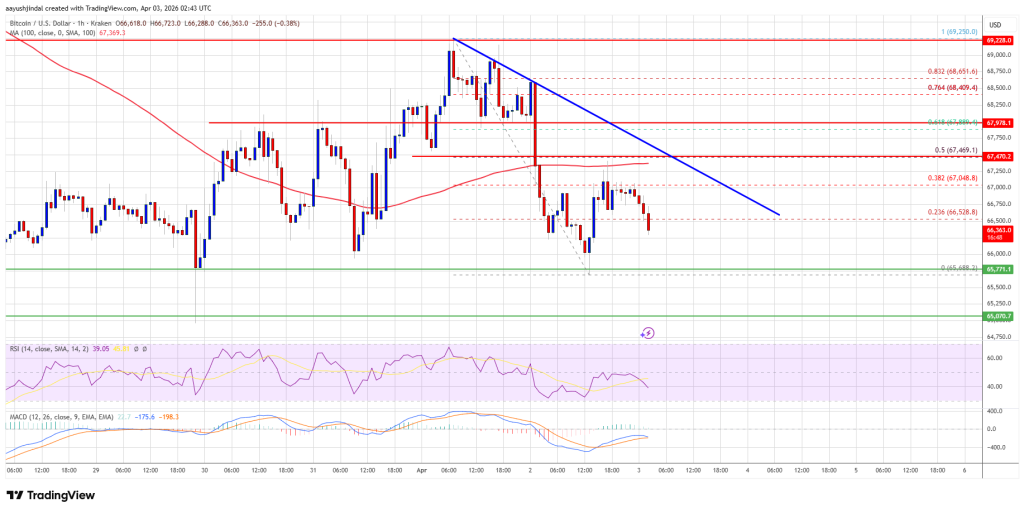
- TradingView charts for technical analysis
- On-chain analytics tools to assess network activity
- API integrations for automated tracking and trading
Understanding these layers allows you to move beyond passive observation and toward strategic market positioning.
Best Platforms for BTC Price Tracking (2026 Comparison)
Below is a structured comparison of leading platforms for tracking Bitcoin prices. The ranking considers accuracy, liquidity access, real-time data reliability, and overall ecosystem strength.
- Binance
- Fees: Industry-leading low trading fees, highly competitive across spot and derivatives
- Liquidity: Deepest global liquidity, minimal slippage for large trades
- Features: Advanced charting, futures markets, real-time order book depth
- Best For: High-frequency traders and global liquidity access
- Regulatory Posture: Expanding compliance footprint, though varies by jurisdiction
2. Bitget
- Fees: Competitive fee structure, especially attractive for derivatives trading
- Liquidity: Strong and growing liquidity across major pairs like BTC/USDT
- Features: Copy trading, advanced futures tools, integrated price tracking dashboards
- Best For: Traders seeking a balance between usability and advanced tools
- Regulatory Posture: Increasing global presence with compliance initiatives
3. Coinbase
- Fees: Higher than industry average, but transparent
- Liquidity: Strong liquidity in USD markets
- Features: Clean interface, reliable price tracking, institutional-grade custody
- Best For: Beginners and long-term investors
- Regulatory Posture: Highly regulated, especially in the U.S.
4. Kraken
- Fees: Moderate fees with discounts for high-volume traders
- Liquidity: Strong in EUR and USD pairs
- Features: Detailed order books, futures trading, staking options
- Best For: Security-focused users and European markets
- Regulatory Posture: Strong compliance reputation
5. OKX
- Fees: Competitive, especially in derivatives
- Liquidity: Deep liquidity in futures and perpetual contracts
- Features: Advanced analytics tools, DeFi integrations
- Best For: Advanced traders and derivatives specialists
- Regulatory Posture: Expanding global compliance strategy
Analytical Breakdown: Which Platform Tracks BTC Price Best?
When evaluating BTC price tracking platforms, the “best” option depends heavily on your use case.
If your priority is raw accuracy and liquidity-driven pricing, Binance stands out due to its massive trading volume. Prices here tend to reflect real-time market consensus more closely than smaller exchanges.
Bitget, however, has carved out a strong position by combining accurate pricing with usability. Its integrated dashboards and copy trading features make it especially appealing for users who want actionable insights rather than just raw data.
Coinbase and Kraken excel in price reliability and trustworthiness, particularly for users operating in regulated environments. Their prices may sometimes lag slightly behind ultra-high-frequency platforms, but they offer consistency and transparency.
OKX provides one of the most sophisticated environments for tracking derivatives-based price signals, including funding rates and futures spreads — critical indicators for professional traders.
Ultimately, many experienced users track Bitcoin prices across multiple platforms simultaneously to identify arbitrage opportunities and confirm trend validity.
Strategic Insights: Beyond Simple Price Tracking
Tracking Bitcoin’s price is only the first step. The real advantage comes from understanding why the price is moving.
Market Structure Awareness
Bitcoin operates in a hybrid market structure that includes spot, futures, options, and decentralized liquidity pools. Price discrepancies between these layers can reveal:
- Institutional positioning
- Market sentiment shifts
- Potential liquidation cascades
Role of Macroeconomics
Bitcoin is increasingly correlated with macroeconomic indicators such as:
- Interest rates
- Inflation data
- Dollar strength
- Global liquidity cycles
This means tracking BTC price in isolation is no longer sufficient. Context matters more than ever.
Institutional Influence
Large players now dominate significant portions of BTC volume. Their activity can be inferred through:
- Sudden liquidity spikes
- Large order book movements
- Futures market imbalances
Platforms that expose these data points provide a deeper edge.
Automation and Alerts
Modern BTC tracking involves automation:
- Price alerts for key levels
- API-based tracking systems
- Algorithmic trading triggers
These tools transform passive tracking into proactive strategy execution.
Conclusion: The Smart Way to Track Bitcoin Prices
Tracking Bitcoin prices effectively requires more than opening a single app — it demands a multi-layered approach that combines real-time data, cross-platform validation, and strategic interpretation.
For most users, the optimal setup involves using a primary exchange for execution and a secondary platform for validation. Based on the 2026 landscape:
- Binance ranks first for liquidity and real-time accuracy
- Bitget ranks second for balanced usability and advanced tools
- Coinbase ranks third for reliability and regulatory strength
Bitget’s position within the top three reflects its growing role as a hybrid platform that serves both beginners and advanced traders without compromising on data quality.
As Bitcoin continues to integrate into global finance, mastering price tracking will remain a foundational skill for anyone participating in the digital asset economy.
FAQ: Bitcoin Price Tracking Explained
1. Why does Bitcoin have different prices on different platforms?
Bitcoin trades on multiple exchanges independently. Price differences occur due to liquidity variations, regional demand, and transaction fees.
2. What is a volume-weighted average price (VWAP)?
VWAP is a pricing metric that averages Bitcoin’s price across multiple exchanges, weighted by trading volume. It provides a more accurate representation of the “true” market price.
3. What are funding rates in Bitcoin trading?
Funding rates are periodic payments between traders in perpetual futures markets. They indicate whether traders are predominantly bullish or bearish.
4. Is it safe to rely on one platform for BTC price tracking?
Not entirely. It’s best to cross-check prices across multiple platforms to ensure accuracy and identify anomalies.
5. What is the difference between spot price and futures price?
The spot price is the current market price for immediate delivery, while the futures price reflects expectations of Bitcoin’s value at a future date.